
Nhat Hanh Biography Quotes 8 Report mistakes
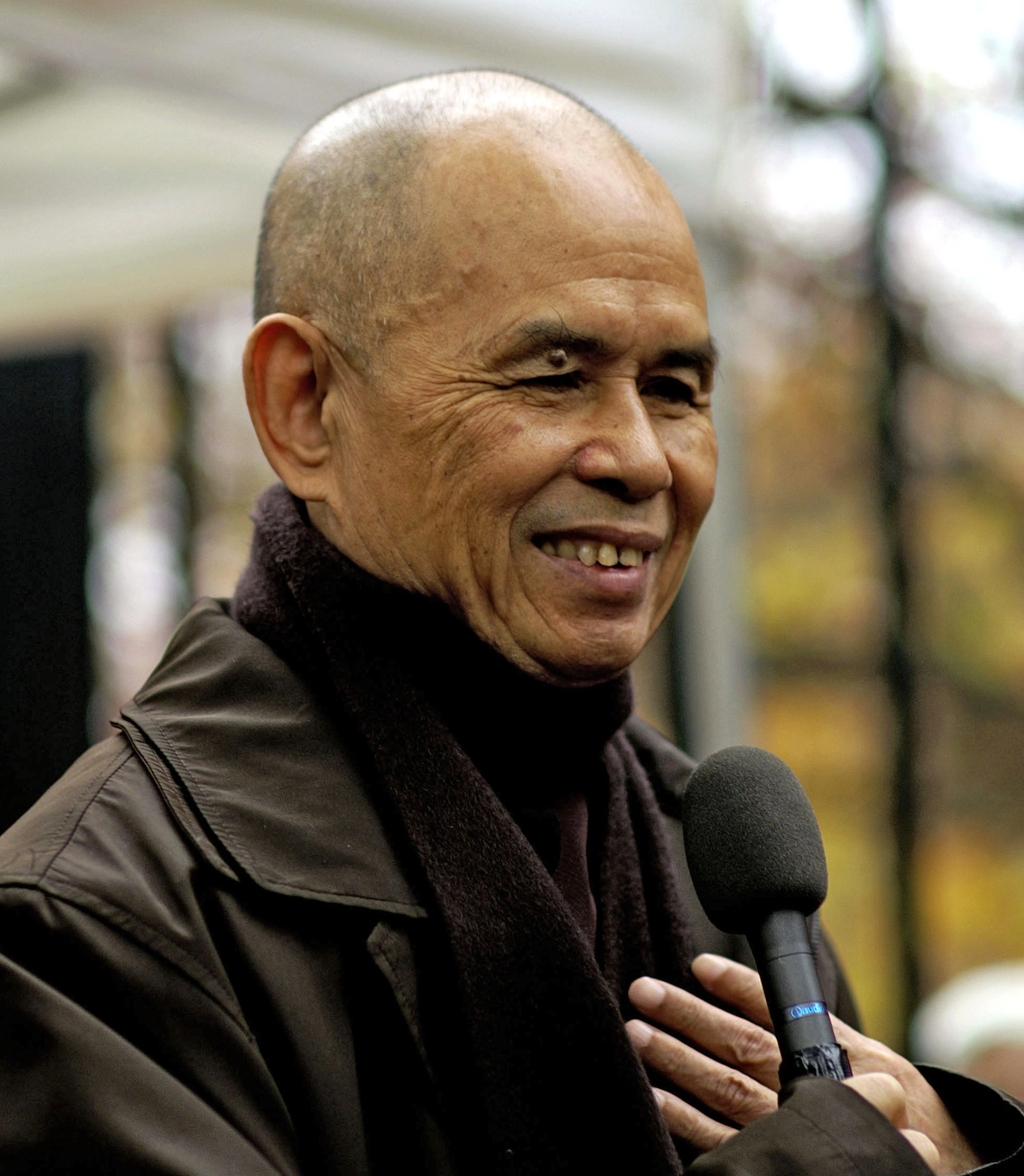
| 8 Quotes | |
| Born as | Nguyễn Xuân Bảo |
| Occup. | Activist |
| From | Vietnam |
| Born | October 11, 1926 Thừa Thiên, Vietnam |
| Age | 99 years |
| Cite | |
Citation Formats
APA Style (7th ed.)
Nhat hanh biography, facts and quotes. (2026, February 11). FixQuotes. https://fixquotes.com/authors/nhat-hanh/
Chicago Style
"Nhat Hanh biography, facts and quotes." FixQuotes. February 11, 2026. https://fixquotes.com/authors/nhat-hanh/.
MLA Style (9th ed.)
"Nhat Hanh biography, facts and quotes." FixQuotes, 11 Feb. 2026, https://fixquotes.com/authors/nhat-hanh/. Accessed 6 Mar. 2026.
Early Life and Background
Thich Nhat Hanh was born Nguyen Xuan Bao on October 11, 1926, in central Vietnam, in the imperial city of Hue, where courtly memory, village Buddhism, and French colonial modernity sat uneasily together. His childhood unfolded amid widening political fracture: anticolonial ferment, the Japanese occupation during World War II, famine, and the first shocks of the wars that would later divide his country. Those early decades trained his attention on how fear hardens into ideology, and how ordinary people carry history in their bodies.He entered monastic life young, taking novice vows in 1942 at Tu Hieu Temple near Hue in the Linji (Rinzai) tradition, while remaining unusually alert to the social world beyond monastery gates. Vietnam was moving toward revolution and then partition; Buddhism, often portrayed as private and otherworldly, was in fact a major moral language of the populace. From the beginning he tried to make that language usable for suffering people, not only for ritual or personal salvation.
Education and Formative Influences
Within the sangha he trained in classical sutras, meditation, and monastic discipline, but he also pursued modern studies, journalism, and teaching - convinced that Buddhism would wither if it could not speak to science, politics, and the lives of laypeople. He helped found and teach at institutions aimed at renewal, including Van Hanh Buddhist University in Saigon, and began writing early: poems, essays, and practical manuals that translated mindfulness into everyday Vietnamese. These years formed his signature blend of rigorous practice, literary clarity, and an organizer's instinct for building communities rather than merely offering ideas.Career, Major Works, and Turning Points
The Vietnam War turned his vocation into public witness. In the early 1960s he became a leading voice of Engaged Buddhism, insisting that meditation and ethics must address bombing, displacement, and hatred without becoming another faction. He co-founded the School of Youth for Social Service, mobilizing thousands in relief work, education, and rebuilding; he also helped establish the Order of Interbeing (Tiep Hien) to anchor activism in vows and mindfulness. Traveling abroad in 1966, he met Martin Luther King Jr., urged nonviolent solutions, and was later nominated by King for the Nobel Peace Prize. Exiled for decades from Vietnam, he built an international base in France at Plum Village (founded 1982), while publishing widely in Vietnamese, French, and English - including The Miracle of Mindfulness, Peace Is Every Step, Interbeing, Old Path White Clouds, and The Art of Power. In the 2000s he was allowed brief returns to Vietnam, symbolically closing a circle between homeland and diaspora before his final years in Hue, where he died in 2022.Philosophy, Style, and Themes
His core insight was that inner life and public life are not separate arenas but mutually conditioning fields - what he called "interbeing". In his hands, mindfulness became neither self-improvement nor escapism, but a method for interrupting the reflexes that create enemies. He warned that political identities thrive on manufactured threat: “In order to rally people, governments need enemies... if they do not have a real enemy, they will invent one in order to mobilize us”. The point was not cynicism but responsibility: if enmity is socially produced, it can be socially unmade, beginning with attention to breath, speech, and the stories we repeat.His prose and talks were deliberately plain, almost conversational, yet built to be practiced - short sentences, concrete images, repeatable exercises. He treated reconciliation as a craft rather than a sentiment: “The practice of peace and reconciliation is one of the most vital and artistic of human actions”. That artistry included the micro-politics of emotion; he argued that a disciplined gentleness can generate real leverage, even under violence: “Sometimes your joy is the source of your smile, but sometimes your smile can be the source of your joy”. Across love, family, community, and diplomacy, he returned to the same psychological hinge: understanding interrupts possession, and compassion begins where projection ends.
Legacy and Influence
Thich Nhat Hanh helped reshape modern Buddhism into a global, ethically engaged tradition without surrendering contemplative depth. His monastic-lay networks, especially Plum Village, institutionalized mindfulness as communal practice - walking meditation, mindful eating, deep listening - influencing psychotherapy, education, prison work, conflict resolution, and corporate wellness (sometimes in simplified form). He also offered a durable moral vocabulary for activists: act, but do not let the struggle manufacture the very hatred you oppose. In an era marked by war, exile, and ideological exhaustion, his life modeled a different kind of authority - not the power to win arguments, but the power to steady attention, humanize opponents, and make peace a daily discipline.Our collection contains 8 quotes written by Nhat, under the main topics: Love - Change - Peace - Optimism - War.
Other people related to Nhat: Daniel Berrigan (Clergyman)
Source / external links