
Nicéphore Soglo Biography Quotes 6 Report mistakes
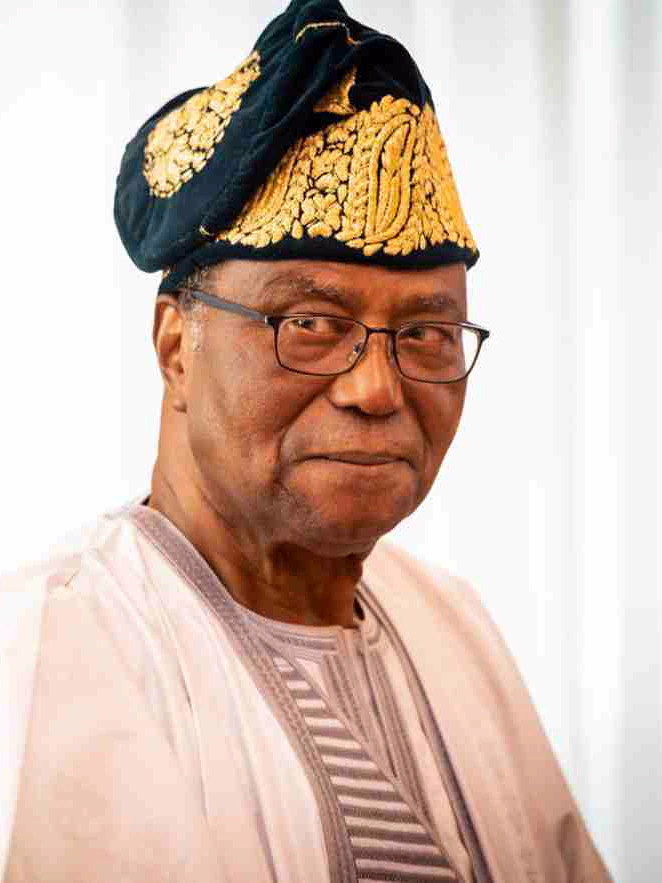
Attr: Benin Web TV
| 6 Quotes | |
| Born as | Nicéphore Dieudonné Soglo |
| Occup. | President |
| From | Benin |
| Spouse | Rosine Vieyra Soglo (1958-2021) |
| Born | November 29, 1934 Badagry, Lagos Colony, British Nigeria |
| Age | 91 years |
| Cite | |
Citation Formats
APA Style (7th ed.)
Nicéphore soglo biography, facts and quotes. (2026, March 9). FixQuotes. https://fixquotes.com/authors/nicephore-soglo/
Chicago Style
"Nicéphore Soglo biography, facts and quotes." FixQuotes. March 9, 2026. https://fixquotes.com/authors/nicephore-soglo/.
MLA Style (9th ed.)
"Nicéphore Soglo biography, facts and quotes." FixQuotes, 9 Mar. 2026, https://fixquotes.com/authors/nicephore-soglo/. Accessed 9 Mar. 2026.
Early Life and Background
Nicephore Dieudonne Soglo was born on November 29, 1934, in the colonial era of French Dahomey, the territory that would become the Republic of Benin. He came of age in a society marked by sharp regional, religious, and linguistic pluralism, and by the layered hierarchies of French rule. The world into which he was born was one in which schooling, bureaucratic advancement, and command of the colonial language could open a path into public life. That path mattered in Dahomey, a territory famous before independence for political volatility but also for producing a disproportionate number of educated civil servants and jurists. Soglo's later bearing - austere, technocratic, and impatient with improvisation - was rooted in this formative setting, where advancement depended on discipline and where government was both feared and desired.His generation experienced, in compressed form, the great transitions of twentieth-century West Africa: colonial administration, independence in 1960, serial coups, ideological experimentation, and economic exhaustion. By the time Dahomey was renamed Benin in 1975 under Mathieu Kerekou's Marxist-Leninist regime, Soglo had already begun to inhabit a wider transnational world than most of his compatriots. That distance gave him a dual perspective. He understood the aspirations of a poor, fractured state, but he also judged it against the standards of functioning bureaucracies and international finance. This tension - patriotic attachment combined with a reformer's severity - would define both his rise and the resistance he later faced.
Education and Formative Influences
Soglo pursued higher studies in France, part of the postwar African elite trained in the institutions of the former metropole. He studied law and economics and later qualified as a chartered accountant, an unusually technical profile for a future head of state in francophone Africa. His professional formation was less literary than managerial; he belonged to the class of African modernizers who believed that states fail not only from bad intentions but from bad ledgers, weak tax systems, and indiscipline in public finance. Work in international economic and financial institutions, including senior responsibilities linked to the World Bank and broader development administration, sharpened his conviction that Africa's problems were neither immutable nor purely external. Debt, inflation, state overreach, and patronage were, in his view, political and administrative failures that could be corrected by competent governance. That training also gave him credibility at a moment when Benin's socialist experiment had run aground and the state could no longer pay salaries.Career, Major Works, and Turning Points
Soglo entered Benin's center stage during the democratic rupture of 1990, when the National Conference - one of the most important political innovations in late Cold War Africa - broke the monopoly of the Kerekou regime and opened a peaceful transition from one-party rule. In a country near bankruptcy, Soglo was chosen prime minister of the transition, effectively the man charged with rescuing the state. He negotiated with creditors, restored a measure of fiscal order, and became the face of sober recovery. In the 1991 presidential election, widely seen as a landmark for African multiparty democracy, he defeated Kerekou and became Benin's first democratically elected president of the post-authoritarian era. His presidency from 1991 to 1996 focused on macroeconomic stabilization, administrative reform, privatization, and rebuilding investor confidence. Benin gained international esteem as a democratic exception in a region troubled by coups and civil war. Yet his presidency also revealed the limits of technocratic reform: austerity hurt, patronage networks adapted rather than disappeared, and Soglo's aloof style cost him politically. In 1996 he lost reelection to the very man he had displaced, Kerekou, in one of Africa's earliest examples of democratic alternation through the ballot box. Soglo remained central thereafter - mayor of Cotonou from 2003 to 2015, elder statesman, party leader, and the patriarch of a political family that included Rosine Vieyra Soglo and later his son Lehady.Philosophy, Style, and Themes
Soglo's public philosophy joined economic rigor to a moral language of dignity. He was never a populist storyteller; he spoke more often like a fiscal surgeon than a tribune. But beneath the technocratic exterior lay a consistent anthropology: poverty was not only material lack, it was humiliation. Hence his insistence that “Our people thirst for dignity and have a burning desire for a better life”. The sentence is revealing. He cast citizens not as clients of the state but as human beings seeking restoration. In the same register, he could praise African industrial success in civilizational terms rather than merely commercial ones: “What we see at Glo-Djigbe is the dignity of the Black people. What we see in Nigeria with Dangote is the dignity of the Black people”. For Soglo, development was a psychological and historical emancipation, proof that African competence need not be borrowed or performed for foreign approval.His style was correspondingly blunt, at times to his detriment. He distrusted denial, delay, and the theatrical evasions of weak states. “Pretending to play ostrich politics would be suicidal”. That line captures his temperament: frontal, admonitory, convinced that reality ignored becomes catastrophe. Yet he was not only a man of adjustment plans. He also returned repeatedly to memory, continuity, and democratic vigilance. He belonged to the generation that had seen institutions collapse from vanity and improvisation, and he treated the democratic opening of 1990 almost as a civic covenant rather than a mere constitutional event. The inner thread of his politics was therefore not ideology in a narrow sense but seriousness - a belief that nations are saved by work, memory, and institutional self-restraint.
Legacy and Influence
Soglo's legacy is inseparable from Benin's reputation as one of West Africa's most durable multiparty systems. He did not found the republic, but he helped refound it after ideological exhaustion and near-state failure. His greatest historical importance lies less in any single reform than in embodying a new post-Cold War African possibility: the internationally literate reformer who returns home, submits to elections, governs under constitutional constraint, and then yields power when defeated. That example mattered beyond Benin. At home, his record remains contested - admired for honesty, administrative seriousness, and democratic commitment, criticized for elitism and insufficient political tact. Yet even his critics often acknowledge that he raised the standard by which public office could be judged. As a statesman, mayor, and patriarch of a long-lived political clan, he linked technocracy to national self-respect. In Benin's democratic memory, Soglo stands as both architect and warning - proof that competence can rescue a state, and proof that reform without durable popular intimacy remains fragile.Our collection contains 6 quotes written by Nicéphore, under the main topics: Freedom - Hope - Pride - African Proverbs.
Source / external links