
Nicholas D. Kristof Biography Quotes 33 Report mistakes
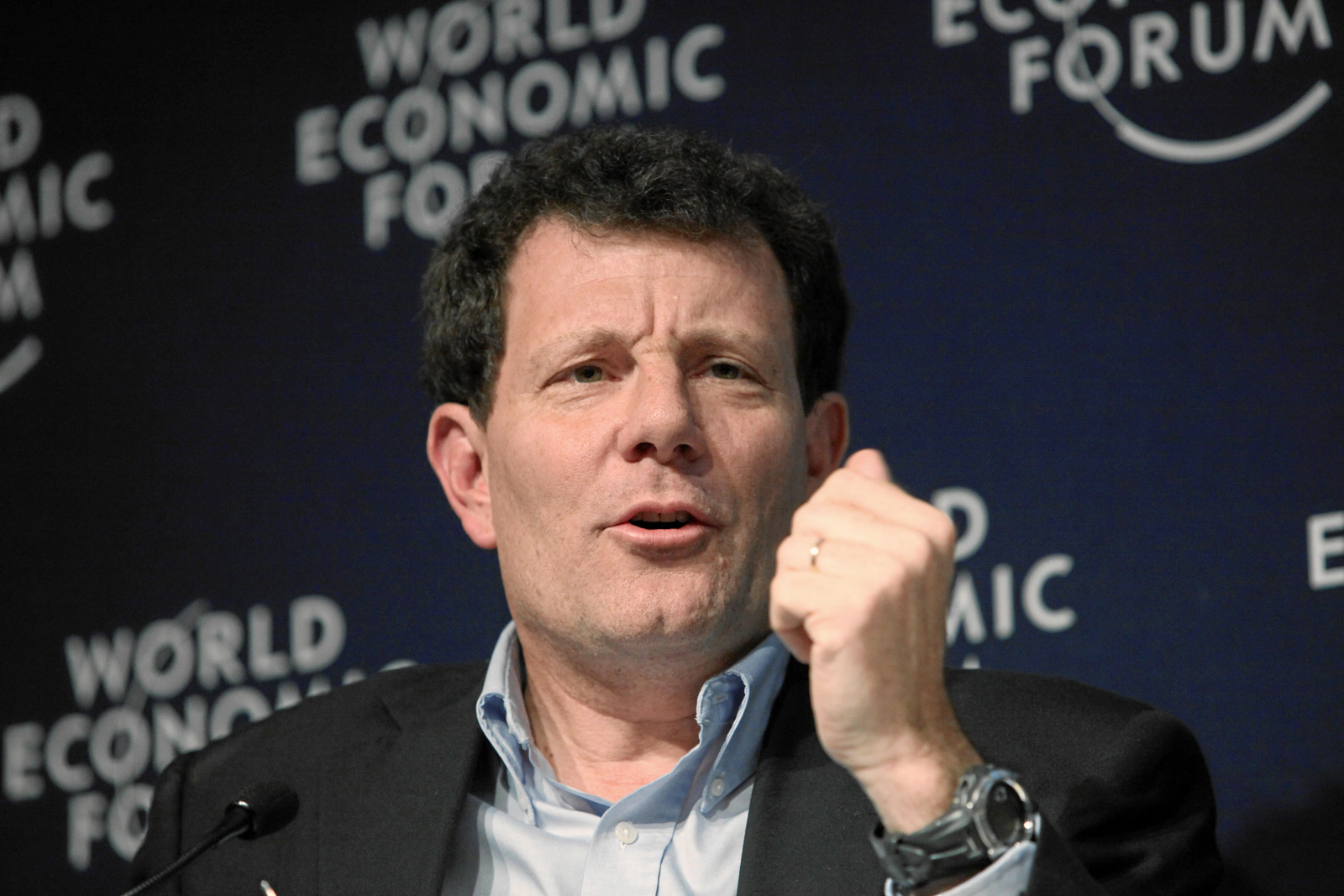
| 33 Quotes | |
| Born as | Nicholas Donabet Kristof |
| Occup. | Writer |
| From | USA |
| Born | April 27, 1959 Yamhill, Oregon, United States |
| Age | 66 years |
| Cite | |
Citation Formats
APA Style (7th ed.)
Nicholas d. kristof biography, facts and quotes. (2026, February 11). FixQuotes. https://fixquotes.com/authors/nicholas-d-kristof/
Chicago Style
"Nicholas D. Kristof biography, facts and quotes." FixQuotes. February 11, 2026. https://fixquotes.com/authors/nicholas-d-kristof/.
MLA Style (9th ed.)
"Nicholas D. Kristof biography, facts and quotes." FixQuotes, 11 Feb. 2026, https://fixquotes.com/authors/nicholas-d-kristof/. Accessed 12 Feb. 2026.
Early Life and Education
Nicholas Donabet Kristof was born in 1959 in the United States and grew up on a small farm in Yamhill, Oregon. The rhythms of rural life, the precarity facing working-class neighbors, and the close-knit fabric of a farming community left an imprint that would later shape his journalism and books. His parents, Ladis Kristof and Jane Kristof, were academics who taught at Portland State University, and their example of intellectual curiosity and civic engagement nudged him toward a life of inquiry and public service. From an early age he gravitated toward reporting, first on school papers and then in college, sharpening a mix of shoe-leather doggedness and high empathy that would become his hallmark.As an undergraduate he attended Harvard University, writing for the student newspaper and developing a fascination with international affairs and human rights. He was selected as a Rhodes Scholar and pursued graduate work at Oxford University, deepening his grounding in global politics and the law while traveling and beginning to report abroad. The combination of farm-bred pragmatism and elite academic training prepared him to translate the lives of people far from power into stories that mainstream audiences could grasp.
Early Career in Journalism
Kristof joined The New York Times in the 1980s and took on assignments that trained him to cover economics, politics, and human drama under pressure. He quickly migrated to international beats, working across Asia and eventually serving as a bureau chief in major capitals. The craft he honed abroad emphasized rigorous reporting and plainspoken prose, but it also relied on patient listening and a willingness to spend time with people on society's margins.His partnership with Sheryl WuDunn, a fellow Times journalist whom he married, broadened both his reach and his perspective. As correspondents they collaborated closely in China and elsewhere, pairing analytical reporting with human-centered storytelling. Their marriage became a professional collaboration as well, and the two would go on to coauthor a series of books that drew on years of fieldwork.
International Reporting and The New York Times
In Asia, Kristof covered upheavals and transformations that defined an era: political crackdowns, economic booms, and the rise of new regional powers. His dispatches from China, Japan, and Southeast Asia were grounded in first-hand observation, interviews in back alleys and government offices alike, and a sturdy sense of historical context. With WuDunn, he shared a Pulitzer Prize for International Reporting for coverage that illuminated both the sweep of events and the lives of ordinary people caught within them. The recognition confirmed a reputation for fearlessness and for taking readers where most news organizations rarely ventured.He later wrote extensively from Africa and the Middle East, reporting on conflicts, famine, and public health crises. Often he emphasized solutions and the people driving them: local doctors, teachers, aid workers, and activists. His on-the-ground approach aimed to humanize statistics and to place responsibility on both perpetrators of abuses and the wider world that too often looked away.
Opinion Columnist and Advocacy
Kristof became an opinion columnist for The New York Times and used the platform to elevate subjects that were frequently neglected by mainstream politics, including human trafficking, maternal mortality, girls education, and extreme poverty. He was among a small cohort of columnists who routinely traveled to remote areas to see issues firsthand before writing about them. The approach earned him a Pulitzer Prize for Commentary for columns that focused relentlessly on atrocities and the global obligation to respond.He developed recurring features such as an annual giving guide, highlighting small, evidence-based nonprofits. He also launched the Win-a-Trip with Nick Kristof contest, inviting students and readers to accompany him to the field and chronicle encounters with communities facing poverty and disease. The project, supported by editors at the Times, reflected his belief that first-hand exposure to global challenges can shift public priorities and foster empathy.
Books and Collaborations
Together with Sheryl WuDunn, Kristof coauthored a series of influential books. China Wakes explored the ambitions and contradictions of a rising China; Thunder from the East examined the broader resurgence of Asia; Half the Sky chronicled the oppression of women and girls worldwide while spotlighting grassroots solutions; A Path Appears surveyed effective strategies for opportunity creation and philanthropy; and Tightrope returned to his roots in Oregon to examine American inequality, addiction, and social unraveling among people he knew growing up. The couple's collaborations extended beyond print to film and television projects with public media partners, bringing long-form reporting to new audiences.Awards and Recognition
Kristof has received numerous honors for both reporting and commentary. He and WuDunn were the first married couple to share a Pulitzer Prize, a reflection of the seamless way they combined investigative rigor with narrative storytelling. His later Pulitzer for opinion writing recognized the capacity of advocacy journalism, when grounded in verification and fieldwork, to inform policy debates and public conscience. Additional awards from journalism and humanitarian organizations attested to a career that bridged newsroom standards and social impact.Public Service and Civic Engagement
Having spent decades chronicling policy failures and social breakdown, Kristof explored a bid for public office in Oregon, motivated by the desire to translate storytelling into direct governance. Although residency questions ultimately halted the campaign, the episode underscored a recurring theme in his life: an insistence that bearing witness is only the first step, and that durable change also demands institutions, budgets, and political will.Personal Life
Family has remained central to Kristof's work and identity. He and Sheryl WuDunn, a journalist turned business executive and investor, built a partnership that blended reporting, entrepreneurship, and philanthropy while raising their children. The example of his parents, Ladis and Jane, continued to echo in his commitments: a belief in education as a ladder, respect for evidence, and a conviction that intellectual life should be tethered to real-world problems. He never fully left the farm behind, returning often to Yamhill and maintaining friendships with neighbors whose lives informed his later explorations of American despair and resilience.Legacy and Influence
Nicholas D. Kristof's legacy rests on a distinctive fusion of empathy, persistence, and accountability. He insisted that faraway crises are not abstractions and that neglected issues deserve the same narrative urgency as the day's political intrigue. Through field reporting, columns, books, teaching moments with readers, and collaborations with Sheryl WuDunn, he connected individuals working in obscurity to a global audience and invited that audience to participate in solutions. Whether writing from a refugee camp, a village clinic, or a struggling American town, he cultivated a journalism of proximity: close to the people most affected, transparent about evidence, and stubbornly focused on what can be done next.Our collection contains 33 quotes written by Nicholas, under the main topics: Justice - Writing - Kindness - Equality - Health.
Nicholas D. Kristof Famous Works
- 2020 Tightrope: Americans Reaching for Hope (Book)
- 2014 A Path Appears: Transforming Lives, Creating Opportunity (Book)
- 2009 Half the Sky: Turning Oppression into Opportunity for Women Worldwide (Book)
- 2000 Thunder from the East: Portrait of a Rising Asia (Book)
- 1994 China Wakes: The Struggle for the Soul of a Rising Power (Book)
Source / external links