
Nicholson Baker Biography Quotes 8 Report mistakes
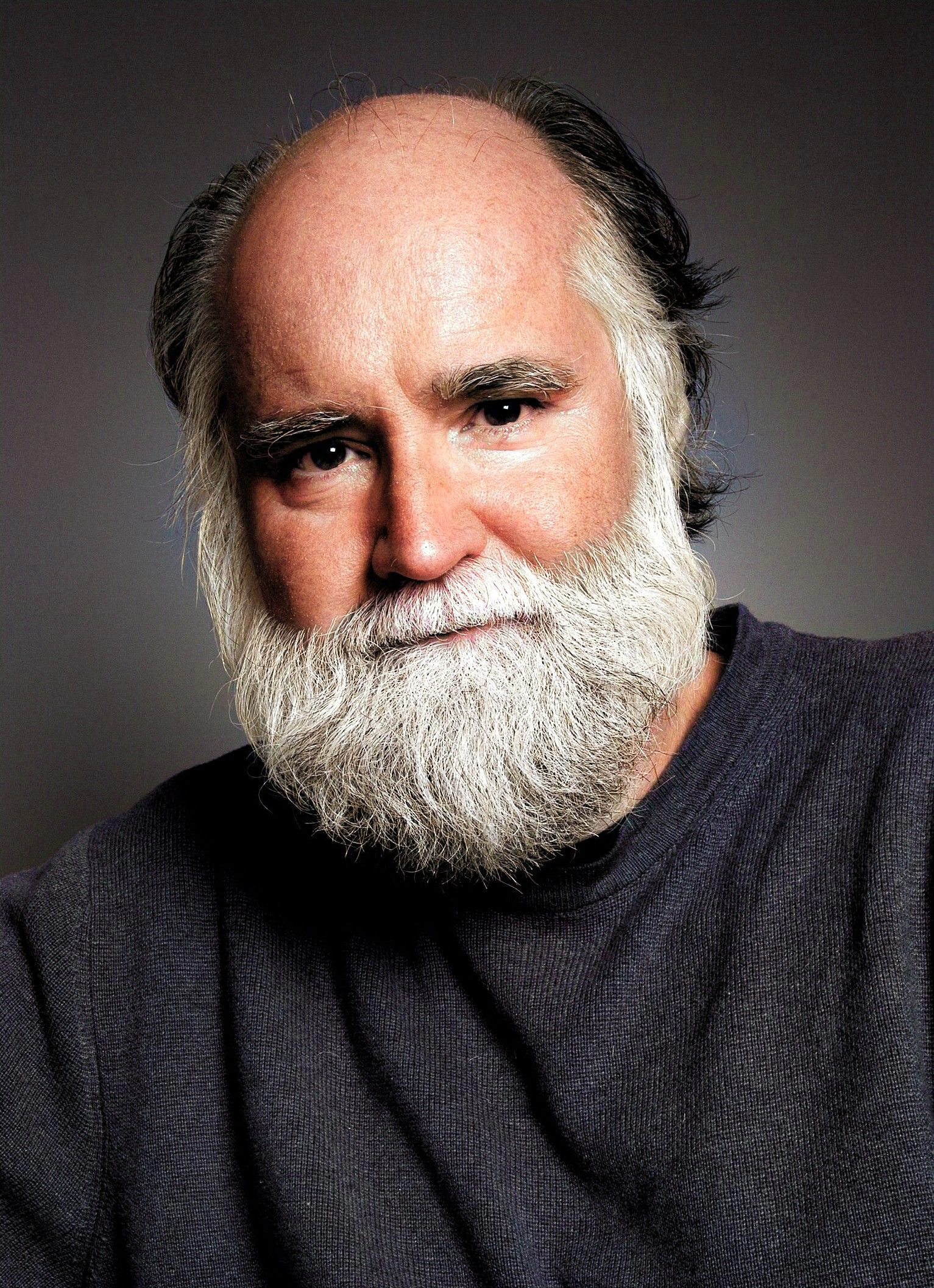
| 8 Quotes | |
| Occup. | Novelist |
| From | USA |
| Born | January 7, 1957 Rochester, New York, U.S. |
| Age | 69 years |
| Cite | |
Citation Formats
APA Style (7th ed.)
Nicholson baker biography, facts and quotes. (2026, February 11). FixQuotes. https://fixquotes.com/authors/nicholson-baker/
Chicago Style
"Nicholson Baker biography, facts and quotes." FixQuotes. February 11, 2026. https://fixquotes.com/authors/nicholson-baker/.
MLA Style (9th ed.)
"Nicholson Baker biography, facts and quotes." FixQuotes, 11 Feb. 2026, https://fixquotes.com/authors/nicholson-baker/. Accessed 6 Mar. 2026.
Early Life and Education
Nicholson Baker was born in 1957 in Rochester, New York, and grew up in an environment that nurtured close attention to music, language, and the everyday objects that later filled his work. He studied music at the Eastman School of Music in Rochester before completing a degree at Haverford College, where his interests broadened from composition and practice to the mechanics of prose and the ethics of attention. The habit of noticing small details took hold early, and by the time he graduated he had begun writing the essays and stories that would become his signature.Emergence as a Novelist
Baker became widely known with The Mezzanine (1988), a slim, exuberant novel that takes place over a single lunch hour and turns an escalator ride into a meditation on memory, technology, packaging, office life, and childhood. Its cascades of footnotes and precisely observed digressions made his style instantly recognizable. Room Temperature (1990) followed, an intimate novel of domestic bliss and associative thought, in which a father feeding his infant daughter finds new meanings in household objects and the rituals of caretaking. These early books established Baker as an anatomist of ordinary life, someone who could extract wonder and comedy from a plastic straw or a shoelace tip.Vox (1992), a novel in the form of a phone call between two strangers, ventured unabashedly into erotic talk and became a popular sensation. Years later, during the Clinton-Lewinsky scandal, the book resurfaced in headlines when reports noted that Monica Lewinsky had given President Bill Clinton a copy, and the association magnified Baker's profile far beyond literary circles. The Fermata (1994) extended his exploration of desire and privacy into a fantastical premise about stopping time. He also wrote a playful, affectionate work of criticism, U and I (1991), a self-conscious tribute to the central presence of John Updike in his literary imagination; Updike's example of stylistic finesse and attention to the commonplace remained a landmark influence.
Essays and Nonfiction
Alongside fiction, Baker cultivated a parallel career in essays, reviews, and investigative nonfiction. The Size of Thoughts (1996) collected his essays on language, technology, and aesthetics. With Double Fold: Libraries and the Assault on Paper (2001), he turned to full-scale reportage, arguing that libraries were discarding bound newspapers and books in favor of brittle microfilm and unstable digital surrogates. The book provoked intense debate within the library and archival communities and won the National Book Critics Circle Award for Nonfiction. His later essay collection The Way the World Works (2012) gathered decades of shorter pieces.Human Smoke (2008) assembled a collage of contemporaneous notes, speeches, dispatches, and diary entries from the years leading to World War II and up to 1941, illuminating pacifist arguments and asking readers to reconsider inevitability and moral certainty in wartime. Baseless (2020) chronicled his multi-year pursuit, through Freedom of Information Act requests and archival spadework, of rumors and documents related to Cold War biological-weapons programs, presenting a personal and procedural record of historical inquiry.
Preservation and the American Newspaper Repository
Baker's advocacy for the survival of physical documents took tangible form in the American Newspaper Repository, which he established in the late 1990s to rescue bound newspaper volumes that were being deaccessioned. With the collaboration of his wife, Margaret Brentano, he preserved thousands of pages of richly printed news, illustrations, and advertisements that would otherwise have been lost. The project culminated in a major transfer of the collection to Duke University, ensuring long-term access for scholars. From this work came The World on Sunday, a volume that he and Brentano assembled to showcase the graphic ingenuity of early-twentieth-century newspaper pages associated with Joseph Pulitzer's New York World, bringing a vanished visual culture back into view.Later Fiction and Experiments
Baker's fiction continued to shift form and focus. A Box of Matches (2003) offered quiet mornings with a man who wakes early to light a fire and think about life's minute textures. Checkpoint (2004), a conversation-novel about a man consumed by anger toward President George W. Bush, sparked controversy for its depiction of political despair. The Anthologist (2009) introduced Paul Chowder, a struggling poet compiling an anthology while meditating on meter, rhyme, and the place of poetry in a cash-driven world; Traveling Sprinkler (2013) returned to Chowder as he drifted between songwriting, love, and political reflection. House of Holes (2011) embraced the comic and surreal in an erotic fantasia that further tested the limits of decorum and imagination.Substitute (2016) documented Baker's month-long service as a substitute teacher in Maine public schools, providing a granular portrait of the classroom as it is lived by children and adults. The book extended his long-standing curiosity about work, systems, and the moral claims we make on one another in ordinary institutions.
Style, Reception, and Debate
Baker's prose is known for its micro-attentiveness, the way it lingers over a perforation on a ticket stub or the mechanism inside a stapler, and then widens into meditations about memory, repair, and the ethics of preservation. Admirers have praised his ability to dignify small experiences and to reclaim objects endangered by speed, digitization, and planned obsolescence. At the same time, his erotic novels and certain political books drew outrage or skepticism from reviewers and commentators, ensuring that his career has unfolded amid debate. The controversies around Double Fold and Human Smoke placed him in conversation with librarians, historians, and fellow writers about the boundaries between advocacy, documentation, and interpretation.Baker has contributed essays and reviews to major American magazines and journals, including The New York Review of Books and Harper's Magazine, elaborating a body of work that crosses genres without losing its core concerns: attentiveness, care for material culture, and the search for humane alternatives to destruction.
Personal Life
Margaret Brentano has been an essential collaborator and partner in Baker's preservation efforts and publishing projects, from the American Newspaper Repository to The World on Sunday. The couple has made their home in Maine, where Baker's routines of writing, research, and family life have often supplied the raw material for his books. He has two children, and his family life occasionally surfaces in his work in ways both protective and affectionate; The Everlasting Story of Nory (1998) is a tender, eccentric tribute to a child's way of seeing.Legacy
Nicholson Baker's legacy is defined by a willingness to sit with the overlooked: the rising hum of an escalator, the texture of eighteenth-century paper, the clatter of a classroom, the contested fact in a government file. He is a novelist who made the footnote a stage, a nonfiction writer who turned archival rescue into a public act, and a critic whose devotion to John Updike marked a lineage of meticulous observation. Through collaborations with Margaret Brentano and encounters, direct and indirect, with figures ranging from Joseph Pulitzer to President Bill Clinton and Monica Lewinsky, Baker's work has remained entangled with the public sphere while preserving a private, humane scale. His books continue to invite readers to pay close attention and to think carefully about what we keep, what we discard, and why the smallest things can matter most.Our collection contains 8 quotes written by Nicholson, under the main topics: Witty One-Liners - Wisdom - Writing - Book - Loneliness.
Nicholson Baker Famous Works
- 2013 Traveling Sprinkler (Novel)
- 2009 The Anthologist (Novel)
- 2004 Checkpoint (Novel)
- 2003 A Box of Matches (Novel)
- 1998 The Everlasting Story of Nory (Novel)
- 1994 The Fermata (Novel)
- 1992 Vox (Novel)
- 1990 Room Temperature (Novel)
- 1988 The Mezzanine (Novel)
Source / external links