
Nick Clooney Biography Quotes 30 Report mistakes
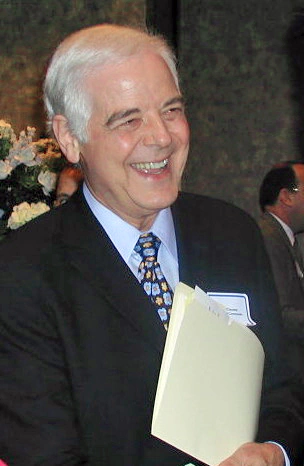
Attr: Dr. Blofeld, CC BY-SA 3.0
| 30 Quotes | |
| Born as | Nicholas Joseph Clooney |
| Occup. | Politician |
| From | USA |
| Born | January 13, 1934 Maysville, Kentucky, USA |
| Age | 92 years |
| Cite | |
Citation Formats
APA Style (7th ed.)
Nick clooney biography, facts and quotes. (2026, February 11). FixQuotes. https://fixquotes.com/authors/nick-clooney/
Chicago Style
"Nick Clooney biography, facts and quotes." FixQuotes. February 11, 2026. https://fixquotes.com/authors/nick-clooney/.
MLA Style (9th ed.)
"Nick Clooney biography, facts and quotes." FixQuotes, 11 Feb. 2026, https://fixquotes.com/authors/nick-clooney/. Accessed 26 Mar. 2026.
Early Life and Background
Nicholas Joseph Clooney was born on January 13, 1934, in Maysville, Kentucky, a river town whose courthouse politics, radio voices, and family reputations traveled faster than the Ohio. He grew up in a large, tightly knit Irish American Catholic clan that treated storytelling as both entertainment and social currency. The Clooneys were not aristocrats of wealth, but they were aristocrats of familiarity - the kind of family that learned early how public life works because neighbors expected them to be seen, heard, and accountable.That early environment trained him in a particular American skill: translating private feeling into a public register. Clooney saw how reputations rise and fall on tone and perceived decency as much as on facts. The boy who learned to read a room in Maysville later made a career reading a city, then a state, and finally a country in moments of contention. Long before he ran for office, he was drawn to the civic rituals that define belonging - parades, campaigns, church suppers, radio remotes - and to the question of what a community owes its most vulnerable people.
Education and Formative Influences
Clooney attended local schools in Kentucky and entered adulthood during the early Cold War, when the language of American confidence sat beside anxieties about conformity, propaganda, and nuclear risk. He moved into broadcasting young, learning the discipline of deadlines and the ethics of on-air persuasion. The microphone became his apprenticeship in democracy: it punished vagueness, demanded clarity, and offered instant feedback from listeners who felt personally addressed - conditions that later shaped his political instincts and his preference for plainspoken argument over ideological performance.Career, Major Works, and Turning Points
Clooney built his public identity primarily as a broadcast journalist and television host in Cincinnati, becoming a familiar regional figure through news and talk programming before pivoting into electoral politics. In 2004 he ran as the Democratic nominee for Congress in Ohio's 2nd District, a race that placed him on a national map in the polarized aftermath of 9/11 and the invasion of Iraq; he lost to incumbent Rob Portman, but the campaign clarified his role as a civic explainer - a candidate who approached politics as an extension of journalism's duty to interrogate power. In later years he remained an active commentator and occasional writer and speaker, and his family life - including his relationship to his son, actor and filmmaker George Clooney - kept him adjacent to cultural power while he continued to define himself through public issues rather than celebrity.Philosophy, Style, and Themes
Clooney's worldview was shaped by a broadcaster's suspicion of abstraction. He tended to argue from institutional memory - how democracies fracture, how economies destabilize, how fear reshapes citizens into something smaller than themselves. In his commentary, history functioned less as nostalgia than as warning: “When runaway inflation and bank failures struck in Germany in the 1920s, the middle class was destroyed, which led directly to the rise of the Nazis”. The sentence is not merely historical recall; it reveals his psychological center of gravity - a conviction that ordinary people's security is the thin line between civic pluralism and political extremism.His style was direct, moral, and resistant to the seductions of righteous brutality. He rejected the idea that democratic states can preserve themselves by mirroring the methods of their enemies: “We didn't defeat the Nazis by becoming Nazis”. That theme - democratic restraint as strength rather than weakness - recurs in his skepticism toward grand schemes of remaking other societies by force: “No matter how many troops we have in place or how long they stay, we cannot impose a parliamentary democracy there any more than the insurgents can impose a theocracy”. Taken together, these lines show a temperament that feared moral corrosion as much as military failure: he worried about what power does to the people who wield it, and he preferred achievable reforms rooted in civic consent.
Legacy and Influence
Nick Clooney's enduring significance lies in the bridge he built between Midwestern broadcasting and retail politics - a model of the public intellectual as neighbor, not celebrity. He did not leave behind a single canonical book or legislative record; instead, his legacy is tonal and civic: an insistence that historical literacy, institutional humility, and moral limits matter in a democracy. His 2004 campaign, though unsuccessful, remains a snapshot of an era when local media figures still tried to convert public trust into public service, and when debates over war, security, and democratic identity were fought as much over character as over policy.Our collection contains 30 quotes written by Nick, under the main topics: Ethics & Morality - Music - Freedom - Resilience - Kindness.
Other people related to Nick: Miguel Ferrer (Actor), Rosemary Clooney (Musician)
Source / external links