
Nick Faldo Biography Quotes 4 Report mistakes
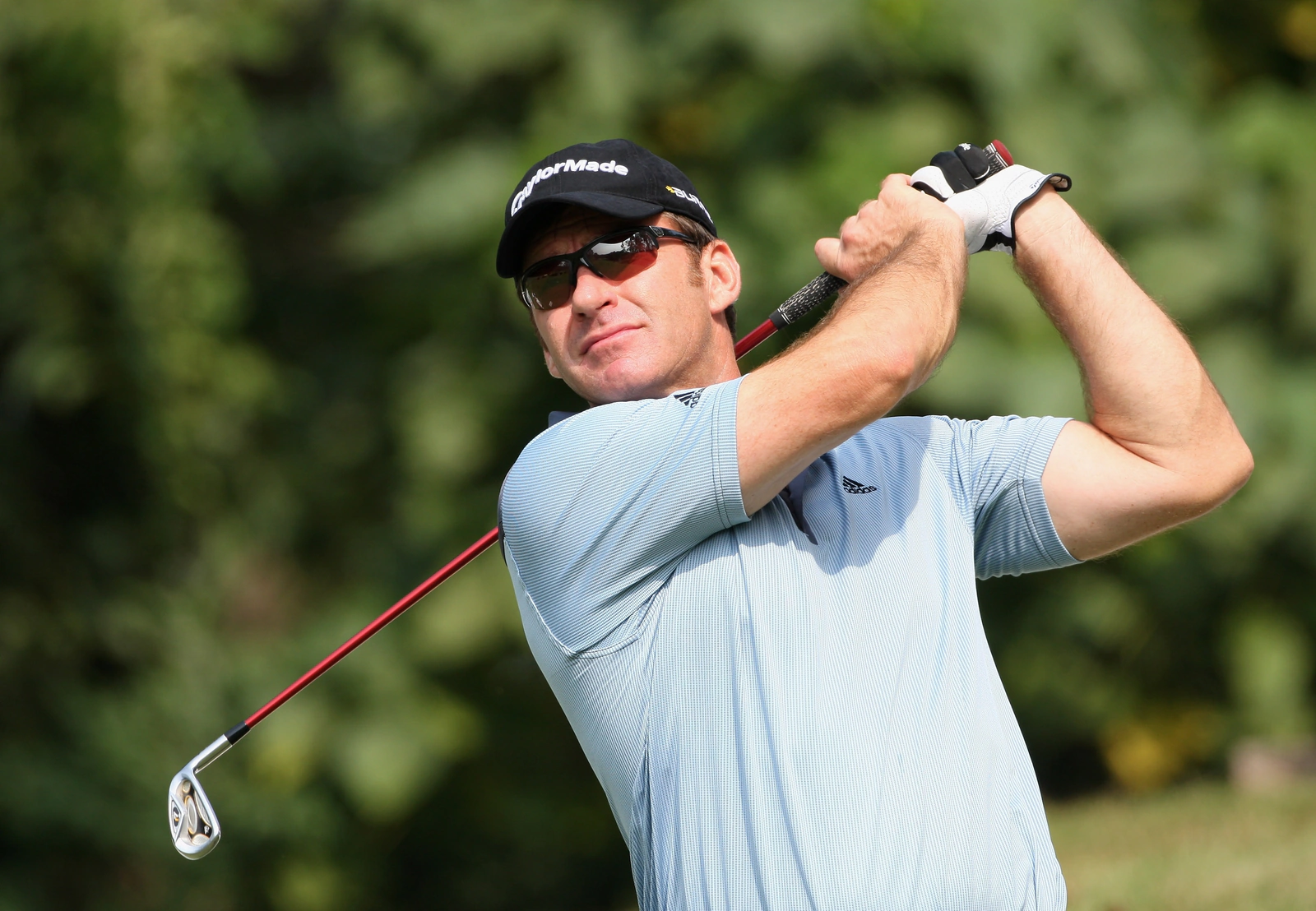
| 4 Quotes | |
| Born as | Nicholas Alexander Faldo |
| Occup. | Athlete |
| From | England |
| Born | July 18, 1957 |
| Age | 68 years |
| Cite | |
Citation Formats
APA Style (7th ed.)
Nick faldo biography, facts and quotes. (2026, February 25). FixQuotes. https://fixquotes.com/authors/nick-faldo/
Chicago Style
"Nick Faldo biography, facts and quotes." FixQuotes. February 25, 2026. https://fixquotes.com/authors/nick-faldo/.
MLA Style (9th ed.)
"Nick Faldo biography, facts and quotes." FixQuotes, 25 Feb. 2026, https://fixquotes.com/authors/nick-faldo/. Accessed 6 Mar. 2026.
Early Life and Background
Nicholas Alexander Faldo was born on July 18, 1957, in Welwyn Garden City, Hertfordshire, England, and grew up in the postwar, suburb-to-sports Britain that treated golf as both aspiration and apprenticeship. The era mattered: British golf in the 1960s and early 1970s still drew much of its myth from the Open Championship and from links weather that punished vanity. Faldo absorbed that worldview early, learning that reputation was made less by flourish than by surviving bad bounces and worse wind.
A pivotal childhood image often cited is his viewing of Jack Nicklaus on television at the 1971 Open at Royal Birkdale, which turned golf from pastime into vocation. That conversion shaped his inner life: he became a boy with a private target, willing to be monotonous in practice because the game promised a measurable ladder out of ordinariness. In a sport where temperament is destiny, he began building a temperament first.
Education and Formative Influences
Faldo attended school in Hertfordshire and, like many elite English golfers of his generation, matured through club golf and national amateur pathways rather than a U.S. collegiate pipeline. His formative influences were less academic than technical and psychological: observation of champions, apprenticeship to range hours, and an early understanding that elite golf was a craft requiring reconstruction when talent plateaued. That willingness to be remade - to treat identity as adjustable - would become his competitive signature.
Career, Major Works, and Turning Points
Turning professional in 1976, Faldo rose through the European Tour and won his first major at the 1987 Open Championship at Muirfield, announcing a new British standard of precision. The decisive turning point was his mid-1980s swing overhaul with coach David Leadbetter, a radical reset undertaken in public that cost short-term results but built repeatability under pressure. The major record followed: Masters victories in 1989, 1990, and 1996, and Open titles again in 1990 and 1992 - six majors across the most competitive era of globalized golf, when American stars and European depth forced excellence to be portable. His 1996 Masters win, sealed when Greg Norman unraveled, was less theft than proof of Faldo's governing trait: he did not flinch when the tournament turned into a test of nerve. After his peak, he extended his public career through Ryder Cup leadership (including captaining Europe in 2008), course design work, youth development through the Faldo Series, and a prominent broadcasting role that translated his analytic mind to television.
Philosophy, Style, and Themes
Faldo's golf was built on engineering and self-command. He stripped motion down to repeatable positions, trusted disciplined pre-shot routines, and aimed for the part of the green that made bogey unlikely even when birdie was possible. He could sound blunt in assessment, but the bluntness reflected a professional morality: sentimentality was not strategy. Even in small remarks he revealed a habit of turning conditions into instruction; “When it blows here, even the seagulls walk”. is not just a joke about coastal weather, but a worldview in which the environment is an opponent to be respected, planned for, and outlasted.
That same temperament shaped his public persona - sometimes sharp, sometimes disarmingly comic - as he negotiated fame, scrutiny, and private turbulence. His quip, “I would like to thank the press from the heart of my bottom”. , shows a defensive wit that kept critics at arm's length while acknowledging how intensely he was watched. His personal life, including multiple marriages and divorces, also entered the narrative of the man behind the method; “We were happily married for eight months. Unfortunately, we were married for four and a half years”. reads like gallows humor, but it also suggests a competitor who processed pain through control of language - compressing complexity into a line he could master, when the situation itself could not be mastered.
Legacy and Influence
Faldo's enduring influence is the model he established for modern European greatness: rebuildable technique, strategic conservatism under pressure, and a near-scientific respect for preparation. He helped normalize the idea that a champion could be manufactured as much as discovered, inspiring later players to treat swing changes and mental training as legitimate mid-career reinvention rather than desperation. His majors remain a benchmark for English golf, his Ryder Cup presence helped define an era of European confidence, and his post-competition work in broadcasting and junior development extended his central message: talent opens the door, but structure keeps you inside when the wind rises.
Our collection contains 4 quotes written by Nick, under the main topics: Witty One-Liners - Sports - Divorce.
Other people related to Nick: Raymond Floyd (Athlete), Nick Price (Athlete), Tom Kite (Athlete), Bernhard Langer (Athlete)
Source / external links