
Nicolas Chamfort Biography Quotes 34 Report mistakes
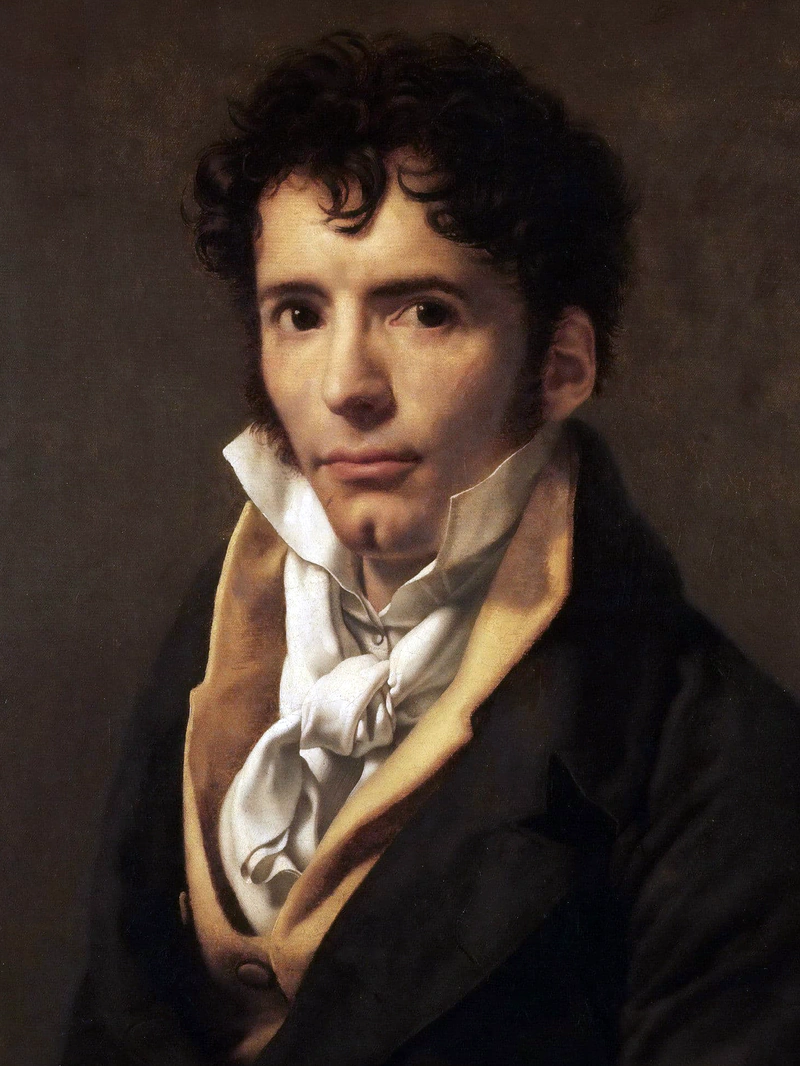
| 34 Quotes | |
| Born as | Sebastien-Roch Nicolas |
| Occup. | Writer |
| From | France |
| Born | April 6, 1741 Clermont-Ferrand, France |
| Died | April 13, 1794 Paris, France |
| Cause | Suicide |
| Aged | 53 years |
| Cite | |
Citation Formats
APA Style (7th ed.)
Nicolas chamfort biography, facts and quotes. (2026, February 11). FixQuotes. https://fixquotes.com/authors/nicolas-chamfort/
Chicago Style
"Nicolas Chamfort biography, facts and quotes." FixQuotes. February 11, 2026. https://fixquotes.com/authors/nicolas-chamfort/.
MLA Style (9th ed.)
"Nicolas Chamfort biography, facts and quotes." FixQuotes, 11 Feb. 2026, https://fixquotes.com/authors/nicolas-chamfort/. Accessed 31 Mar. 2026.
Early Life and Background
Sebastien-Roch Nicolas, later celebrated under the name Nicolas Chamfort, was born on April 6, 1741, in Clermont-Ferrand, in the Auvergne, a province where Catholic discipline and provincial hierarchy still shaped daily life. His origins were clouded and socially fraught: he was widely believed to be illegitimate, and the suspicion that he had been born into a world that would always ask for credentials haunted his posture in salons as much as his later republican severity. In an ancien regime that measured worth by lineage, the young Chamfort learned early that a sharpened mind could be both weapon and passport.He grew up amid the contradictions of mid-18th-century France - a kingdom prosperous in appearance yet brittle with inequality, a culture that adored wit while policing status. That tension became his native element. Even before politics made him a public man, he read society as a system of appetites and masks, and he cultivated the double talent that would define him: the ability to please as a man of letters and to despise the very game he played.
Education and Formative Influences
Chamfort was educated in Paris, benefiting from the citys institutional ladder for gifted outsiders, and he quickly absorbed the rhetoric of the Enlightenment - clarity, skepticism, moral accounting - while also mastering the social choreography of the capital. The moralists (La Rochefoucauld, Pascal) gave him a model for compressed truth; the philosophes supplied a new language of reform and indignation; and the theater taught him timing. Parisian literary life, with its patronage and its humiliations, trained his eye for the petty mechanisms by which reputations were built and broken, and helped turn a sensitive, ambitious temperament into a writer of controlled ferocity.Career, Major Works, and Turning Points
He entered the world of letters through verse, theater, and salon journalism, gaining notice in the 1760s and 1770s, and winning the kind of recognition that came with proximity to power. His comedy La Jeune Indienne and later tragedies and essays placed him in the orbit of the Academie francaise, to which he was elected in 1781, a triumph that also sharpened his contempt for institutional vanity. Yet Chamforts real masterpiece was not a single play but a voice - the aphorist who anatomized self-interest with surgical brevity. The Revolution transformed him from a mordant observer into an engaged partisan: he aligned himself with the early revolutionary cause, worked in administrative and propagandistic roles, and moved among the circles where rhetoric became policy and policy became blood. As the Revolution radicalized, the same lucidity that had made him useful made him endangered. Arrest and disillusion followed, and in 1793 he attempted suicide; the injuries never fully healed, and he died in Paris on April 13, 1794, as the Terror still held the city in its grip.Philosophy, Style, and Themes
Chamforts thought begins with a moral diagnosis: society is a marketplace where people trade illusions for advantage, then punish anyone who speaks too plainly about the exchange. His style - aphorism, portrait, epigram - is not ornament but strategy, a way to smuggle truth past self-defense. He believed hypocrisy was not a personal flaw but a social technology, and he wrote as someone who had seen both sides of the salon smile: its warmth and its trap. His recurring subjects are dependence, hunger (literal and figurative), the cost of reputation, and the grim comedy of institutions that call themselves virtuous while thriving on humiliation.Psychologically, his pessimism is inseparable from his pride. He can sound like a man who demanded greatness from life and found mostly bargaining and bad faith. “There is a melancholy that stems from greatness”. That line reads less like a pose than an admission that lofty standards can become a wound: the sharper the ideal, the more brutal the compromise. His suspicion of collective judgment is equally personal and political, forged in a world where a whisper could decide a career and later in a Revolution where crowds became tribunals: “There are certain times when public opinion is the worst of all opinions”. And yet he did not counsel retreat into pure thought. He distrusted self-scrutiny when it became paralysis, insisting that action was a kind of salvation from inward corrosion: “Contemplation often makes life miserable. We should act more, think less, and stop watching ourselves live”. The tension between these impulses - to judge ruthlessly and to live decisively - gives his maxims their bite and their sadness.
Legacy and Influence
Chamfort endures as one of Frances great moralists at the hinge between Enlightenment and Revolution - a writer whose fragments capture what long narratives often miss: the microeconomy of motives. His posthumous Maximes and pensees became a quarry for later aphorists and skeptics, admired for their compression and feared for their accuracy; they influenced the tradition that runs through 19th-century French irony and into modern cynicism about politics and celebrity. He remains compelling because he is not simply a satirist but a witness: a man who tried to reconcile intellectual honesty with public life, and whose failure - ending in physical suffering and historical terror - still reads as an indictment of any era that confuses virtue with applause.Our collection contains 34 quotes written by Nicolas, under the main topics: Witty One-Liners - Ethics & Morality - Truth - Wisdom - Friendship.
Nicolas Chamfort Famous Works
- 1795 Maximes et pensées, caractères et anecdotes (Collection)