
Niels Bohr Biography Quotes 22 Report mistakes
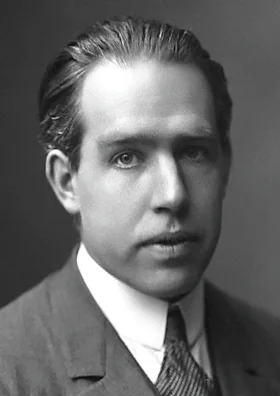
| 22 Quotes | |
| Occup. | Physicist |
| From | Denmark |
| Born | October 7, 1885 |
| Died | November 18, 1962 |
| Aged | 77 years |
| Cite | |
Citation Formats
APA Style (7th ed.)
Niels bohr biography, facts and quotes. (2026, February 2). FixQuotes. https://fixquotes.com/authors/niels-bohr/
Chicago Style
"Niels Bohr biography, facts and quotes." FixQuotes. February 2, 2026. https://fixquotes.com/authors/niels-bohr/.
MLA Style (9th ed.)
"Niels Bohr biography, facts and quotes." FixQuotes, 2 Feb. 2026, https://fixquotes.com/authors/niels-bohr/. Accessed 22 Mar. 2026.
Early Life and Background
Niels Henrik David Bohr was born on 1885-10-07 in Copenhagen, Denmark, into a household where scholarship and public duty were everyday expectations. His father, Christian Bohr, was a respected physiologist at the University of Copenhagen; his mother, Ellen Adler Bohr, came from a prominent Jewish Danish family whose cultural confidence and civic connections gave the home a cosmopolitan cast. The Bohr brothers grew up in a city that was small by imperial standards but intellectually ambitious, shaped by Denmark's late-19th-century modernization and its memory of geopolitical loss - conditions that encouraged rigor without triumphalism.The family apartment near the university functioned as an informal salon where science, literature, and politics overlapped. That environment fostered in Bohr a lifelong habit: thinking in conversation. Even as a boy he was drawn less to solitary display than to the social testing of ideas, a trait that later defined his institute and his style of physics. Denmark's relative neutrality and openness also helped form his instinct that knowledge should circulate - a moral stance that would harden after two world wars made secrecy both a weapon and a temptation.
Education and Formative Influences
Bohr studied physics at the University of Copenhagen, completing a doctoral dissertation in 1911 on the electron theory of metals, work that showed his early willingness to tackle problems where theory and experiment did not yet align cleanly. A crucial turning point came with his travels to Britain: first to Cambridge, where his encounter with J.J. Thomson disappointed him, then to Manchester to work with Ernest Rutherford, whose nuclear model of the atom electrified him. Rutherford's frank empiricism and the new picture of a tiny nucleus surrounded by electrons confronted Bohr with a basic crisis - classical physics predicted atomic collapse - and taught him that revolutionary theory must remain anchored to the hard grain of measurement.Career, Major Works, and Turning Points
In 1913 Bohr published his trilogy "On the Constitution of Atoms and Molecules", proposing quantized electron orbits and explaining the hydrogen spectrum, a daring hybrid of Rutherford's nucleus and Planck's quantum. He married Margrethe Norlund in 1912, and their partnership became central to his working life, with Margrethe serving as editor, critic, and stabilizing presence through decades of intellectual and political strain. Returning to Copenhagen, he became professor and then founded the Institute for Theoretical Physics (opened 1921, later the Niels Bohr Institute), which became a world center for the new quantum theory. In the 1920s he developed the principle of complementarity and his interpretation of quantum mechanics in dialogue and debate with Heisenberg, Pauli, Born, and Schrodinger, while his famous exchanges with Einstein culminated in the 1927 Solvay Conference and continued for years. During World War II, after Denmark's occupation, Bohr escaped in 1943 to Sweden and then to Britain and the United States, contributing as a consultant to Allied atomic work while urging international control of nuclear weapons; he returned to Denmark after the war to rebuild scientific life and advocate openness in the nuclear age.Philosophy, Style, and Themes
Bohr's science was inseparable from a philosophy of description: he insisted that physics is not a god's-eye inventory of reality but a disciplined account of what can be said under specified conditions. His often-quoted line, “It is wrong to think that the task of physics is to find out how Nature is. Physics concerns what we say about Nature”. , is less a retreat from reality than an ethical and linguistic demand for clarity about the rules of evidence. Complementarity - wave and particle, continuity and discreteness, causal narrative and statistical law - was his attempt to protect empirical knowledge from metaphysical overreach without flattening the strangeness of the quantum world.His psychological signature was patience with paradox and mistrust of premature closure. In seminars he would circle a point from multiple angles, as if trying to hear where language itself began to fail, and he was quick to puncture purely formal reasoning when it outran physical meaning: “No, no, you're not thinking; you're just being logical”. The shock of quantum mechanics became for him not a scandal to be explained away but a training in intellectual humility - “If quantum mechanics hasn't profoundly shocked you, you haven't understood it yet”. That shock was also a method: accept the wound to common sense, then rebuild concepts with stricter attention to experimental arrangements, insisting that the observer and the conditions of observation belong to the story.
Legacy and Influence
Bohr died on 1962-11-18 in Copenhagen, having shaped both the content of modern physics and the culture by which it is made. His 1913 atomic model was soon surpassed in detail, but it opened the path to quantum theory by showing how quantization could rescue atomic stability and explain spectra; his later interpretive work set the terms of debate for generations, even among critics who defined themselves against the "Copenhagen interpretation". Equally enduring was his institution-building: Copenhagen became a pilgrimage site where ideas were forged through argument, hospitality, and relentless conceptual self-critique. In the political aftermath of Hiroshima, he tried - with limited success - to translate scientific internationalism into policy, warning that nuclear knowledge could not be fenced indefinitely and that democracy needed openness to survive. His name now attaches to fundamental concepts, prizes, and institutes, but his deeper inheritance is a stance: to treat the hardest contradictions not as failures but as invitations to refine what we mean by explanation itself.Our collection contains 22 quotes written by Niels, under the main topics: Witty One-Liners - Truth - Wisdom - Freedom - Reason & Logic.
Other people related to Niels: Enrico Fermi (Physicist), Edward Teller (Physicist), Werner Heisenberg (Physicist), Max Delbruck (Scientist), James Rainwater (Scientist), Felix Bloch (Scientist), Walther Bothe (Physicist), Johannes Stark (Physicist), Abraham Pais (Scientist)
Niels Bohr Famous Works
- 1958 Atomic Physics and Human Knowledge (Book)
- 1922 The Theory of Spectra and Atomic Constitution (Book)
- 1913 On the Constitution of Atoms and Molecules (Book)
Source / external links