
Nikki Giovanni Biography Quotes 18 Report mistakes
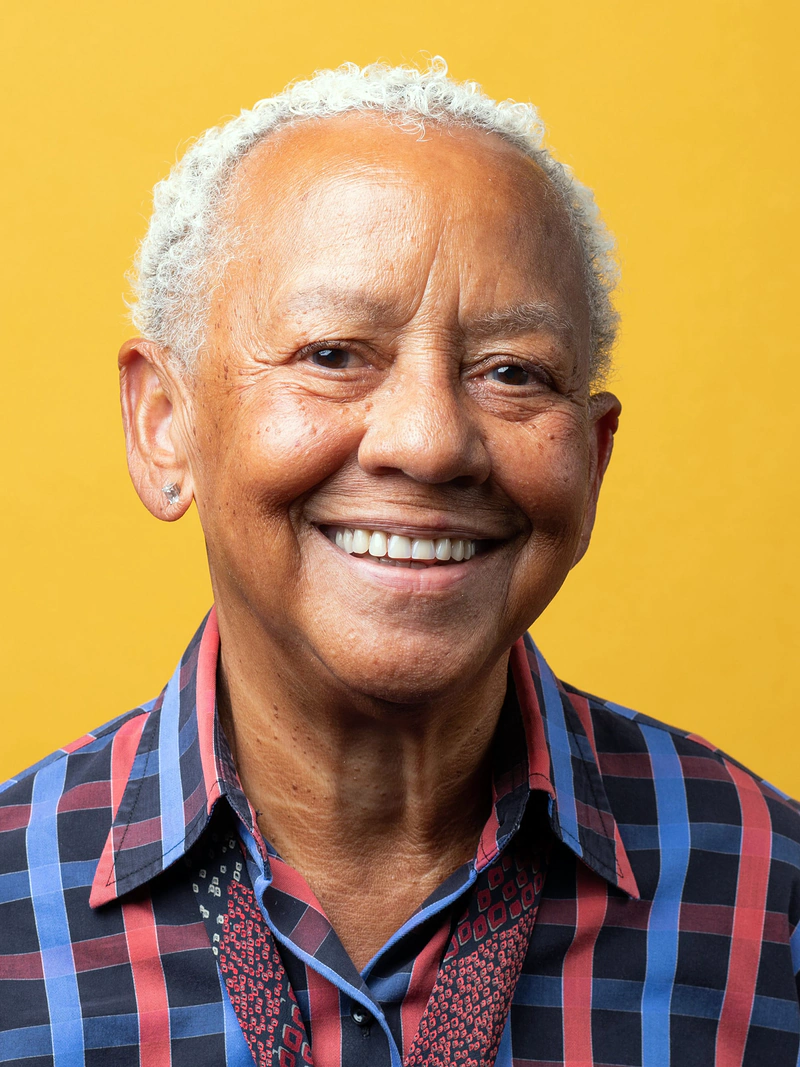
Attr: Appalachian Today
| 18 Quotes | |
| Born as | Yolande Cornelia Giovanni Jr. |
| Occup. | Poet |
| From | USA |
| Born | June 7, 1943 Knoxville, Tennessee |
| Age | 82 years |
| Cite | |
Citation Formats
APA Style (7th ed.)
Nikki giovanni biography, facts and quotes. (2026, February 11). FixQuotes. https://fixquotes.com/authors/nikki-giovanni/
Chicago Style
"Nikki Giovanni biography, facts and quotes." FixQuotes. February 11, 2026. https://fixquotes.com/authors/nikki-giovanni/.
MLA Style (9th ed.)
"Nikki Giovanni biography, facts and quotes." FixQuotes, 11 Feb. 2026, https://fixquotes.com/authors/nikki-giovanni/. Accessed 26 Mar. 2026.
Early Life and Background
Yolande Cornelia Giovanni Jr. was born on June 7, 1943, in Knoxville, Tennessee, into a Black working- and middle-class family shaped by the Great Migration and the pressure of Jim Crow. She was raised largely in Cincinnati, Ohio, but Knoxville - especially her grandparents home on Mulvaney Street - remained her emotional north star, a place where dignity was practiced as daily discipline. Her father, Jones "Gus" Giovanni, served in the U.S. Army; her mother, Yolande Cornelia Sr., held the household together with a pragmatism that would later surface in Giovanni's unsentimental tenderness.Giovanni came of age as television carried the modern civil rights movement into living rooms and as Cold War patriotism collided with the reality of segregation. Those contradictions trained her early ear for public speech - what the nation said about itself versus what Black families knew. In family stories, church cadences, and the watchfulness required of Black childhood, she learned that voice is both shield and instrument, and that comedy can be a form of survival rather than escape.
Education and Formative Influences
After attending Fisk University in Nashville, Giovanni graduated in 1967 with a degree in history; she had earlier been dismissed and later readmitted, an early sign of her refusal to perform respectability for institutions. Fisk placed her near the nerve center of Black student activism and the aftershocks of sit-ins, Freedom Rides, and the assassinations that altered the decade's emotional weather. She studied the long arc behind the headlines, absorbing the Black Arts Movement's insistence that art should be socially accountable while also learning, from campus life and her own restlessness, how easily movements can harden into orthodoxies.Career, Major Works, and Turning Points
Giovanni emerged as a defining poet-voice of the late 1960s and 1970s, publishing the self-produced chapbook Black Feeling, Black Talk (1968) and following with Black Judgement (1968) and Re: Creation (1970), books that blended incantation, streetwise critique, and love poems that refused to separate private desire from public struggle. Her celebrity expanded beyond print through recordings and performances, and she became one of the most widely read Black poets of her generation, moving between polemic and lullaby without apology. Later collections such as Those Who Ride the Night Winds (1983), Love Poems (1997), Blues: For All the Changes (1999), and Bicycles: Love Poems (2009) traced a widening emotional palette, while her children's books and essays helped carry Black cultural memory to new readers. Across decades she also taught - most prominently at Virginia Tech - and her campus presence took on additional gravity after the 2007 shooting, when her public words helped frame mourning without surrender.Philosophy, Style, and Themes
Giovanni's style is built on clarity, breath, and the authority of direct address: poems that sound spoken because they are designed to meet an audience where it lives. She distrusts sanctimony and loves the quick turn of humor, but the humor is rarely decorative; it is a method for staying human inside political rage. Her early work often speaks from the collective "we", pressing for Black self-determination, while her later work leans into witness and caretaking - how to keep feeling alive after the slogans fade. The through-line is intimacy as strategy: a belief that the revolution, if it is real, must be able to cook, cradle, flirt, and forgive.Her inner life, as it appears on the page, is governed less by purity than by responsibility and risk. “We love because it's the only true adventure”. In Giovanni's work, love is not a retreat from history but the hardest form of courage, the place where the self can be wounded and therefore must learn ethics. She is similarly impatient with euphemism and delay: “If now isn't a good time for the truth I don't see when we'll get to it”. That line captures her psychological posture - urgency without melodrama - and explains her preference for plain speech that can carry grief, desire, and indictment in the same sentence. Even her teaching ethos fits the pattern, treating art as a public good rather than a gated credential: “Art is not for the cultivated taste. It is to cultivate taste”. Giovanni writes as if the poem is a tool passed hand to hand, meant to sharpen the reader's moral and emotional perception.
Legacy and Influence
Giovanni's enduring influence lies in how she made the poet a recognizable public figure without surrendering the poem to propaganda: she helped define the sound of the Black Arts era, then kept evolving when the era ended. Her work normalized Black domestic tenderness as a serious subject, expanded the possibilities for performance poetry and spoken-word lineage, and provided a model for writer-teachers who insist that literature belongs in ordinary speech. For readers who meet her first through a love poem, a children's book, or a fierce early manifesto, the lesson is consistent: language can be both comfort and demand, and a life in poems can be a life of truth-telling that still makes room for joy.Our collection contains 18 quotes written by Nikki, under the main topics: Witty One-Liners - Motivational - Wisdom - Art - Love.