
Nikola Vaptsarov Biography Quotes 7 Report mistakes
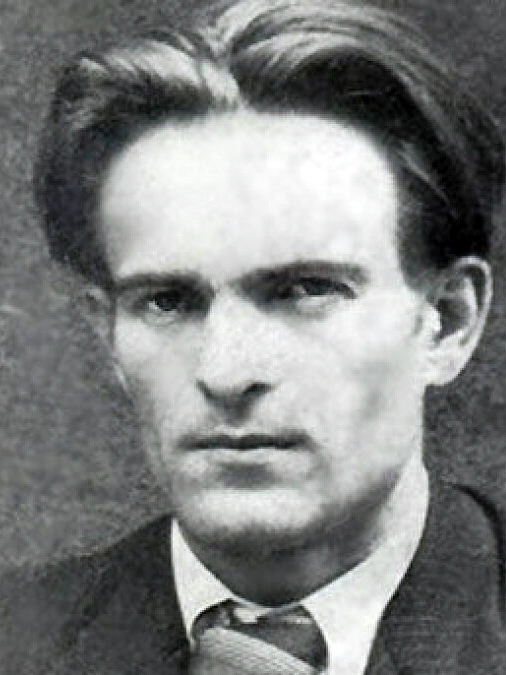
Attr: adebiportal.kz
| 7 Quotes | |
| Born as | Nikola Yonkov Vaptsarov |
| Native name | Никола Вапцаров |
| Occup. | Poet |
| From | Bulgaria |
| Spouse | Boyka Vaptsarova |
| Born | December 7, 1909 Bansko, Principality of Bulgaria |
| Died | July 23, 1942 Sofia, Bulgaria |
| Cause | Execution by firing squad |
| Aged | 32 years |
| Cite | |
Citation Formats
APA Style (7th ed.)
Nikola vaptsarov biography, facts and quotes. (2026, March 12). FixQuotes. https://fixquotes.com/authors/nikola-vaptsarov/
Chicago Style
"Nikola Vaptsarov biography, facts and quotes." FixQuotes. March 12, 2026. https://fixquotes.com/authors/nikola-vaptsarov/.
MLA Style (9th ed.)
"Nikola Vaptsarov biography, facts and quotes." FixQuotes, 12 Mar. 2026, https://fixquotes.com/authors/nikola-vaptsarov/. Accessed 12 Mar. 2026.
Early Life and Background
Nikola Yonkov Vaptsarov was born on December 7, 1909, in Bansko, then a mountain town in the Pirin region of Bulgaria, only recently drawn into the modern Bulgarian state after the Balkan convulsions. He grew up in a household where nationalism, rebellion, and literature met under one roof. His father, Yonko Vaptsarov, had taken part in the Macedonian liberation movement; his mother, Elena, was educated, culturally ambitious, and decisive in shaping her son's reading life. Bansko itself mattered: a place of artisans, teachers, and insurgent memory, where Ottoman afterlives, village discipline, and modern political passions coexisted. Vaptsarov's imagination was formed not in salon culture but in a hard landscape of labor, poverty, and unfinished national questions.That background gave him a double inheritance - idealism and severity. He was born into the generation that came of age after Bulgaria's military defeats and social disappointments, when patriotic myth no longer matched everyday hunger. The emotional tone of his later poetry - tenderness under pressure, belief tested by machinery, hope spoken against catastrophe - can be traced to this setting. He knew early that history was not abstract; it entered the home through stories of conspirators, police, failed uprisings, and exile. Yet the family also nourished music, theater, and books, giving him a sensibility unusually open to lyric feeling. This fusion of rough public life and inward receptivity became the core tension of his art.
Education and Formative Influences
In 1926 Vaptsarov entered the Naval Machine School in Varna, an institution whose discipline, technical curriculum, and maritime horizon left lasting marks on him even though he did not become a career sailor. There he absorbed engines, metal, gauges, and the impersonal rhythm of machines - not as metaphors borrowed from afar, but as daily realities. He read widely, wrote early verse and plays, and encountered socialist ideas in an era when industrial labor, class conflict, and authoritarian politics were reshaping Bulgaria and Europe. After graduating in 1932, he worked intermittently in factories, mills, and rail-related jobs, including technical work near Kocherinovo. These years among stokers, mechanics, and unemployed workers radicalized him more deeply than doctrine alone could have done. His poetic voice matured through direct contact with working people whose lives were structured by exhaustion, humiliation, and stubborn solidarity.Career, Major Works, and Turning Points
Vaptsarov published little in book form during his lifetime, but what he did publish was enough to secure his place in Bulgarian literature. His single completed collection, Motor Songs, appeared in 1940 and immediately stood apart. It brought together poems such as "Factory", "History", "Faith", "Song of Man" and "The Letter", combining industrial imagery with moral urgency and startling intimacy. He wrote dramatic pieces and agitational texts as well, but poetry remained his most concentrated instrument. Politically, he moved into the orbit of the illegal Bulgarian Communist movement during the years of royal authoritarianism and, after 1941, Bulgaria's alignment with the Axis. He became involved in anti-fascist underground activity in Sofia, including support networks and clandestine organizing. Arrested in March 1942, tortured, tried by a military court, and sentenced to death, he was executed by firing squad on July 23, 1942. The turn from worker-poet to martyr was not a legend imposed after the fact; it was the final compression of a life already lived at the intersection of lyric conscience and political risk.Philosophy, Style, and Themes
Vaptsarov's poetry is often described as proletarian, but that label is too thin unless one hears the inward drama beneath it. He was a poet of modernity from below: he did not worship the machine, yet he refused pastoral nostalgia. Engines, furnaces, ships, and factory sirens in his verse are sites where human dignity is threatened and remade. His lines tend to be plainspoken, tensile, and cinematic, with sudden shifts from reportage to confession. What distinguished him from many ideological poets was his refusal to flatten experience into slogans. He wrote about workers not as symbols but as bruised, desiring, contradictory people. Even his revolutionary faith is marked by knowledge of despair, and that is why the poems remain alive outside their original political moment.His psychology appears most clearly where defiance and vulnerability meet. “Though I should perish, life with its brutal claws of steel still would I cherish, still would I cherish!” is not naive optimism but a nearly tragic attachment to existence, spoken by someone who sees violence clearly and chooses love of life anyway. Equally revealing is “Do you remember how within us bit by bit our last hopes were dying out along with our faith in goodness found in the person, in romance, in empty yearning?” Here the romantic self audits its own disillusionment, exposing how sentiment can fail under historical pressure. Yet he never lets disenchantment have the final word. In the death-shadow of resistance, he writes, “Just tell our story simply to those we shall not see, tell those who will replace us - we fought courageously”. That sentence captures his deepest theme: the individual life matters intensely, but it finds meaning in transmission - from comrade to comrade, generation to generation, poem to reader.
Legacy and Influence
After 1944, the new communist state elevated Vaptsarov into an official anti-fascist icon, publishing him widely, memorializing him, and at times simplifying him into a monumental figure. Yet his endurance cannot be explained by state canonization alone, especially after the ideological frameworks that promoted him began to collapse. He remained central because Motor Songs still speaks in a human register broader than doctrine - about labor, humiliation, technological modernity, hope under repression, and the moral cost of action. In Bulgaria he is taught as one of the indispensable twentieth-century poets; internationally he has attracted translators drawn to his compressed intensity and unusual blend of industrial modernism and emotional directness. His life was short, but its shape was complete: provincial child of a contested borderland, technician of the machine age, worker among workers, conspirator under dictatorship, poet executed at thirty-two. What survives is not merely the legend of sacrifice, but a voice that made solidarity sound intimate and made historical struggle feel personal.Our collection contains 7 quotes written by Nikola.
Source / external links