
Nikolai Gogol Biography Quotes 13 Report mistakes
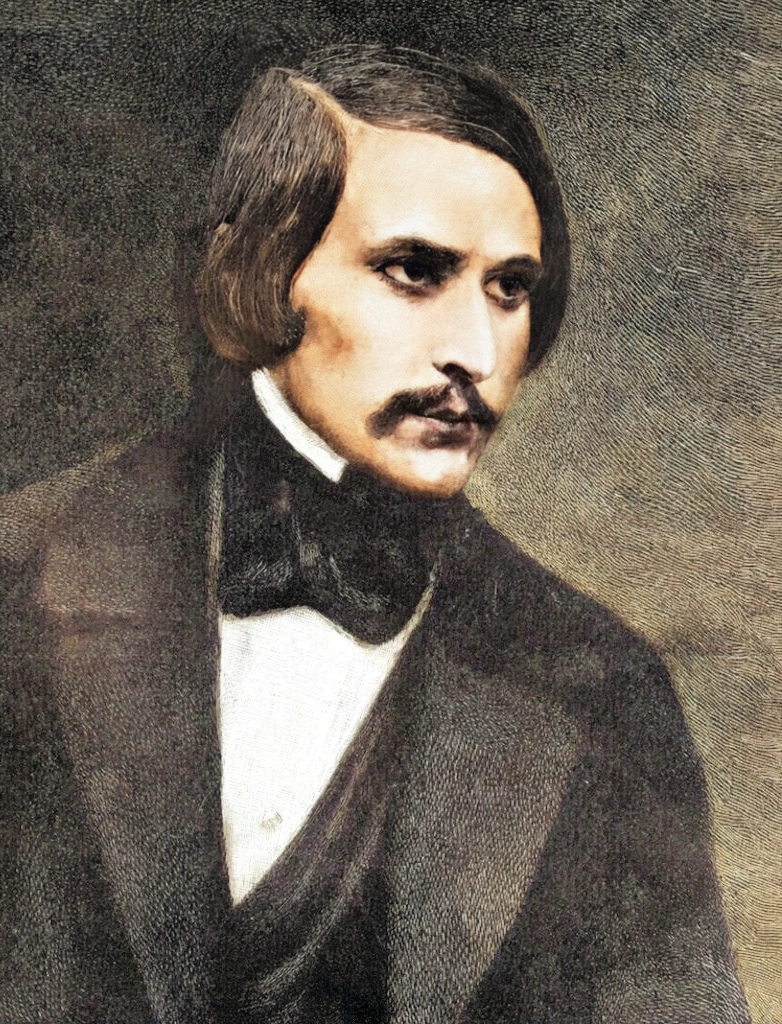
| 13 Quotes | |
| Born as | Nikolai Vasilyevich Yanovsky |
| Known as | Nikolai Vasilyevich Gogol |
| Occup. | Writer |
| From | Russia |
| Born | March 20, 1809 Sorochintsy, Poltava Governorate, Russian Empire |
| Died | March 4, 1852 Moscow, Russian Empire |
| Aged | 42 years |
| Cite | |
Citation Formats
APA Style (7th ed.)
Nikolai gogol biography, facts and quotes. (2026, February 11). FixQuotes. https://fixquotes.com/authors/nikolai-gogol/
Chicago Style
"Nikolai Gogol biography, facts and quotes." FixQuotes. February 11, 2026. https://fixquotes.com/authors/nikolai-gogol/.
MLA Style (9th ed.)
"Nikolai Gogol biography, facts and quotes." FixQuotes, 11 Feb. 2026, https://fixquotes.com/authors/nikolai-gogol/. Accessed 25 Mar. 2026.
Early Life and Background
Nikolai Gogol was born Nikolai Vasilyevich Yanovsky on March 20, 1809, in the Poltava region of what was then the Russian Empire, in the Ukrainian-speaking world of Cossack memory, Orthodox ritual, and provincial gentry life. His family belonged to the minor landed class; his father, Vasily Gogol-Yanovsky, wrote amateur comedies for local performance, and the household mixed folk humor with piety and an anxious concern for status. That combination - laughter edged with dread - became a lifelong emotional climate.The early nineteenth-century empire he inherited was socially stratified and administratively sprawling: serfdom shaped the countryside, while the capital projected a severe, bureaucratic ideal of order. Gogol internalized the provincial sense of being both inside and outside the imperial story. The landscapes and speech he heard in childhood later returned as a distinctive imaginative reservoir - witches and clerks, fairs and officialdom - but also as a private ache: the feeling that the soul could be lost amid roles, ranks, and appearances.
Education and Formative Influences
He studied at the Nizhyn Gymnasium of Higher Sciences (1821-1828), where his reading ranged from European Romanticism to Russian satire, and where he learned the stagecraft of voices and masks through student theatricals and literary circles. Nizhyn refined his ear for dialect and grotesque detail, but it also sharpened his ambition: he dreamed of moral significance and public recognition at once. That tension - between spiritual purpose and the seductions of literary success - became the central engine of his inner life and later crises.Career, Major Works, and Turning Points
In 1828 he went to St. Petersburg, the empire's cold, implacable theater of rank, and met humiliation quickly: his early poem "Hans Kuchelgarten" (1829) failed, and he reportedly tried to suppress it. He reinvented himself as Nikolai Gogol and broke through with "Evenings on a Farm Near Dikanka" (1831-1832), followed by "Mirgorod" (1835) and "Arabesques" (1835), blending Ukrainian folk material with a new urban satire. Under Alexander Pushkin's influence and encouragement, he wrote the Petersburg tales - "Nevsky Prospect", "Diary of a Madman", "The Nose", and "The Overcoat" (1842) - and the comedy "The Government Inspector" (1836), a scandalous mirror held to provincial corruption. His novel-in-progress "Dead Souls" (Part I, 1842) aimed at a panoramic moral diagnosis of Russia. After years abroad, especially in Rome, his religiosity deepened into an austere, self-scrutinizing program; the didactic "Selected Passages from Correspondence with Friends" (1847) shocked many admirers, and in his final breakdown he burned much of "Dead Souls" Part II shortly before dying in Moscow on March 4, 1852, after severe fasting and illness.Philosophy, Style, and Themes
Gogol's art rests on a paradox: he uses comedy to force metaphysical seriousness. His famous moral mechanism is not accusation but exposure. “It is no use to blame the looking glass if your face is awry”. The line captures his psychological stance as writer and believer - he feels compelled to show his contemporaries, and himself, the distortion already present. This is why his grotesque is rarely pure fantasy: it is a social hallucination made literal, as when a nose acquires autonomy or a clerk's overcoat becomes a soul's last shelter.At the same time he understood the unruly interiority that defeats systems, reforms, and even good intentions. “Countless as the sands of the sea are human passions”. In his stories, desire proliferates into absurdity - vanity, hunger for rank, fear of ridicule - until identity itself seems detachable. Yet he also clung to the possibility of grace, flashes of consolation amid bleakness: “Everywhere across whatever sorrows of which our life is woven, some radiant joy will gaily flash past”. That hope is never sentimental; it appears as fleeting illumination against a backdrop of moral sleep, which he experienced personally in bouts of shame, zeal, and exhaustion. His later turn toward religious exhortation and an idealized vision of social order was less a betrayal of the satirist than an attempt to discipline the very passions he anatomized.
Legacy and Influence
Gogol changed the trajectory of Russian prose by proving that the everyday language of clerks, coachmen, and petty officials could carry epic weight and spiritual terror. His fusion of satire with the uncanny shaped Dostoevsky's psychological intensity, Turgenev's social observation, and later the absurdism of Kafka and the modernist grotesque in writers from Bulgakov to Beckett. "The Overcoat" became a foundational myth of literary empathy for the "little man", while "The Government Inspector" remains a durable anatomy of institutional self-deception. His enduring influence lies in this unsettling gift: making readers laugh and then recognize, with a sting, that the joke implicates their own face in the glass.Our collection contains 13 quotes written by Nikolai, under the main topics: Ethics & Morality - Truth - Wisdom - Sarcastic - Nature.
Frequently Asked Questions
- Nikolai Gogol Priest: Though Gogol was deeply religious, he never served as a priest. His works frequently address spiritual and moral themes.
- Nikolai Gogol Buried Alive: There is a myth surrounding Gogol's death which claims he was buried alive. However, this has been proven false.
- Nikolai Gogol BSD: Nikolai Gogol was a 19th-century Russian writer, known for works such as 'Dead Souls' and 'The Government Inspector'.
- How old was Nikolai Gogol? He became 42 years old
Nikolai Gogol Famous Works
- 1842 The Overcoat (Short Story)
- 1842 Dead Souls (Novel)
- 1836 The Nose (Short Story)
- 1836 The Government Inspector (Play)
- 1835 Viy (Short Story)
- 1835 Diary of a Madman (Short Story)
Source / external links