
Nobuo Uematsu Biography Quotes 24 Report mistakes
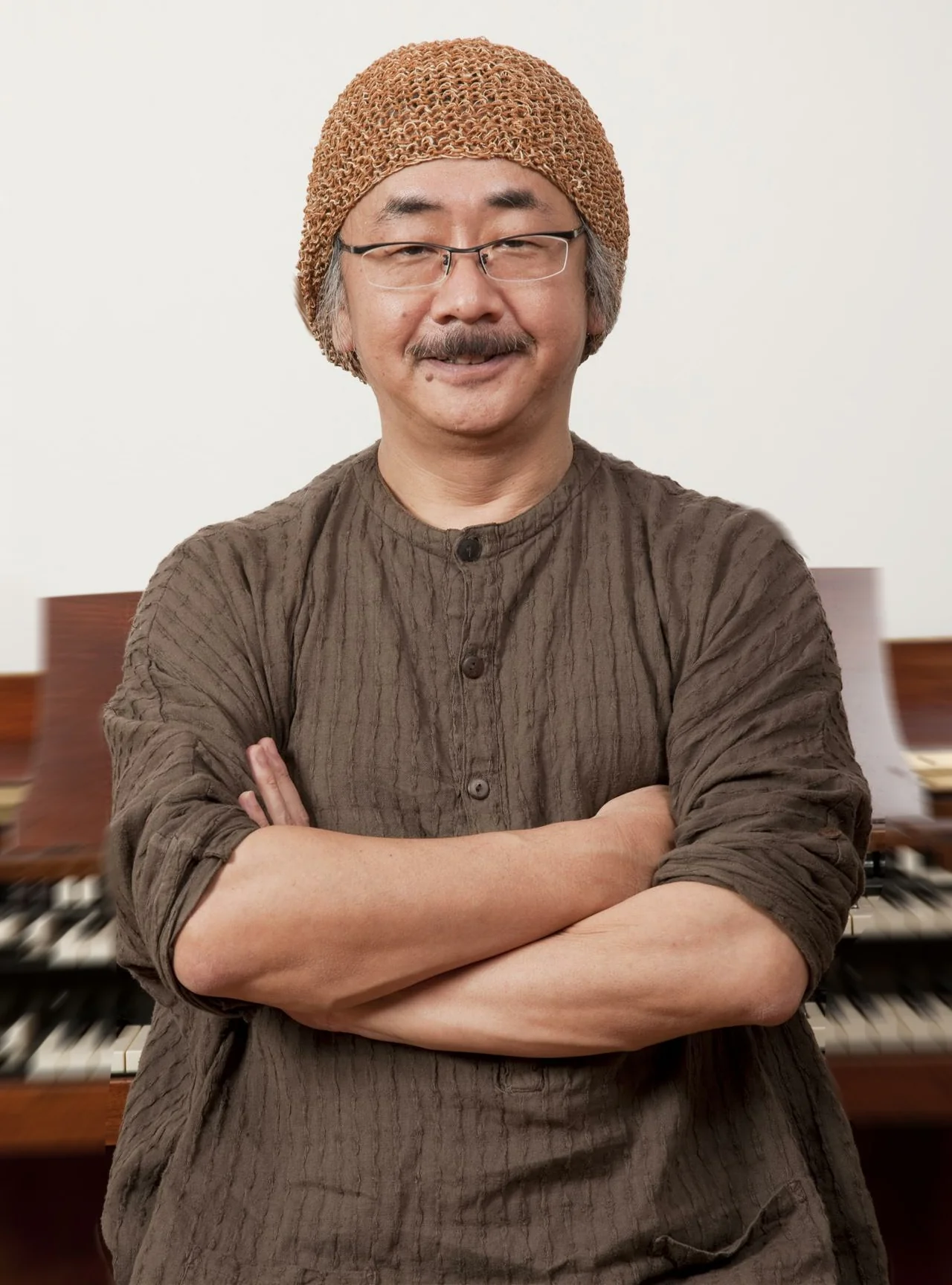
| 24 Quotes | |
| Born as | 植 松 伸 夫 |
| Occup. | Composer |
| From | Japan |
| Born | March 21, 1959 Kōchi, Kōchi Prefecture, Japan |
| Age | 66 years |
| Cite | |
Citation Formats
APA Style (7th ed.)
Nobuo uematsu biography, facts and quotes. (2026, February 11). FixQuotes. https://fixquotes.com/authors/nobuo-uematsu/
Chicago Style
"Nobuo Uematsu biography, facts and quotes." FixQuotes. February 11, 2026. https://fixquotes.com/authors/nobuo-uematsu/.
MLA Style (9th ed.)
"Nobuo Uematsu biography, facts and quotes." FixQuotes, 11 Feb. 2026, https://fixquotes.com/authors/nobuo-uematsu/. Accessed 6 Mar. 2026.
Early Life and Background
Nobuo Uematsu (植松 伸夫) was born on March 21, 1959, in Kochi City, Kochi Prefecture, Japan, a port-side region whose distance from Tokyo culture sharpened his appetite for imported sounds and local melody alike. Growing up in the high-growth decades that remade postwar Japan, he absorbed music as both household pleasure and mass media-television themes, pop singles, and the long shadow of Western rock that Japanese youth were rapidly learning to make their own.From early on he was less a conservatory prodigy than a self-directed listener with a performer's curiosity. He played in bands, gravitated toward keyboards, and learned to treat harmony as something practical: a tool for carrying emotion in a room. That instinct for direct feeling, rather than academic display, would later become crucial when he began writing for limited sound chips where every note had to justify its existence.
Education and Formative Influences
Uematsu studied at Kanagawa University, but his decisive education came from listening and doing: the Beatles' melodic economy, progressive rock's long-form ambitions, and a composer's craftsmanlike awareness of how tunes lodge in memory. By the early 1980s, as Japanese game studios were forming new production pipelines, he was ready for a career that demanded speed, adaptability, and an ability to make technology sing.Career, Major Works, and Turning Points
After joining Square (later Square Enix) in 1986, Uematsu became one of the defining architects of JRPG sound, writing for early titles and then establishing the musical identity of Final Fantasy from its first release (1987) through an extraordinary run that included Final Fantasy IV (1991), VI (1994), and VII (1997), where "One-Winged Angel" helped normalize the idea of game tracks as event music rather than background. As hardware evolved from the Famicom era into CD-quality audio, he expanded from chip-era counterpoint to orchestral palette, rock arrangements, and choral writing, while keeping themes singable enough to survive endless repetition. In the 2000s he gradually stepped away from full-time in-house scoring, co-founding the rock band The Black Mages, writing concert works such as the Final Fantasy suite and the song cycle "Distant Worlds" staples, and taking on high-profile collaborations including Lost Odyssey (2007) and later Fantasian (2021), each marked by the same insistence on melody as narrative spine.Philosophy, Style, and Themes
Uematsu's psychology as a composer is rooted in persuasion: he has long written as if he must prove that game music deserves the same attention granted to film or classical repertoire. “I believe that there are still people who believe that game music is something equal to just an effect incorporated into the game, something like a BGM. And therefore this is something that I would like to show that is not true”. That stance is not merely polemical; it explains his habit of giving characters and worlds strong leitmotifs that can be reharmonized, slowed, or weaponized, turning the soundtrack into a second script. Where many scores dissolve into ambience, his themes assert identity, inviting players to remember not just scenes but moral temperatures-grief, resolve, temptation-as melodies with names.Technically, he has often prioritized singable line over ornamental complexity, a choice that reads like an aesthetic and a survival strategy shaped by early hardware limits and by stage instincts. “I always begin to compose the melody first”. The result is music that can withstand endless loops without thinning into fatigue: balanced phrases, clear cadences, and harmonic turns that feel earned rather than clever. Over time he also articulated a mature skepticism toward virtuosity for its own sake: “However, very recently I have come to an understanding that complex music is not necessarily pleasant”. That recognition helps explain the late-career warmth of his writing-the way he often chooses lyrical simplicity and modal color over maximal density, aiming for intimacy even when the orchestration is large.
Legacy and Influence
Uematsu's influence is measurable in both industry practice and public culture: he helped elevate the status of game composers, fueled the global concert movement that treats game scores as repertoire, and provided a template for thematic writing that countless JRPG and anime composers adapted. His melodies have been arranged for orchestra, choir, rock band, and solo piano; they circulate as fan covers and conservatory audition pieces, quietly collapsing the old hierarchy between "serious" music and popular media. More than a hitmaker, he is a storyteller of inner states-a composer whose tunes taught a generation that digital worlds could carry real longing, and that a theme, precisely shaped, can become a life companion.Our collection contains 24 quotes written by Nobuo, under the main topics: Music - Sister - Happiness - Nostalgia - Career.
Source / external links