
Nong Duc Manh Biography Quotes 7 Report mistakes
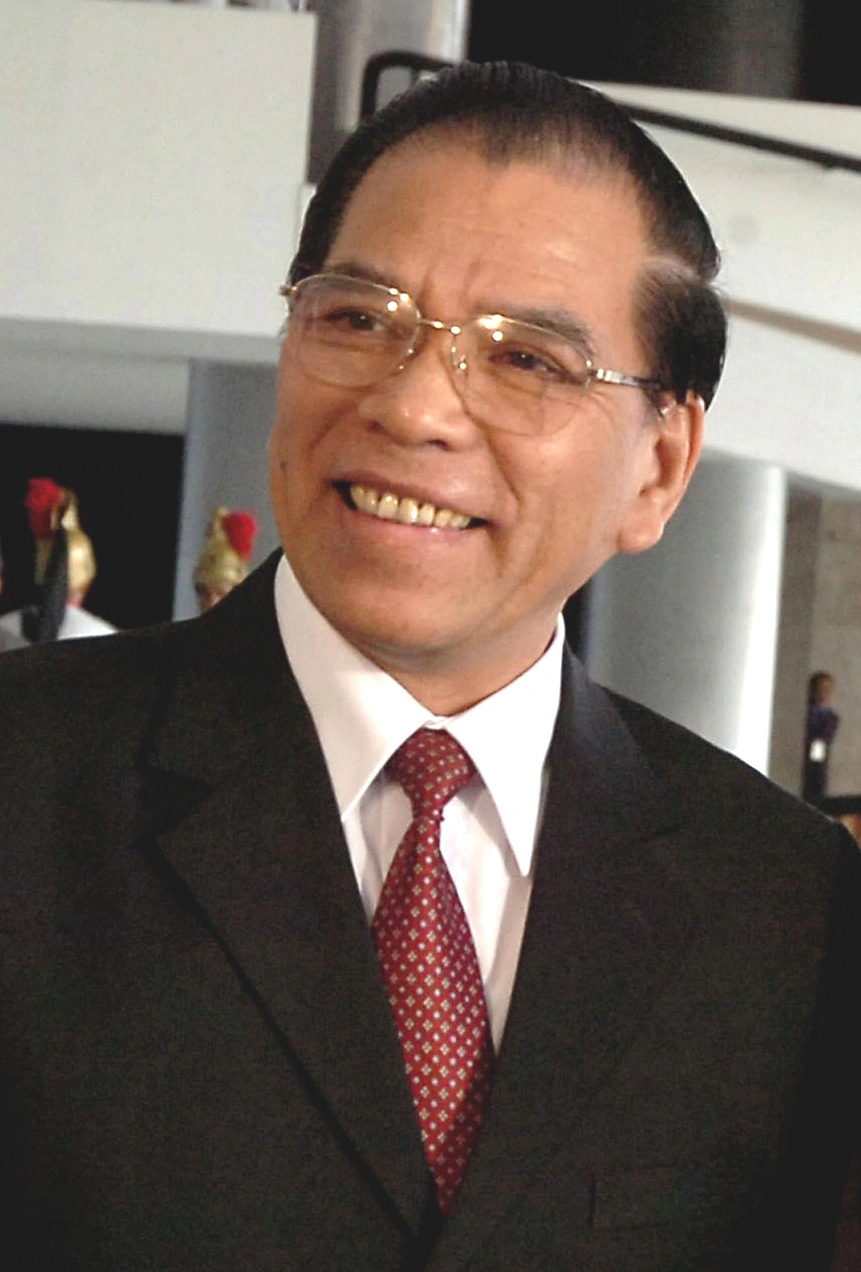
| 7 Quotes | |
| Occup. | Politician |
| From | Vietnam |
| Born | September 11, 1940 |
| Age | 85 years |
| Cite | |
Citation Formats
APA Style (7th ed.)
Nong duc manh biography, facts and quotes. (2026, February 11). FixQuotes. https://fixquotes.com/authors/nong-duc-manh/
Chicago Style
"Nong Duc Manh biography, facts and quotes." FixQuotes. February 11, 2026. https://fixquotes.com/authors/nong-duc-manh/.
MLA Style (9th ed.)
"Nong Duc Manh biography, facts and quotes." FixQuotes, 11 Feb. 2026, https://fixquotes.com/authors/nong-duc-manh/. Accessed 12 Feb. 2026.
Early Life and Background
Nong Duc Manh was born on September 11, 1940, in the northern highlands of Vietnam, in Bac Thai province (later divided into Thai Nguyen and Bac Kan). He grew up in a region where ethnic minority communities lived close to the forests and rivers that sustained them, and where colonial extraction and then revolutionary mobilization made politics feel less like distant ideology than daily weather. Manh belonged to the Tay ethnic group, a fact that would later carry symbolic weight in a state long dominated by Kinh leadership.His early life unfolded in the long shadow of war and state-making: the end of French rule, the partition of Vietnam in 1954, and the increasing militarization that culminated in the American War. In that atmosphere, loyalty, discipline, and organizational ability became currencies of advancement. For a young man from the uplands, the Communist Party offered both a ladder and a language - a way to translate local hardship into national purpose and to imagine personal ambition as collective duty.
Education and Formative Influences
Manh trained as an engineer, studying forestry in the Soviet Union during an era when Hanoi relied on Eastern Bloc education to produce technocrats for reconstruction and planning. The Soviet experience mattered less for ideology - which was already set by Party doctrine - than for habits of mind: measurement, quotas, institutional hierarchy, and faith that national modernization could be engineered. Returning to Vietnam, he carried a pragmatic, administrative temperament shaped by the needs of a war-torn country that would soon face the even harder work of peacetime consolidation and economic renovation.Career, Major Works, and Turning Points
Rising through provincial leadership in Bac Thai, Manh built a reputation as a steady manager before entering the national elite. He served as Chairman of the National Assembly in the early 1990s, a period when Vietnam was refining the legal and institutional scaffolding of doi moi (Renovation) after the 1986 turn toward a "socialist-oriented market economy". In 2001 he became General Secretary of the Communist Party of Vietnam, the system's paramount position, and held it until 2011. His tenure emphasized continuity: tightening Party discipline, promoting integration through trade and diplomacy, and sustaining high growth while containing political pluralism. Key turning points included Vietnam's deepening engagement with global institutions and the regional security order, culminating in accession to the World Trade Organization in 2007, alongside constant internal pressure to curb corruption and manage the social dislocations of rapid marketization.Philosophy, Style, and Themes
Manh's public voice was restrained and institutional, reflecting a leader who governed through consensus inside a collective apparatus rather than through charismatic rupture. His worldview combined a strong doctrine of sovereignty with a belief that international legitimacy could be won by demonstrating responsibility within multilateral frameworks. He insisted on legal equality among states, not merely as principle but as protection for smaller nations navigating great-power pressure: "All countries, big or small, strong or weak, are equal members of the United Nations". In practice, this translated into careful diplomacy - diversifying partnerships, reducing isolation, and presenting Vietnam as a predictable actor even when its internal politics remained opaque to outsiders.The psychological center of his rhetoric was order: the state as guardian of stability, modernization, and national dignity after decades of conflict. That same impulse shaped his treatment of dissent and human rights criticism. When he said, "In Vietnam we have no political prisoners. No one is arrested or jailed for his or her speech or point of view. They are put in jail because they violated the law". , he framed coercion as procedure, seeking to convert moral accusations into technical disputes over legality. Yet his language of renewal also hinted at anxiety about the regime's vulnerabilities in a faster, more connected society: "As part of our renewal - we need to fight problems, not just wait for them to take place". The line reveals an administrator's fear of drift - that corruption, inequality, and bureaucratic inertia could erode the Party's claim to embody the nation.
Legacy and Influence
Manh's legacy is that of a transitional steward: the first ethnic minority General Secretary, he symbolized an inclusive national narrative while presiding over a period when Vietnam became markedly more globalized and economically dynamic. Admirers credit his steadiness during a decade of intensified integration; critics argue that under his watch political liberalization remained tightly bounded and anti-corruption efforts struggled to match the scale of rent-seeking created by rapid growth. In Vietnamese political memory, he stands less as an ideological innovator than as a consolidator of doi moi's statecraft - a leader who sought to keep the Party's monopoly compatible with a market society and an interdependent world.Our collection contains 7 quotes written by Nong, under the main topics: Equality - Human Rights - Honesty & Integrity - Work - War.
Source / external links