
Norman Angell Biography Quotes 4 Report mistakes
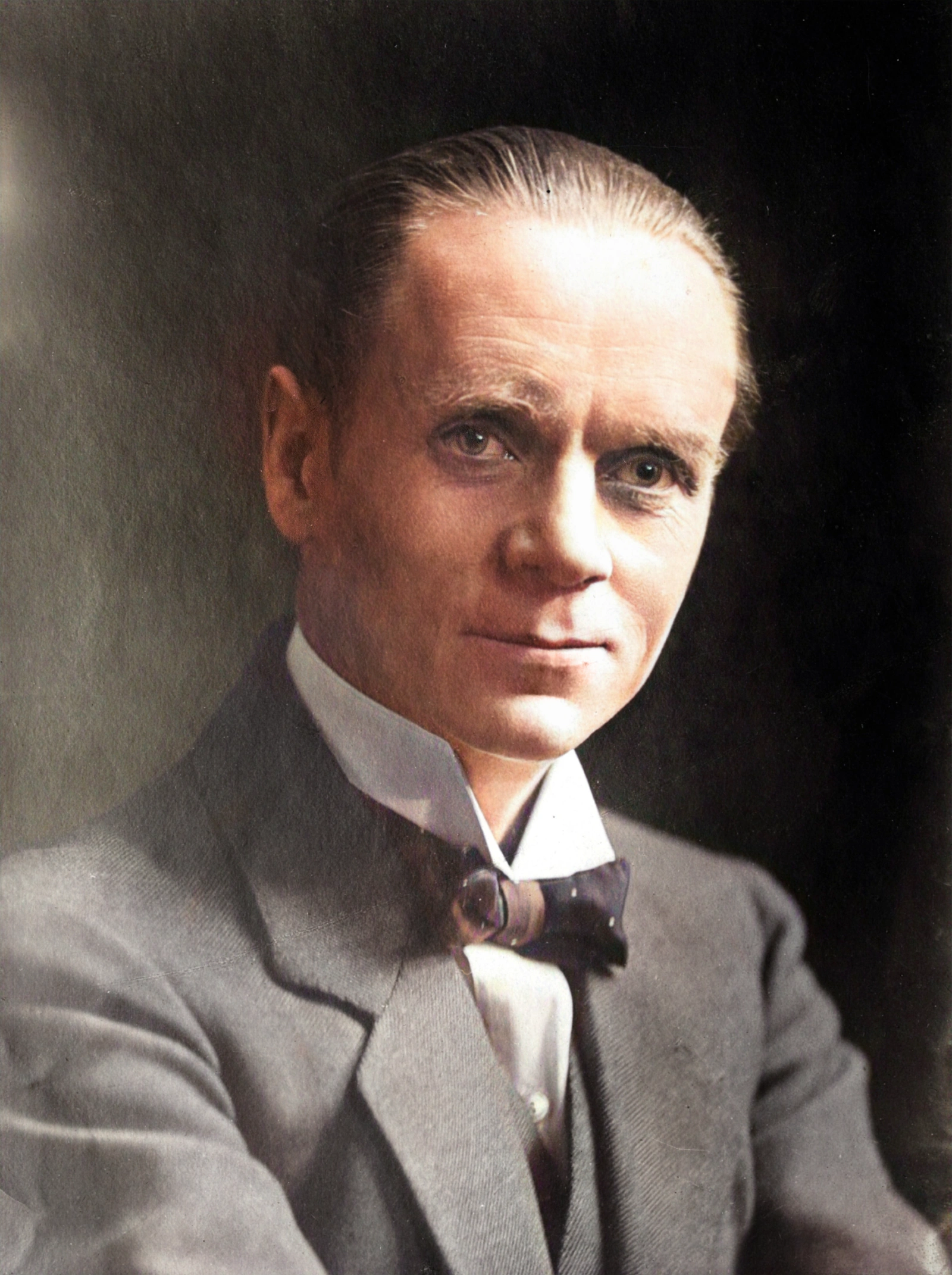
Attr: Library of Congress, Public domain
| 4 Quotes | |
| Born as | Ralph Norman Angell Lane |
| Known as | Sir Ralph Norman Angell |
| Occup. | Writer |
| From | United Kingdom |
| Born | December 26, 1872 Holbeach, Lincolnshire, United Kingdom |
| Died | October 7, 1967 Croydon, Surrey, United Kingdom |
| Cause | Natural Causes |
| Aged | 94 years |
| Cite | |
Citation Formats
APA Style (7th ed.)
Norman angell biography, facts and quotes. (2026, February 11). FixQuotes. https://fixquotes.com/authors/norman-angell/
Chicago Style
"Norman Angell biography, facts and quotes." FixQuotes. February 11, 2026. https://fixquotes.com/authors/norman-angell/.
MLA Style (9th ed.)
"Norman Angell biography, facts and quotes." FixQuotes, 11 Feb. 2026, https://fixquotes.com/authors/norman-angell/. Accessed 4 Apr. 2026.
Early Life and Background
Ralph Norman Angell Lane was born on December 26, 1872, in Holbeach, Lincolnshire, into a late-Victorian Britain confident in empire yet anxious about industrial competition and social unrest. The son of a clergyman father, he grew up amid rural respectability and the moral certainties of provincial England, then watched those certainties strain as mass politics, finance, and newspapers began to compress distance and amplify fear. That early contrast - between settled parish life and a world accelerating beyond it - seeded his lifelong fixation on how nations persuade themselves into catastrophic mistakes.Restless and temperamentally independent, Angell left England as a young man and sampled the wider Anglophone world at the moment it was becoming tightly networked by telegraph, steamship, and capital flows. Time in the United States and later France exposed him to cosmopolitan cities and the harsher underside of modernity: boom-and-bust economies, crowded tenements, and political passions sharpened by print culture. These experiences gave his writing its characteristic blend of moral urgency and analytic argument, as if he were trying to discipline emotion with facts without ever denying how easily publics can be inflamed.
Education and Formative Influences
Angell was not formed by a single university so much as by journalism and self-directed study, reading political economy and contemporary diplomacy while learning, in newsrooms, how arguments travel. In Paris he worked as a correspondent (including for the Daily Mail), absorbing the aftermath of the Dreyfus Affair and the brittle rivalries of fin-de-siecle Europe; he also reported from the United States and encountered progressive-era debates about monopoly, labor, and the social responsibilities of wealth. By the early 1900s he had come to believe that modern interdependence had outgrown the old strategic imagination - that states still thought in terms of conquest while the real engines of power had become credit, trade, and public confidence.Career, Major Works, and Turning Points
Angell emerged as an international public intellectual with Europe"s Optical Illusion (1909), expanded and popularized as The Great Illusion (1910), arguing that conquest no longer paid in an advanced, credit-based world because prosperity depended on cooperation, markets, and trust rather than seizure of territory. The book made him famous, helped spur the Norman Angell League, and placed him at the center of pre-1914 debates on militarism; the First World War then tested him cruelly, as events seemed to refute his hopes even while confirming his underlying point about the self-destructive costs of modern war. In the interwar years he wrote widely, lectured, and engaged in liberal internationalist politics, serving as a Labour Member of Parliament (1929-1931) and advocating collective security; in 1933 he received the Nobel Peace Prize for his influence on peace thought and his insistence that stability required institutions and informed publics. He continued publishing through the Second World War and into the Cold War, an elder critic of slogans and a believer that democratic societies must train themselves to think beyond panic.Philosophy, Style, and Themes
Angell"s central claim was psychological as much as economic: war persisted because nations clung to prestige myths and zero-sum instincts long after material reality had changed. He argued that modern wealth is intangible - embedded in organization, finance, and the habits of cooperation - and therefore cannot be captured like loot. His prose was deliberately didactic, built from plain premises and repeated demonstrations, as if he were cross-examining the public. He distrusted romantic nationalism and the newspaper-fueled drama of crisis, seeing in both a kind of collective wish to simplify a complex world into heroes and enemies.That moral-sociological streak could turn bleak when he looked at mass society, with its appetites and resentments easily manipulated. “Everywhere I go I see increasing evidence of people swirling about in a human cesspit of their own making”. Yet he refused fatalism; his aim was to change the very category of "the ordinary man" by education, dignity, and civic responsibility, insisting, “The greatest service we can do the common man is to abolish him and make all men uncommon”. In international affairs he diagnosed a tragic pattern of sincere self-deception, captured in his observation, “Every nation sincerely desires peace; and all nations pursue courses which if persisted in, must make peace impossible”. The through-line is a belief that peace is less a sentiment than a discipline - an achievement of clear thinking against the seductions of fear and pride.
Legacy and Influence
Angell died on October 7, 1967, in a Britain reshaped by two world wars and the retreat from empire, yet still wrestling with the temptations he analyzed: prestige politics, threat inflation, and the hope that force can secure what trust and cooperation create. His "Angellism" was often caricatured as naive pacifism, but his durable contribution lies in reframing power for the modern age - emphasizing the fragility of credit, the economic boomerang of aggression, and the psychological mechanics of nationalism. Later liberal internationalists, integrationists in Europe, and many strands of peace research drew on his insistence that interdependence changes the cost-benefit logic of war even if it cannot, by itself, prevent it. His work remains a reminder that the hardest battle is not against foreign enemies but against the comforting illusions nations tell themselves.Our collection contains 4 quotes written by Norman, under the main topics: Ethics & Morality - Equality - Peace.
Norman Angell Famous Works
- 1951 After All: The Autobiography of Norman Angell (Book)
- 1934 The Menace to Our National Defence (Book)
- 1932 The Unseen Assassins (Book)
- 1928 The Money Game (Book)
- 1921 The Fruits of Victory (Book)
- 1909 The Great Illusion (Book)
Source / external links