
Norman Douglas Biography Quotes 16 Report mistakes
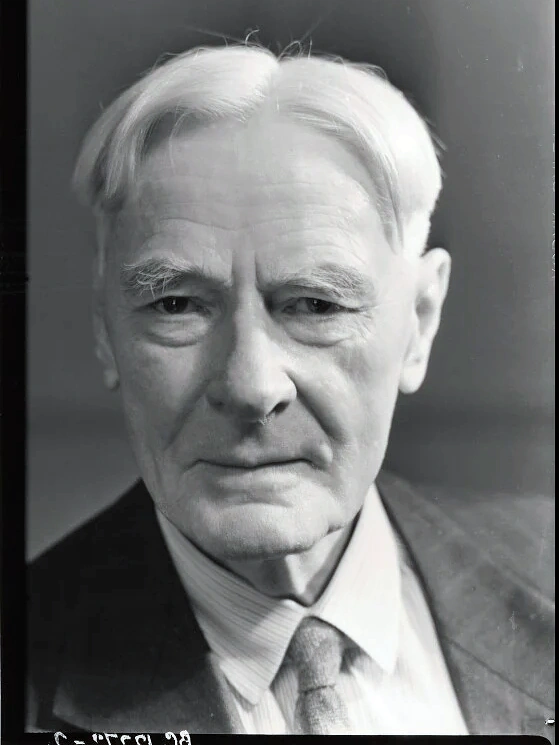
| 16 Quotes | |
| Born as | George Norman Douglas |
| Occup. | Writer |
| From | United Kingdom |
| Born | December 8, 1868 |
| Died | February 7, 1952 |
| Aged | 83 years |
| Cite | |
Citation Formats
APA Style (7th ed.)
Norman douglas biography, facts and quotes. (2026, February 11). FixQuotes. https://fixquotes.com/authors/norman-douglas/
Chicago Style
"Norman Douglas biography, facts and quotes." FixQuotes. February 11, 2026. https://fixquotes.com/authors/norman-douglas/.
MLA Style (9th ed.)
"Norman Douglas biography, facts and quotes." FixQuotes, 11 Feb. 2026, https://fixquotes.com/authors/norman-douglas/. Accessed 25 Mar. 2026.
Early Life and Background
George Norman Douglas was born on December 8, 1868, in the market town of Thurles, County Tipperary, then part of the United Kingdom of Great Britain and Ireland. His father, the Reverend James Douglas, was a Scottish-born Anglican clergyman; his mother, Adelaide (nee Norman), came from an Anglo-Irish milieu that placed him at a cultural crossroads - Irish landscape and Catholic majority on one side, Protestant institutions and imperial assumptions on the other. That tension - belonging everywhere and nowhere - later sharpened his eye for local custom and for the quiet hypocrisies of respectable life.He was a solitary, quick-witted child who grew into a young man with an instinct for flight: from routine, from moral certainty, from any environment that tried to name him too narrowly. Late-Victorian public virtues - industriousness, piety, domestic stability - never fit his temperament. Even before his books, his life read like a rehearsal for travel writing: a search for climates, cuisines, and conversations that could restore feeling to a world he found over-managed.
Education and Formative Influences
Douglas was educated in England and Germany, experiences that gave him both linguistic range and a cosmopolitan skepticism about national self-congratulation. He absorbed classical and Enlightenment habits of mind while remaining distrustful of systems, and he developed a taste for the observational method - listening, collecting impressions, letting contradictions stand. The fin-de-siecle atmosphere, with its mixture of scientific confidence and cultural unease, helped form his lifelong posture: a modern sensibility with a classical preference for proportion and a deep suspicion of earnest reform.Career, Major Works, and Turning Points
In the 1890s Douglas worked abroad, notably in Russia, before settling for long periods in Italy, a country that became both subject and solvent for his imagination. After years of wandering and private study, he emerged as an author in midlife, publishing travel books that treated geography as psychology: Siren Land (1911) on southern Italy and Capri, and Old Calabria (1915), which turned remote villages, bandit lore, and botany into a portrait of endurance and pleasure under hard conditions. He also wrote novels and short fiction, most famously South Wind (1917), a satiric, sunstruck fable set on the imaginary island of Nepenthe that lampooned northern prudery and the missionary urge to improve others. The interwar years brought recognition and controversy in roughly equal measure - his candor about sensuality and his impatience with cant made him admired by some as a liberated stylist and distrusted by others as an aesthete without a program. In later life he lived mostly in the Mediterranean world, writing memoiristic and essayistic works such as Looking Back (1933), his tone darkening as Europe slid from cosmopolitan travel into mass politics and war.Philosophy, Style, and Themes
Douglas wrote like a man who believed that the smallest sensory facts were morally consequential. A shoreline, a scent of resin, a cheap hotel meal - these are not decorations in his prose but tests of whether a life has been lived awake. He distrusted grand metaphysics and preferred a portable ethics of attention, self-command, and bodily reverence, a stance he distilled into a credo that is almost a clinical self-prescription: “Shall I give you my recipe for happiness? I find everything useful and nothing indispensable. I find everything wonderful and nothing miraculous. I reverence the body. I avoid first causes like the plague”. The sentence shows his inner life plainly: wonder without superstition, pleasure without addiction, and a deliberate turning away from doctrinal battles that make people cruel while claiming to make them pure.His style fuses travel narrative with moral essay and comic portraiture. He prized tact, irony, and the right to be inconsistent - not as weakness, but as fidelity to lived experience. The social world, in his view, constantly pressures the individual to perform virtue; he answered by protecting an inner chamber of creativity and selfhood: “There is in us a lyric germ or nucleus which deserves respect; it bids a man to ponder or create; and in this dim corner of himself he can take refuge and find consolations which the society of his fellow creatures does not provide”. That refuge, however, was not a monkish withdrawal but a base camp for sharper seeing, including his mordant diagnosis of modernity as a theatre of persuasion: “You can tell the ideals of a nation by its advertising”. Behind the epigrams lies a consistent theme - that civilizations reveal themselves in what they sell, individuals reveal themselves in what they cannot stop wanting, and freedom begins when appetite is educated rather than denied.
Legacy and Influence
Douglas died on February 7, 1952, after a life largely spent outside the British literary center he never quite trusted. His reputation has moved in cycles - celebrated for South Wind and the Mediterranean books, criticized for elitism and scandal, and then rediscovered for the precision of his observation and the modern feel of his skepticism. Yet his enduring influence is less a school than a method: the insistence that travel writing can be serious literature, that comedy can carry philosophy, and that the moral life begins not in slogans but in the disciplined noticing of how places, bodies, and institutions shape desire.Our collection contains 16 quotes written by Norman, under the main topics: Witty One-Liners - Wisdom - Freedom - Honesty & Integrity - Poetry.
Other people related to Norman: Elizabeth David (Writer)
Norman Douglas Famous Works
- 1917 South Wind (Novel)
- 1915 Old Calabria (Non-fiction)