
Norman Foster Biography Quotes 1 Report mistakes
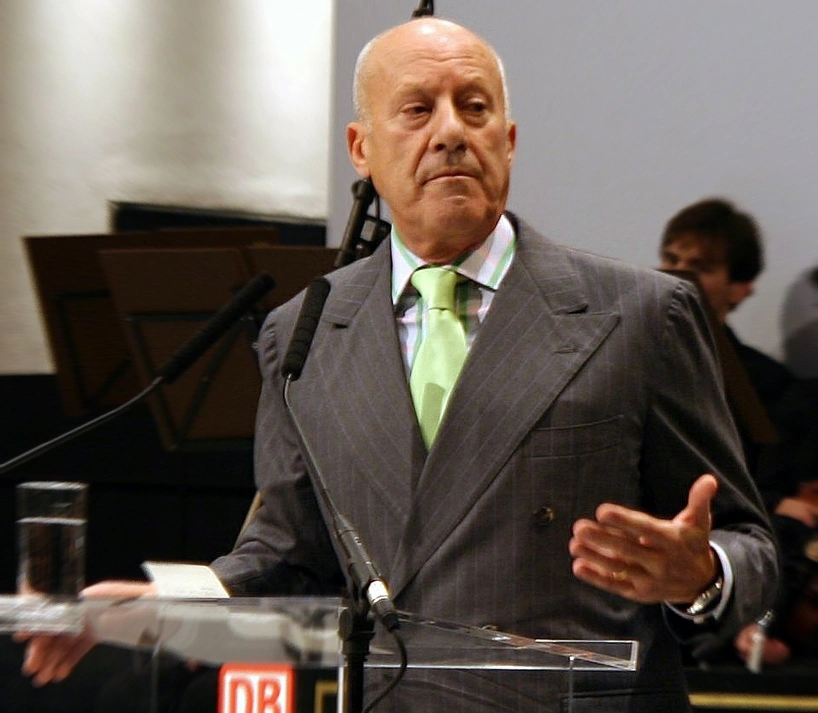
| 1 Quotes | |
| Born as | Norman Robert Foster |
| Known as | Baron Foster of Thames Bank |
| Occup. | Architect |
| From | United Kingdom |
| Born | June 1, 1935 Manchester, Lancs, England |
| Age | 90 years |
| Cite | |
Citation Formats
APA Style (7th ed.)
Norman foster biography, facts and quotes. (2026, February 11). FixQuotes. https://fixquotes.com/authors/norman-foster/
Chicago Style
"Norman Foster biography, facts and quotes." FixQuotes. February 11, 2026. https://fixquotes.com/authors/norman-foster/.
MLA Style (9th ed.)
"Norman Foster biography, facts and quotes." FixQuotes, 11 Feb. 2026, https://fixquotes.com/authors/norman-foster/. Accessed 12 Feb. 2026.
Early Life and Background
Norman Robert Foster was born on June 1, 1935, in Manchester, England, and grew up in the long shadow of war and austerity, when soot-blackened industry and ration-era pragmatism shaped the look and mood of British cities. His family background was modest, and the texture of his early environment was less the picturesque England of postcards than the working rhythms of the North: buses, factories, warehouses, and the patient repair of things made to last. That world gave him an early sensitivity to performance and economy - how structures stand, how systems move people, and how everyday infrastructure can either dignify or diminish life.As a teenager and young man, he developed a fascination with machines and buildings as interconnected instruments rather than isolated monuments. The period was also one of national rebuilding, when public architecture and engineering carried moral weight: housing, civic services, and transport were arenas where design promised social repair. Foster absorbed that spirit without sentimentalizing it. He learned to read the city as an organism, where light, air, circulation, and maintenance matter as much as facade, and where discipline and optimism could coexist.
Education and Formative Influences
Foster studied architecture at the University of Manchester, then won a scholarship to Yale University, a crucial hinge in his formation. At Yale in the early 1960s, he encountered an internationalizing architectural culture that treated technology as a creative language and management as a design tool. The American scale of ambition, and the clarity of modernist precedent, sharpened his resolve to combine engineering logic with civic purpose; he left with a belief that architecture could be both rigorous and humane, and that collaboration across disciplines was not a compromise but a method.Career, Major Works, and Turning Points
In the 1960s Foster co-founded Team 4, where his partnership with Richard Rogers helped crystallize a new British modernism attentive to industrial techniques and social change; after Team 4 dissolved, he established Foster Associates (later Foster + Partners), building a practice that could handle complex, systems-driven projects. His early breakthrough, the Willis Faber and Dumas headquarters in Ipswich (completed 1975), fused workplace reform with urban generosity - a glazed, curving form that returned public space at ground level and treated the office as a social ecosystem. From there the work scaled globally: the high-tech expression and structural candor of the Hongkong and Shanghai Bank Headquarters in Hong Kong (1985) became a manifesto for adaptable, serviceable, daylighted towers; later landmarks included the Reichstag renovation in Berlin (completed 1999) with its public dome and symbolic transparency, 30 St Mary Axe ("the Gherkin") in London (completed 2003) with its aerodynamic profile and environmental logic, and major transport and airport commissions that tested architecture as choreography. In 1999 he was awarded the Pritzker Architecture Prize, and in 1990 he was ennobled as Lord Foster of Thames Bank, recognition of a career that made British engineering-led modernism a global idiom.Philosophy, Style, and Themes
Foster's architecture is often labeled "high-tech", but the deeper theme is stewardship: the building as an efficient, adaptable framework that earns its presence through performance. His best work treats structure, services, and circulation as legible - not to show off, but to clarify how the place works and to make change over time less wasteful. The psychological core is a disciplined optimism: an engineer's respect for constraints paired with a civic faith that better light, better air, and clearer movement patterns can improve daily life. Even when the forms become iconic, the logic usually begins with systems - energy, maintenance, transport, and the human body in motion.Equally central is his view of authorship as distributed across experts, partners, and builders, a stance shaped by the scale of his commissions and the managerial architecture of his own studio. "Control is the wrong word. The practice is very much about sharing, and, in any creative practice, some individuals, whether partners or directors, are much closer to certain projects than I could ever be". Read psychologically, the statement is both humility and strategy: it deflects the cult of the solitary genius while revealing a temperament comfortable with delegation, systems, and long horizons. It also reframes power as responsibility - the leader sets standards and direction, but the work is authored by a collective intelligence, which helps explain how the practice could sustain coherence across continents and decades.
Legacy and Influence
Norman Foster's enduring influence lies in making technical sophistication feel like civic common sense: daylight as a public good, transparency as both metaphor and measurable condition, and infrastructure as a form of culture. He helped normalize interdisciplinary collaboration as the baseline for major architecture, and he demonstrated that expressive form can emerge from environmental and structural logic rather than surface styling. For a generation of architects and engineers, Foster stands as a model of how a practice can be both design-led and process-literate - an architecture of systems that, at its best, enlarges the public realm and makes modernity feel workable rather than alien.Our collection contains 1 quotes written by Norman, under the main topics: Team Building.
Other people related to Norman: Richard Rogers (Architect)
Source / external links