
Norman MacCaig Biography Quotes 32 Report mistakes
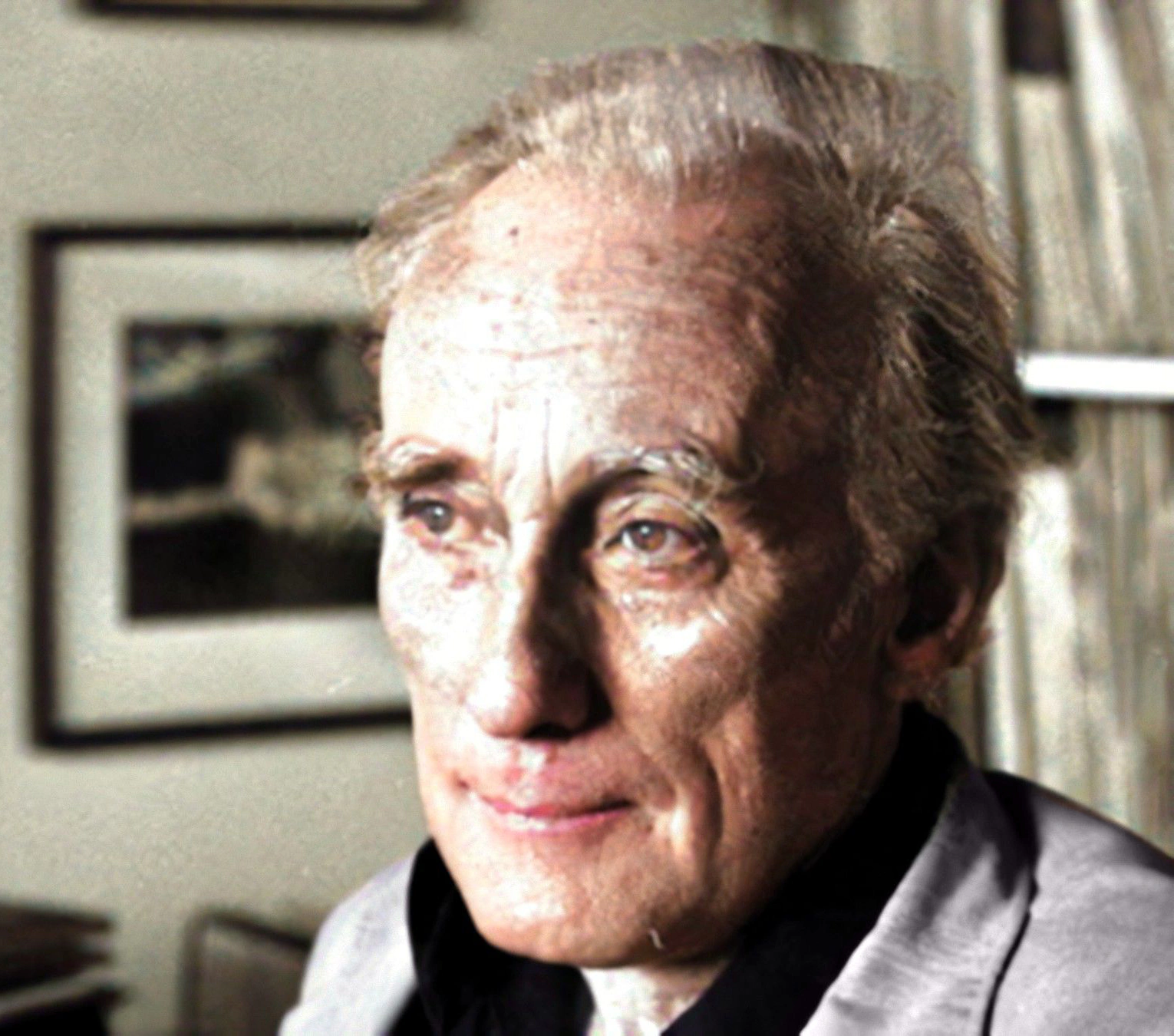
| 32 Quotes | |
| Born as | Norman Alexander MacCaig |
| Occup. | Poet |
| From | Scotland |
| Born | November 14, 1910 Edinburgh, Scotland, United Kingdom |
| Died | January 23, 1996 Edinburgh, Scotland, United Kingdom |
| Cause | Heart attack |
| Aged | 85 years |
| Cite | |
Citation Formats
APA Style (7th ed.)
Norman maccaig biography, facts and quotes. (2026, February 11). FixQuotes. https://fixquotes.com/authors/norman-maccaig/
Chicago Style
"Norman MacCaig biography, facts and quotes." FixQuotes. February 11, 2026. https://fixquotes.com/authors/norman-maccaig/.
MLA Style (9th ed.)
"Norman MacCaig biography, facts and quotes." FixQuotes, 11 Feb. 2026, https://fixquotes.com/authors/norman-maccaig/. Accessed 5 Mar. 2026.
Early Life and Background
Norman Alexander MacCaig was born on 14 November 1910 in Edinburgh, a city where Presbyterian sobriety, Enlightenment argument, and the modernist shockwaves from Europe all coexisted in close streets. He grew up bilingual in landscape more than language - the urban capital on one side, and the hard, tidal, Gaelic-shaped north on the other - because his family roots lay in Assynt, Sutherland. The Highlands were not a picturesque backdrop to him but a moral climate: lochs that could look tender one hour and inimical the next, crofts and rock and weather that trained attention to reality rather than romance.That double belonging - Edinburgh mind, Highland eye - became the tension that powered his later work. In youth he watched Scotland negotiate the long aftermath of empire and the rift between metropolitan opportunity and rural depopulation. The First World War ended when he was a child; by the time he reached adulthood, the Depression had tightened prospects and the Second World War would soon tighten consciences. MacCaig was temperamentally unsuited to slogans. He developed instead a quiet, exacting independence, suspicious of cant and impatient with any art that substituted display for truth.
Education and Formative Influences
He was educated at the Royal High School in Edinburgh and studied Classics at the University of Edinburgh, a training that sharpened his syntactic control and his taste for lucid argument. Yet his decisive education was also self-directed: long returns to the north, observation of animals and weather, and immersion in a Scottish literary tradition trying to define itself between Anglocentric prestige and local speech. He would later work as a teacher in Edinburgh, and the classroom tested his sense that poetry was less a method than an aptitude, something that could be guided but not manufactured.Career, Major Works, and Turning Points
MacCaig began publishing in the mid-1930s and became associated with the 1940s Scottish Renaissance circle, though he resisted being filed under any single movement. A conscientious objector during the Second World War, he carried into peacetime a deep distrust of mass conviction and a preference for the individual conscience. After years balancing teaching with writing, his reputation consolidated through volumes that brought Highland actuality into modern lyric precision - notably the later books and selections that made him a major public voice: collections such as A Round of Applause, Rings on a Tree, and the widely read Selected Poems. A turning point was the death of his friend Christopher Murray Grieve (Hugh MacDiarmid) as a cultural symbol of an earlier insurgent generation; MacCaig emerged not as an heir but as a counterweight - less manifesto, more seeing. In his final decades he became one of Scotland's best-known poets, his readings and broadcasts building a national audience without diluting his hard-won exactness.Philosophy, Style, and Themes
MacCaig's art is often described as clear, but the clarity is earned - the result of a mind allergic to pretension, including his own. He distrusted talk about poetry that replaced the thing itself: “I never think about poetry except when I'm writing it. I mean my poetry”. That attitude was not anti-intellectual so much as anti-false-consciousness; it kept him anchored in the act of looking, the ethical discipline of attention. His poems repeatedly stage a confrontation between the named and the unknowable: a heron, a loch, a dying person, a city street - each becomes a test of how far language can go without lying. The voice is typically wry, compassionate, and unseduced by glamour; metaphors arrive like verdicts, not ornaments.He also wrote out of a quiet anxiety about how words travel from one mind to another. “Anybody who writes doesn't like to be misunderstood”. In MacCaig this is less a demand for obedience than a recognition of solitude - the poet is always translating experience into a code that may or may not land. His style, therefore, prizes intelligibility while admitting mystery. Even his teaching persona reinforced the same psychology: skeptical of formula, generous to talent, wary of coercion. “However, I learned something. I thought that if the young person, the student, has poetry in him or her, to offer them help is like offering a propeller to a bird”. The line exposes his core belief that craft matters, but the deepest impulse is native - and that humility, extended to others, protected him from turning poetry into a hierarchy. Across his work, the Highlands are not escapism but a proving ground where perception, mortality, and moral responsibility meet.
Legacy and Influence
MacCaig died on 23 January 1996, leaving a body of work that helped redefine what "Scottish" poetry could sound like: modern without being mannered, local without being parochial, skeptical without being cold. He influenced later poets through example rather than theory - the example of a voice that could be funny and devastating in the same breath, and a technique that made plain speech carry metaphysical weight. In classrooms and on moors, in city flats and radio studios, he demonstrated that a poet can be widely loved without softening the truth, and that careful seeing can be a form of moral courage.Our collection contains 32 quotes written by Norman, under the main topics: Witty One-Liners - Friendship - Mortality - Sarcastic - Nature.
Norman MacCaig Famous Works
- 1983 A World of Difference (Poetry Collection)
- 1980 The Equal Skies (Poetry Collection)
- 1974 The World's Room (Poetry Collection)
- 1973 The White Bird (Poetry Collection)
Source / external links