
Norman Schwarzkopf Biography Quotes 7 Report mistakes
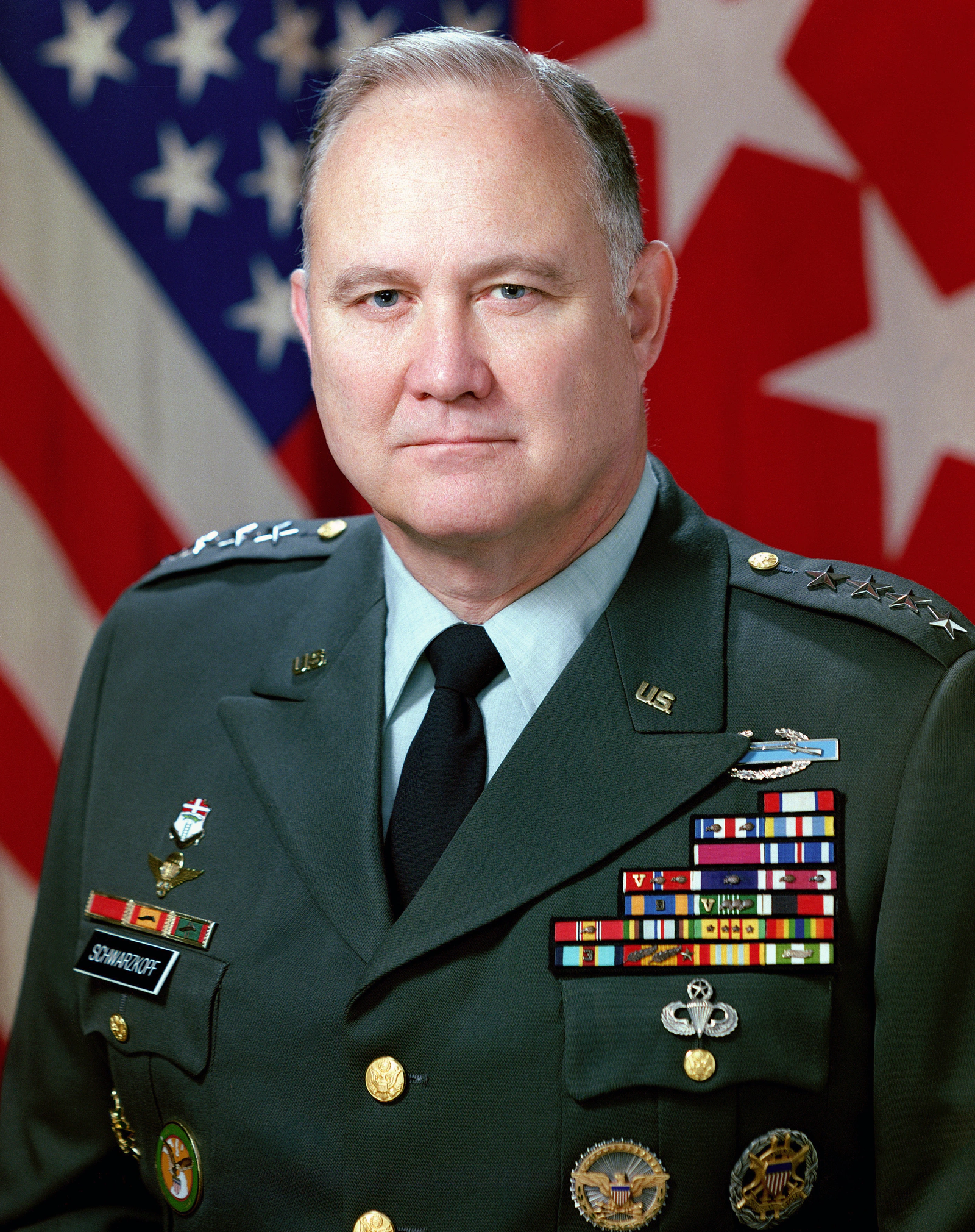
Attr: Russell Roederer
| 7 Quotes | |
| Born as | Herbert Norman Schwarzkopf Jr. |
| Known as | Stormin' Norman |
| Occup. | Soldier |
| From | USA |
| Born | August 22, 1934 Trenton, New Jersey, United States |
| Died | December 27, 2012 Tampa, Florida, United States |
| Cause | pneumonia |
| Aged | 78 years |
| Cite | |
Citation Formats
APA Style (7th ed.)
Norman schwarzkopf biography, facts and quotes. (2026, February 11). FixQuotes. https://fixquotes.com/authors/norman-schwarzkopf/
Chicago Style
"Norman Schwarzkopf biography, facts and quotes." FixQuotes. February 11, 2026. https://fixquotes.com/authors/norman-schwarzkopf/.
MLA Style (9th ed.)
"Norman Schwarzkopf biography, facts and quotes." FixQuotes, 11 Feb. 2026, https://fixquotes.com/authors/norman-schwarzkopf/. Accessed 12 Feb. 2026.
Early Life and Background
Herbert Norman Schwarzkopf Jr. was born on August 22, 1934, in Trenton, New Jersey, into an Army family whose sense of public duty was both intimate and relentless. His father, Herbert Norman Schwarzkopf Sr., rose to national prominence in law enforcement, remembered for commanding the New Jersey State Police during the 1932 Lindbergh kidnapping investigation. That household modelled hierarchy, discipline, and the consequences of public visibility - a childhood lesson that authority could be both protective and punishing.Much of his early life unfolded across postings abroad, including time in Iran where his father helped organize national police forces, exposing the boy to the intersection of security and politics long before Vietnam or the Gulf made those linkages routine. The constant movement fostered self-reliance and a certain emotional compression: the habit of mastering new environments quickly, then leaving them. That pattern later surfaced in his command style - brisk, controlling, and fiercely attentive to the human cost of decisions that others might treat as abstract.
Education and Formative Influences
Schwarzkopf attended Valley Forge Military Academy and then the U.S. Military Academy at West Point, graduating in 1956 and commissioning into the infantry. He later earned a masters degree in engineering management at the University of Southern California, and passed through the Army's professional schools as the service tried to produce leaders who could manage both people and systems. West Point gave him a moral vocabulary of duty and a technical bent toward planning, but his formative education was also experiential - learning how institutional ideals collide with combat stress, bureaucracy, and the temptation to perform for superiors rather than for mission and troops.Career, Major Works, and Turning Points
His career followed the central arc of Cold War soldiering: Vietnam, staff work, and ever larger commands. He served two tours in Vietnam, including with the 101st Airborne Division, earning decorations such as the Silver Star and Purple Heart, and absorbing lessons about initiative amid confusion. In the 1980s he commanded the 24th Infantry Division, then led U.S. Southern Command during turbulent years in Central America. In 1988 he became commander in chief of U.S. Central Command, and his defining turning point arrived after Iraq invaded Kuwait in August 1990. As the public face of Operation Desert Shield and Desert Storm, he orchestrated a broad coalition and a high-tempo campaign that combined air power with a sweeping ground maneuver that shattered Iraqi forces in early 1991. Retiring soon after, he became a household name and published the best-selling memoir It Doesnt Take a Hero (1992), shaping his own narrative of responsibility, fear, and command.Philosophy, Style, and Themes
Schwarzkopf's inner life was marked by a tug-of-war between fierce empathy for soldiers and an explosive intolerance for incompetence. His command presence - gravelly voice, blunt briefings, visible anger at evasions - was not mere theater so much as a psychological tool: he believed clarity saved lives. The public saw a commander of massive operations, but his private preoccupations ran smaller and sharper, circling questions of moral credibility. "Leadership is a potent combination of strategy and character. But if you must be without one, be without the strategy". In that sentence he exposed his own fear of becoming a technician without a conscience - a man who could win plans while losing trust.He also carried a hard-earned skepticism about the chain of command as a social machine that rewards appearances. "Do what is right, not what you think the high headquarters wants or what you think will make you look good". This ethic, sharpened by Vietnam and later by Washington politics, explains both his impatience with hedged language and his insistence on ownership: "When placed in command - take charge". Yet his rhetoric never romanticized combat; he could be publicly triumphant and privately wary, insisting that war remains contaminating even when justified, a tension that made his postwar reflections unusually candid for a modern American general.
Legacy and Influence
Schwarzkopf died on December 27, 2012, in Tampa, Florida, remembered as the emblematic American field commander of the post-Vietnam rebound - confident, media-savvy, and operationally decisive. Desert Storm became a reference point for coalition warfare, joint planning, and the belief that overwhelming force and clear objectives can compress conflict, though later wars complicated that lesson. His enduring influence rests less in doctrine than in an ethic of accountable command: a demand for plain truth upward and protective stewardship downward, paired with the warning that battlefield success does not cleanse war of its moral residue.Our collection contains 7 quotes written by Norman, under the main topics: Leadership - Military & Soldier - Honesty & Integrity - War.
Frequently Asked Questions
- Norman Schwarzkopf education: West Point (1956); M.S. engineering, USC (1964); U.S. Army Command and General Staff College; Army War College.
- Norman Schwarzkopf Special forces: Not Special Forces; Ranger- and Airborne-qualified; oversaw special ops as CENTCOM commander.
- Norman Schwarzkopf wife: Brenda Holsinger (Brenda Schwarzkopf).
- What is Norman Schwarzkopf net worth? Not publicly disclosed; estimates vary.
- Norman Schwarzkopf Awards: Defense and Army Distinguished Service Medals; Legion of Merit; Bronze Star (V); Purple Heart; Air Medal; Presidential Medal of Freedom; honorary KCB.
- Norman Schwarzkopf cause of death: Complications of pneumonia.
- Norman Schwarzkopf Delta Force: No, he wasn’t in Delta Force; as CENTCOM commander he oversaw special operations during Desert Storm.
- How old was Norman Schwarzkopf? He became 78 years old
Source / external links