
Norman Vincent Peale Biography Quotes 38 Report mistakes
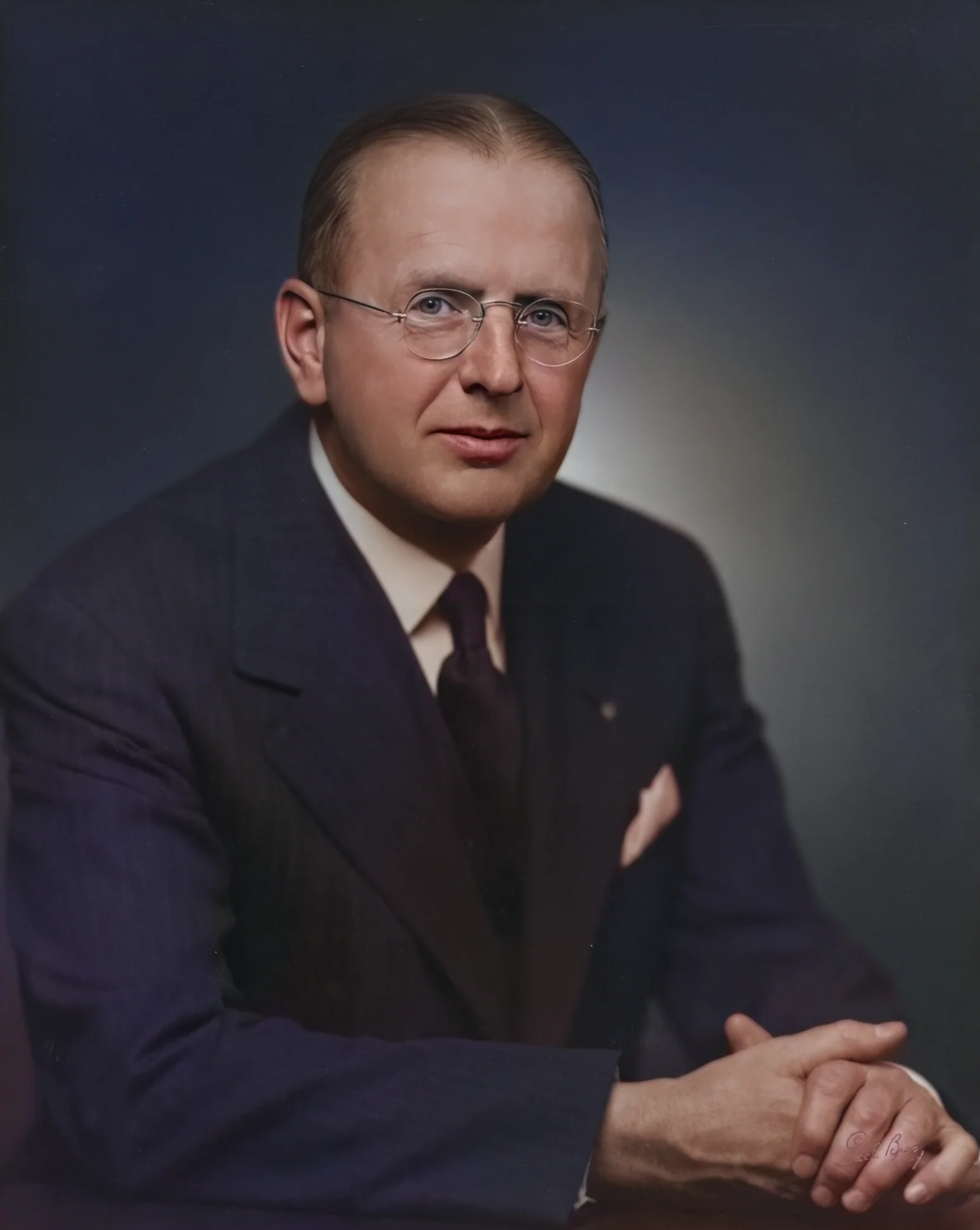
Attr: Smithsonian Institution
| 38 Quotes | |
| Occup. | Clergyman |
| From | USA |
| Born | May 31, 1898 Bowersville, Ohio, USA |
| Died | December 24, 1993 Pawling, New York, USA |
| Aged | 95 years |
| Cite | |
Citation Formats
APA Style (7th ed.)
Norman vincent peale biography, facts and quotes. (2026, February 11). FixQuotes. https://fixquotes.com/authors/norman-vincent-peale/
Chicago Style
"Norman Vincent Peale biography, facts and quotes." FixQuotes. February 11, 2026. https://fixquotes.com/authors/norman-vincent-peale/.
MLA Style (9th ed.)
"Norman Vincent Peale biography, facts and quotes." FixQuotes, 11 Feb. 2026, https://fixquotes.com/authors/norman-vincent-peale/. Accessed 6 Mar. 2026.
Early Life and Background
Norman Vincent Peale was born May 31, 1898, in Bowersville, Ohio, and grew up in a small-town Midwestern world shaped by Protestant piety, civic optimism, and the practical ethic of self-improvement. His father, a Methodist minister, moved the family as pastorates changed, giving Peale early intimacy with church life not as abstraction but as weekly labor - sermons prepared, visits made, hope offered to the sick and discouraged. That itinerant rhythm also trained him to read rooms quickly and speak in a way ordinary people could use on Monday morning.Peale came of age as the United States moved through World War I, the moral reform impulses of the Progressive Era, and the early years of mass advertising and radio. Those decades taught Americans to believe in technique - in slogans, programs, and habits that could reorganize a life. Peale absorbed that atmosphere and later translated it into religious language, insisting that faith was not only salvation but also a discipline of mind, will, and emotional tone.
Education and Formative Influences
After service in the U.S. Army during World War I, Peale studied at Ohio Wesleyan University, graduating in 1920, and then at Boston University School of Theology, earning a B.D. in 1923; he was ordained in the Methodist Episcopal Church. He encountered modern psychology as it entered popular culture, the Social Gospel as it tried to match faith to social problems, and the emerging science of persuasion. In these years he formed the synthesis that would define him: traditional Christian devotion coupled to the idea that inner attitudes - anxiety, resentment, self-talk - could be trained as deliberately as muscles.Career, Major Works, and Turning Points
Peale served churches in New England and Brooklyn before becoming pastor of Marble Collegiate Church (Reformed Church in America) in Manhattan in 1932, a pulpit he held for more than half a century. During the Depression, then World War II, and the anxious early Cold War, his message met a public hungry for steadiness and momentum. He expanded a pastoral counseling practice into an institutional method, co-founding the American Foundation of Religion and Psychiatry in 1946 with psychiatrist Smiley Blanton, and reaching millions through sermons, radio, and print. His breakthrough book, The Power of Positive Thinking (1952), turned him into a national figure, followed by a steady stream of titles such as Stay Alive All Your Life (1957) and The Tough-Minded Optimist (1964). His influence was not confined to churchgoers; he became a symbol of American confidence, praised for energizing people and criticized for blurring lines between theology, psychology, and salesmanship.Philosophy, Style, and Themes
Peale preached in short, usable paragraphs: a problem named, a fear reframed, a ritual prescribed - prayer, visualization, gratitude, disciplined speech. He was less interested in metaphysical argument than in what he considered spiritual engineering. When he said, “Imagination is the true magic carpet”. he was describing the inner mechanism he believed could lift a person above circumstances: picture a healthier self, a calmer mind, a reconciled relationship, then act as if the picture were already partly true. In his best moments this was pastoral realism - a way of giving the anxious a tool - though it could also flatten tragedy into technique.At his core Peale was a minister of morale, convinced that enthusiasm and endurance were moral forces. “There is a real magic in enthusiasm. It spells the difference between mediocrity and accomplishment”. captures his belief that emotional temperature shapes destiny, and that faith is partially the art of keeping the inner fires lit when evidence is thin. Yet his optimism was not merely sunny; it was also a warning against ego and brittle self-regard. “Drop the idea that you are Atlas carrying the world on your shoulders. The world would go on even without you. Don't take yourself so seriously”. is Peale at his most psychologically shrewd - prescribing humility not as self-negation, but as relief from the exhausting fantasy of total control.
Legacy and Influence
Peale died December 24, 1993, in Pawling, New York, after a long public life that helped define the genre now called inspirational nonfiction and much of modern self-help preaching. His admirers credit him with bringing prayer into everyday language and giving ordinary Americans a vocabulary for courage, while his critics argue that he made faith too compatible with success culture. Either way, the Peale formula - scripture plus psychology plus performance-ready encouragement - reshaped American pulpit rhetoric, influenced corporate motivation and political messaging, and seeded decades of positive-thinking literature that still borrows his central premise: inner life can be trained, and hope, when practiced, becomes a kind of power.Our collection contains 38 quotes written by Norman, under the main topics: Motivational - Wisdom - Never Give Up - Friendship - Live in the Moment.
Other people related to Norman: Ben Sweetland (Author), David Joseph Schwartz (Businessman), Claude M. Bristol (Writer)
Frequently Asked Questions
- Norman Vincent Peale The Power of Positive Thinking: Norman Vincent Peale wrote "The Power of Positive Thinking", first published in 1952. The book promotes an optimistic mindset and practical faith-based techniques for overcoming negativity.
- Norman Vincent Peale Trump: Norman Vincent Peale officiated the wedding of Donald Trump and Ivana Trump in 1977 at Marble Collegiate Church in New York City. Norman Vincent Peale was also a longtime minister at Marble Collegiate Church.
- Norman Vincent Peale 10 rules: Norman Vincent Peale did not publish an official, universally recognized list titled "10 rules" in his major works. Many "10 rules" lists online are later summaries rather than a single authenticated set from Norman Vincent Peale.
- Norman Vincent Peale books: Norman Vincent Peale wrote many books, including "The Power of Positive Thinking" (1952) and "The Art of Real Happiness" (1950). He was also co-author of "How to Win Over Worry" (1950).
- Norman Vincent Peale cause of death: Norman Vincent Peale died on December 24, 1993, in Pawling, New York. His specific cause of death is not consistently reported in reliable, widely cited sources.
- How old was Norman Vincent Peale? He became 95 years old
Source / external links