
Norodom Sihanouk Biography Quotes 3 Report mistakes
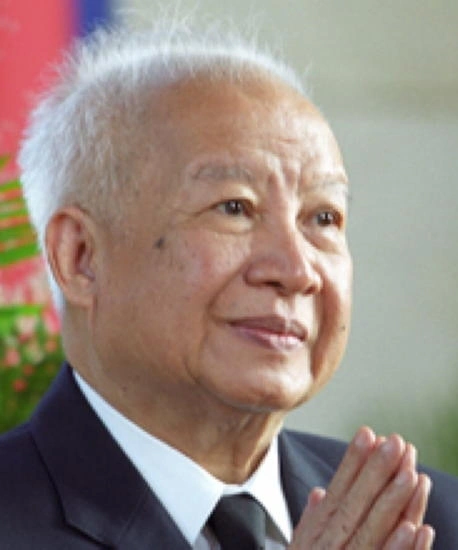
| 3 Quotes | |
| Occup. | Royalty |
| From | Cambodia |
| Born | October 31, 1922 Phnom Penh, Cambodia |
| Age | 103 years |
| Cite | |
Citation Formats
APA Style (7th ed.)
Norodom sihanouk biography, facts and quotes. (2026, February 16). FixQuotes. https://fixquotes.com/authors/norodom-sihanouk/
Chicago Style
"Norodom Sihanouk biography, facts and quotes." FixQuotes. February 16, 2026. https://fixquotes.com/authors/norodom-sihanouk/.
MLA Style (9th ed.)
"Norodom Sihanouk biography, facts and quotes." FixQuotes, 16 Feb. 2026, https://fixquotes.com/authors/norodom-sihanouk/. Accessed 5 Apr. 2026.
Early Life and Background
Norodom Sihanouk was born on October 31, 1922, in Phnom Penh, into Cambodia's Norodom royal line at a moment when the kingdom existed under the shadow of French Indochina. His father, Prince Norodom Suramarit, and his mother, Princess Sisowath Kossamak, linked the two main royal branches, a dynastic fact that later made him a plausible compromise figure to outside administrators and internal courtiers alike. The Cambodia of his childhood was outwardly quiet, but it was also a society in which royal ritual, Buddhist merit, and colonial bureaucracy competed to define authority.The boy prince grew up watching power operate as theater: the palace as a place of ceremony, and the protectorate as a place of paperwork and police. That split between symbolic legitimacy and administrative control shaped his instincts early - he learned to treat politics as performance without forgetting that real coercion sat behind it. When France sought a pliant monarch during World War II, those instincts would be tested in public and at high speed.
Education and Formative Influences
Educated in Phnom Penh and later in Saigon at the Lycee Chasseloup-Laubat, Sihanouk absorbed French language and institutional habits while remaining deeply formed by Cambodian Buddhism and court culture. The mix produced a leader who could speak to colonial officials in their own idiom yet justify choices through Khmer concepts of harmony, patronage, and karmic consequence. The war years, Japanese pressure on the French, and the rise of anti-colonial movements across Asia supplied his central lesson: small states survive by reading great-power moods early, and by turning moral claims into diplomatic leverage.Career, Major Works, and Turning Points
Chosen by the French and crowned king in 1941, Sihanouk quickly grew from presumed figurehead into strategist, steering Cambodia through the end of empire. He pressed for full sovereignty and in 1953 secured independence, then in 1955 abdicated in favor of his father to enter day-to-day politics, founding the Sangkum Reastr Niyum and dominating elections with a blend of charisma, patronage, and repression. He pursued neutrality through the Cold War, balancing ties with China, France, and at times the United States, while allowing North Vietnamese sanctuaries that later drew Cambodia deeper into the Vietnam War. In 1970, while abroad, he was overthrown by Lon Nol; from exile he allied with the Khmer Rouge to regain leverage, only to become their prisoner after their 1975 victory. He survived the killing years, reemerged as an international symbol of Cambodian suffering, and after the 1991 Paris Peace Accords returned to a constitutional monarchy, becoming king again in 1993. In 2004 he abdicated due to ill health and spent his final years largely in Beijing, dying in 2012 - a monarch who had been king, prince, head of state, exile, captive, and again king.Philosophy, Style, and Themes
Sihanouk's inner life joined Buddhist moral vocabulary to a relentlessly tactical temperament. He wanted to be seen as the nation's father - generous, offended by ingratitude, and alert to betrayal - yet he also treated legitimacy as something to be staged through radio addresses, mass rallies, and a constant narration of events in his own voice. His fixation on historical judgment was not abstract: “Time will inevitably uncover dishonesty and lies; history has no place for them”. The line reads like self-defense and self-instruction at once, suggesting a ruler haunted by rumor and faction, who tried to outrun accusation by recording his version of Cambodia's fate before others could.Neutrality was his central theme and his chosen shield. He framed it as both geopolitics and ethics, insisting, “Cambodia wanted no part of SEATO. We would look after ourselves as neutrals and Buddhists”. The phrasing reveals how he fused strategy with identity: to be Buddhist was to seek balance and avoid entangling alliances, but also to claim a moral high ground against the Cold War demand for sides. Yet neutrality, in his hands, could slide into personal sovereignty - a belief that only his improvisation could keep the country intact, even when compromises quietly deepened internal polarization.
Legacy and Influence
Sihanouk endures as Cambodia's most consequential modern royal - a leader who won independence, shaped a generation's political culture, and embodied the country's tragedies. Admirers credit his diplomatic agility and cultural nationalism; critics fault his intolerance of opposition, his misreadings of revolutionary forces, and his fateful alliance of convenience after 1970. His influence persists in how Cambodian politics blends monarchy, charisma, and patronage, and in the cautionary memory that small-state survival can demand artistry but also humility. Above all, he left a portrait of leadership as narrative: a man who tried to write Cambodia's story while history, as he warned, kept writing back.Our collection contains 3 quotes written by Norodom, under the main topics: Honesty & Integrity - Peace.
Other people related to Norodom: Hun Sen (Statesman), Sam Rainsy (Politician)
Source / external links