
Novalis Biography Quotes 21 Report mistakes
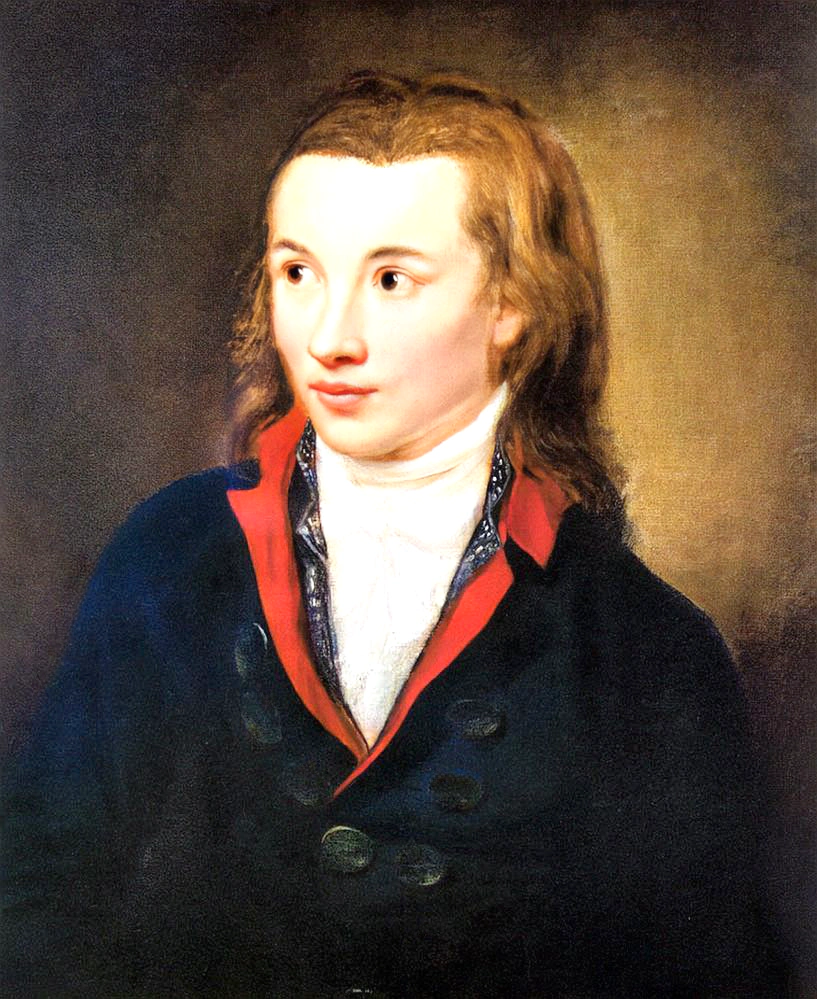
| 21 Quotes | |
| Born as | Georg Philipp Friedrich Freiherr von Hardenberg |
| Occup. | Poet |
| From | Germany |
| Born | May 2, 1772 Oberwiederstedt, Electorate of Saxony, Germany |
| Died | March 25, 1801 |
| Aged | 28 years |
| Cite | |
Citation Formats
APA Style (7th ed.)
Novalis biography, facts and quotes. (2026, February 11). FixQuotes. https://fixquotes.com/authors/novalis/
Chicago Style
"Novalis biography, facts and quotes." FixQuotes. February 11, 2026. https://fixquotes.com/authors/novalis/.
MLA Style (9th ed.)
"Novalis biography, facts and quotes." FixQuotes, 11 Feb. 2026, https://fixquotes.com/authors/novalis/. Accessed 5 Mar. 2026.
Early Life and Background
Georg Philipp Friedrich Freiherr von Hardenberg, who wrote under the name Novalis, was born on 2 May 1772 at the family estate of Wiederstedt in Electoral Saxony (in present-day Saxony-Anhalt). He grew up amid the ordered hierarchies of minor nobility and the moral intensity of German Pietism: his father, Heinrich Ulrich Erasmus von Hardenberg, was a stern Moravian-leaning administrator of estates and later saltworks, and the household cultivated discipline, inward examination, and a sense that the visible world hid a deeper, providential structure.The late Enlightenment and the first shocks of the French Revolution formed the background noise of his youth, but his temperament leaned less toward political agitation than toward metaphysical urgency. Frail health and long stretches of reading encouraged an interior life in which faith, feeling, and speculation braided together. Even early on, he sought a language that could reconcile the demands of reason with a longing for wholeness - a longing sharpened by the era's fractures between religion and science, tradition and modernity.
Education and Formative Influences
After early schooling and private study, Hardenberg attended the University of Jena in 1790, entering the most electric intellectual scene in Germany, where he encountered the circles around Schiller and the ferment that would become early German Romanticism; he later studied law at Leipzig and Wittenberg, completing his legal training and passing examinations in 1794. Jena also brought him into contact with post-Kantian philosophy - above all Fichte's Wissenschaftslehre - and with Friedrich Schlegel and August Wilhelm Schlegel, who were redefining criticism and literature as a unified project of mind and world-making. These influences gave him a disciplined method for what might otherwise have been pure rapture: the habit of treating imagination as a cognitive power, not an escape.Career, Major Works, and Turning Points
In 1794 he entered administrative service and soon worked with the saltworks directorate at Weissenfels, a practical career that later deepened through technical study at the Mining Academy in Freiberg (1797-1799) under the geologist Abraham Gottlob Werner; the mining world - shafts, strata, measurement, and hidden veins - became a master metaphor for his thought. The decisive personal turning point was his engagement to Sophie von Kuhn in 1795; her illness and death in 1797 transformed private grief into a spiritual poetics of transfiguration. Out of this crisis came his most enduring works: the "Hymnen an die Nacht" (1799-1800), the novel-fragment "Heinrich von Ofterdingen" (published posthumously, 1802) with its emblematic "blue flower", the philosophical-scientific notebooks later known as the "Fichte-Studien" and "Das Allgemeine Brouillon", and the "Geistliche Lieder". Tuberculosis cut him down at Weissenfels on 25 March 1801, leaving a compact oeuvre whose unfinished state feels less like failure than like an invitation to continue.Philosophy, Style, and Themes
Novalis wrote at the hinge where Enlightenment confidence met Romantic doubt, and his inner life is legible in the way he makes longing productive rather than merely plaintive. He defined thinking itself as a form of yearning: “Philosophy is properly home-sickness; the wish to be everywhere at home”. That sentence is not a decorative aphorism but a psychological diagnosis - the mind as an exile seeking a homeland that cannot be reduced to any single institution, creed, or empirical fact. His grief for Sophie intensified this impulse into a metaphysics of night: darkness becomes not negation but a passage into intimacy, where death is reimagined as a mode of inward continuity. The result is an art that treats devotion and desire as instruments of knowledge.His style - lyrical hymn, fragment, fairy tale, essay, and notebook aphorism - mirrors his conviction that no single genre can hold reality. He stages a reconciliation between analysis and enchantment, insisting that imagination can repair what mere rationality dismembers: “Poetry heals the wounds inflicted by reason”. Yet he is not anti-intellectual; his immersion in mining and natural philosophy shows a hunger for precision, only redirected toward the symbolic depth of phenomena. When his writing warns that disenchantment breeds substitutes, it is as much cultural critique as theology: “Where no gods are, spectres rule”. In Novalis, the spectres are not only superstition but the hollow compulsions of a world that has lost living meaning - and his remedy is a re-sacralized perception in which love, language, and nature re-enter dialogue.
Legacy and Influence
Though he died at twenty-eight, Novalis became a keystone of early German Romanticism, shaping the movement's fusion of philosophy, lyric intensity, and the dream of a "Romanticizing" of the world. The "blue flower" from "Heinrich von Ofterdingen" endured as a shorthand for longing, vocation, and the infinite task of art, while the "Hymns to the Night" offered a model for modern spiritual lyric that could be orthodox, heretical, and intimate at once. Later poets and thinkers - from the Jena Romantics to Symbolists and modernists drawn to fragment and myth - found in him a disciplined mystic of language, a writer who made inner experience historically consequential and whose unfinished projects continue to feel like open systems rather than closed monuments.Our collection contains 21 quotes written by Novalis, under the main topics: Wisdom - Truth - Art - Nature - Deep.
Novalis Famous Works
- 1802 Heinrich von Ofterdingen (Novel)
- 1800 Hymns to the Night (Poetry)
- 1798 Fragments (Collection)
- 1798 The Novices of Sais (Novel)
Source / external links