
Ogden Nash Biography Quotes 37 Report mistakes
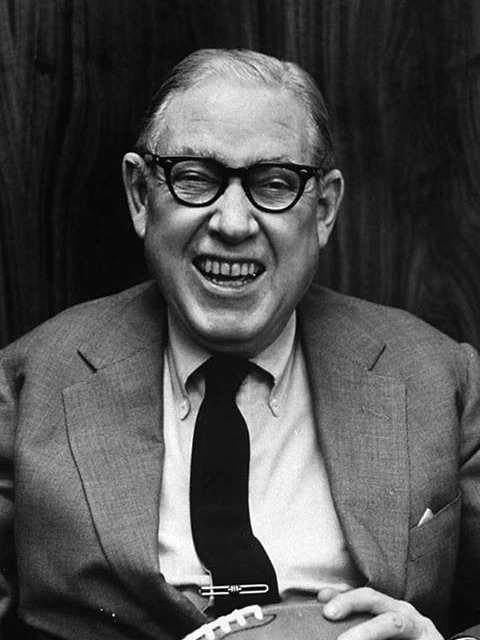
| 37 Quotes | |
| Born as | Frederic Ogden Nash |
| Occup. | Poet |
| From | USA |
| Born | August 19, 1902 Rye, New York, USA |
| Died | May 19, 1971 Baltimore, Maryland, USA |
| Aged | 68 years |
| Cite | |
Citation Formats
APA Style (7th ed.)
Ogden nash biography, facts and quotes. (2026, February 11). FixQuotes. https://fixquotes.com/authors/ogden-nash/
Chicago Style
"Ogden Nash biography, facts and quotes." FixQuotes. February 11, 2026. https://fixquotes.com/authors/ogden-nash/.
MLA Style (9th ed.)
"Ogden Nash biography, facts and quotes." FixQuotes, 11 Feb. 2026, https://fixquotes.com/authors/ogden-nash/. Accessed 5 Mar. 2026.
Early Life and Background
Frederic Ogden Nash was born on August 19, 1902, in Rye, New York, into a mobile, white-collar family shaped by the restless pace of early-20th-century American commerce. His father, a salesman whose work required frequent moves, brought the household through a succession of addresses that left Nash both socially adaptable and privately wary of permanence. That tension - between the desire for a settled domestic comedy and the knowledge that everything changes - would later animate poems that look like throwaways but are built on the ache of transience.Nash grew up amid the rising culture of mass advertising, department stores, and magazine humor, when wit was becoming a national currency and the middle class was learning to narrate itself. He watched the new century promise ease and improvement while delivering more paperwork, more schedules, more noise. Even in youth, he seemed drawn to the small absurdities of ordinary life - pets, etiquette, health fads, romance - because they were where modern anxiety hid in plain sight, safely disguised as jokes.
Education and Formative Influences
After preparatory schooling, Nash entered Harvard University (class of 1924) but left without a degree, a decision that in retrospect suited his temperament: he was less interested in institutional prestige than in the nimble freedoms of language. He absorbed the cadences of light verse, the snap of newspaper headlines, and the new American magazine voice, learning that the surest way to tell the truth in a culture of slogans was to parody its slogans more accurately than it could.Career, Major Works, and Turning Points
Nash drifted through early jobs before finding his true medium in publishing and the magazine world - first in advertising and editorial work, then in the quicksilver arena of The New Yorker, where his compact, mischievous poems became a signature of the interwar and wartime years. His first collection, Hard Lines (1931), made his name, and a steady stream followed, including Happy Days (1933), I'm a Stranger Here Myself (1938), Many Long Years Ago (1945), and You Can't Get There from Here (1957). He also wrote for the stage, most notably the lyrics for the Broadway hit One Touch of Venus (1943), and later composed children's verse and occasional pieces. Across the Great Depression, World War II, and the postwar boom, Nash proved that brevity could be a form of moral clarity: he compressed the era's nervous energy into comic couplets that felt like party chatter and landed like verdicts.Philosophy, Style, and Themes
Nash's philosophy was skeptical, domestic, and sharply anti-heroic. He distrusted grand systems and preferred the small, repeatable crises of daily life - marriage, money, health, manners - because they were where people actually negotiated power. His line breaks were often engineered as traps, with a plainspoken setup that swerved into an improbable rhyme or an ungainly, deliberately overlong word, as if the language itself were protesting modern over-organization. He made a method of sounding casual: the voice of someone who would like to be at ease but keeps noticing the fine print, and keeps noticing that the fine print is the point.His humor, though, was rarely simple cheer. It was a defense against disappointment and a way to admit fear without melodrama. When he observes, “The trouble with a kitten is that eventually it becomes a cat”. , the joke carries a deeper logic: affection creates obligation, and time converts charm into responsibility. Likewise his complaint that “Progress might have been alright once, but it has gone on too long”. is not mere crankiness but a portrait of a century that promised liberation while multiplying pressures - faster communication, stricter norms of efficiency, and fewer places to hide from comparison. Even his self-mocking confession, “I would live all my life in nonchalance and insouciance, Were it not for making a living, which is rather a nouciance”. , sketches a psychology of reluctant participation: a man temperamentally suited to contemplation, repeatedly dragooned by paychecks and deadlines, turning that irritation into art.
Legacy and Influence
Nash died on May 19, 1971, in Baltimore, Maryland, after decades in which his poems had circulated as widely as newspaper cartoons and advertising jingles, yet with a precision few humorists sustained. He helped define the modern American light-verse tradition, proving that comic writing could be both popular and technically audacious, and he left behind a template for later writers who fuse wit with unease - from magazine poets to stand-up comics who build entire worldviews from small observations. His lines endure because they are not only funny but diagnostic: they capture the inner negotiations of ordinary life in a mass society, where the quickest laugh is often the most accurate account of how it feels to be alive.Our collection contains 37 quotes written by Ogden, under the main topics: Witty One-Liners - Puns & Wordplay - Parenting - Marriage - Aging.
Other people related to Ogden: S. J. Perelman (Writer), Kurt Weill (Composer)
Ogden Nash Famous Works
- 1938 I'm a Stranger Here Myself (Collection)
- 1931 Hard Lines (Collection)