
O.J. Simpson Biography Quotes 9 Report mistakes
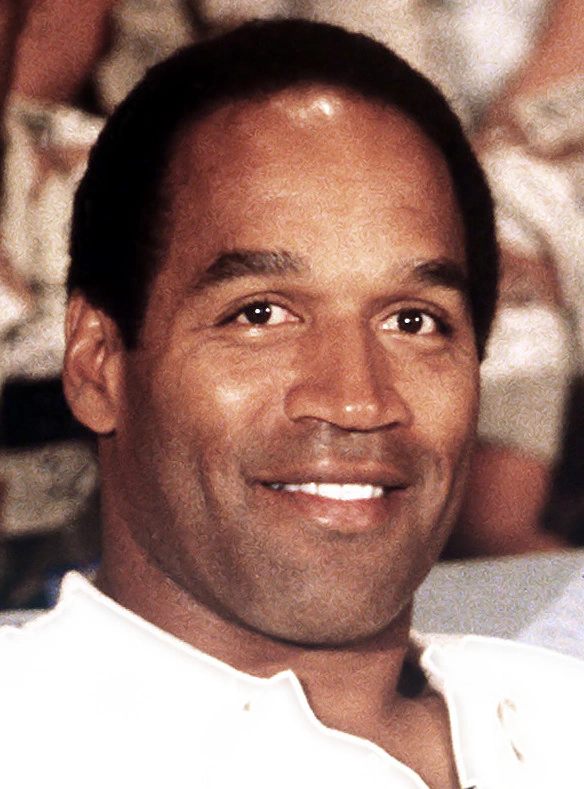
| 9 Quotes | |
| Born as | Orenthal James Simpson |
| Occup. | Athlete |
| From | USA |
| Born | July 9, 1947 San Francisco, California |
| Age | 78 years |
| Cite | |
Citation Formats
APA Style (7th ed.)
O.j. simpson biography, facts and quotes. (2026, February 13). FixQuotes. https://fixquotes.com/authors/oj-simpson/
Chicago Style
"O.J. Simpson biography, facts and quotes." FixQuotes. February 13, 2026. https://fixquotes.com/authors/oj-simpson/.
MLA Style (9th ed.)
"O.J. Simpson biography, facts and quotes." FixQuotes, 13 Feb. 2026, https://fixquotes.com/authors/oj-simpson/. Accessed 27 Mar. 2026.
Early Life and Background
Orenthal James Simpson was born July 9, 1947, in San Francisco, California, into a working-class family in the Potrero Hill public-housing projects. The city around him was shifting from wartime industry to postwar inequality, and the streets could be both proving ground and trap. He grew up with a reputation for speed and charm but also for skirting trouble, the kind of early duality that later hardened into a public split between a dazzling persona and darker headlines.Simpson battled childhood illness - rickets and asthma are often cited - and wore leg braces for a time, experiences that sharpened his hunger to be seen as powerful and unbreakable. Sports became both identity and exit strategy. In an era when Black athletes were marketed as entertainers but rarely granted full control of their image, Simpson learned early to perform likability as a kind of armor - smiling, accommodating, and careful about the rooms he wanted access to.
Education and Formative Influences
After time at City College of San Francisco, Simpson emerged at the University of Southern California as a transformational running back in the late 1960s, when campus life and the nation were roiling with civil-rights conflict and Vietnam-era unrest. At USC he won the Heisman Trophy in 1968 and refined the traits that would define him: a patient, gliding running style; an instinct for angles; and an acute understanding of celebrity as craft. He was mentored by coaches who emphasized discipline and film study, but he also absorbed Hollywood-adjacent Los Angeles - the idea that an athlete could become an all-purpose brand.Career, Major Works, and Turning Points
Drafted first overall by the Buffalo Bills in 1969, Simpson became the NFLs premier back, culminating in his 1973 season when he became the first player to rush for 2, 000 yards in a 14-game season, an achievement that fused power with balletic efficiency and made him a national fixture. He parlayed that fame into broadcasting and acting, appearing in films such as The Towering Inferno (1974) and later the Naked Gun comedies, presenting himself as genial and harmless. The defining turning point came in 1994, when his ex-wife Nicole Brown Simpson and her friend Ronald Goldman were murdered; Simpson was charged, pursued in the televised Bronco chase, and tried in a case that became a referendum on policing, race, celebrity, and domestic violence. He was acquitted in criminal court in 1995, found liable for wrongful death in civil court in 1997, and his public standing never recovered. In 2007 he was arrested in Las Vegas for an armed confrontation over sports memorabilia; convicted in 2008 of robbery and kidnapping-related charges, he served roughly nine years before parole in 2017, a final act in a long collapse from adored athlete to cautionary symbol.Philosophy, Style, and Themes
Simpsons public philosophy was built on assimilation as ambition: he pursued mass appeal by insisting he was beyond categories, famously saying, “I'm not black, I'm O.J”. Psychologically, the line reads less like innocence than strategy - an attempt to convert race, and the burdens attached to it, into a detachable costume. It fit a commercial era that rewarded the athlete who never complicated the sponsors story, yet it also left him exposed when the nation demanded a moral account rather than a marketable smile.His self-description repeatedly returned to gentleness, goodness, and narration on his own terms. “I'm a lover, not a fighter. I've always been that way”. “I'm not trying to justify anything. I'm just trying to tell my side of the story”. These are not just defenses; they are portraits of a man who believed identity could be asserted into existence - that character was what he said it was, not what others inferred from patterns, accusations, or harm. The tragedy of the Simpson saga is how that performative selfhood collided with evidence, with histories of intimate-partner violence reported around Nicole Brown Simpson, and with a media ecosystem that turned private catastrophe into national sport. His style - genial, camera-ready, confident in his own narrative gravity - became inseparable from the era that amplified it.
Legacy and Influence
Simpson remains two figures in permanent, unresolved tension: one of the greatest running backs in football history and the central character in the most consequential American celebrity trial of the 20th century. On the field he influenced how the position was evaluated - vision, patience, open-field geometry - and his 2, 000-yard season stands as a benchmark across changing rules and seasons. Off the field, his case reshaped courtroom television, crisis public relations, and the countrys conversation about race, policing, and fame, while also forcing a harsher reckoning with domestic violence and the costs of believing charisma over victims. His enduring influence is less inspirational than diagnostic: he became a lens through which America studies its own appetites - for heroes, for spectacle, and for stories that let everyone claim they were right.Our collection contains 9 quotes written by Simpson, under the main topics: Witty One-Liners - Justice - Love - Honesty & Integrity - Legacy & Remembrance.
Other people related to Simpson: Christopher Darden (Lawyer), David Schwimmer (Actor), Cuba Gooding, Jr. (Actor), Rob Morrow (Actor), Jordana Brewster (Actress), Robert Kardashian (Lawyer)
Source / external links