
Oksana Chusovitina Biography Quotes 6 Report mistakes
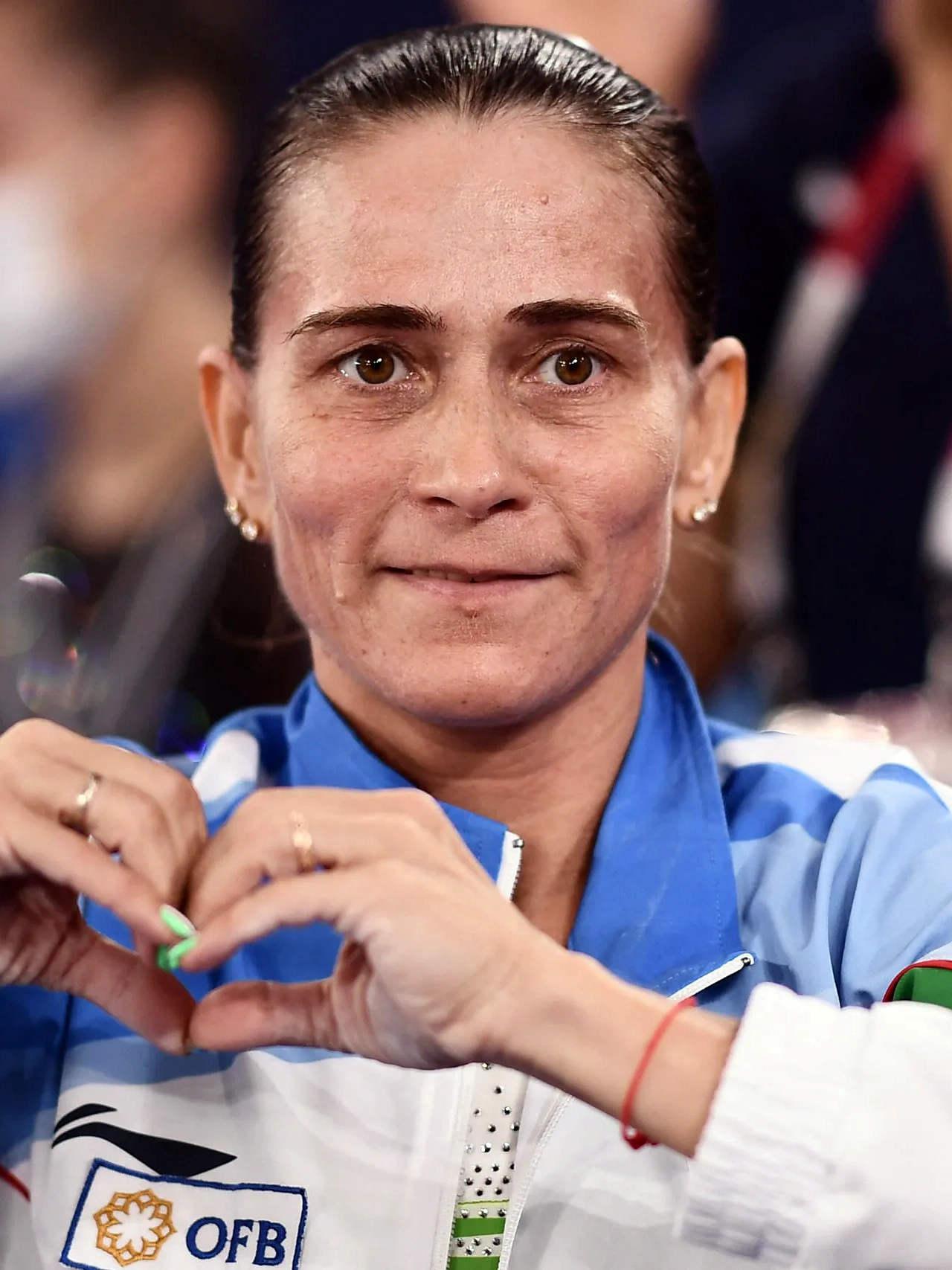
Attr: scarymommy.com
| 6 Quotes | |
| Born as | Oksana Aleksandrovna Chusovitina |
| Native name | Оксана Чусовитина |
| Occup. | Athlete |
| From | Uzbekistan |
| Spouse | Bakhodir Kurbanov |
| Born | June 19, 1975 Bukhara, Uzbek SSR, Soviet Union (now Uzbekistan) |
| Age | 50 years |
| Cite | |
Citation Formats
APA Style (7th ed.)
Oksana chusovitina biography, facts and quotes. (2026, February 15). FixQuotes. https://fixquotes.com/authors/oksana-chusovitina/
Chicago Style
"Oksana Chusovitina biography, facts and quotes." FixQuotes. February 15, 2026. https://fixquotes.com/authors/oksana-chusovitina/.
MLA Style (9th ed.)
"Oksana Chusovitina biography, facts and quotes." FixQuotes, 15 Feb. 2026, https://fixquotes.com/authors/oksana-chusovitina/. Accessed 12 Mar. 2026.
Early Life and Background
Oksana Aleksandrovna Chusovitina was born on June 19, 1975, in Bukhara, in the Uzbek Soviet Socialist Republic, a place where ancient Silk Road grandeur coexisted with late-Soviet austerity. She came of age in a system that treated sport as public achievement and private discipline - a route to mobility and recognition for talented children, but also a daily bargain with pain, repetition, and the state calendar of competitions. Gymnastics, with its early specialization and unforgiving standards, shaped her body and time before she was old enough to name what it was taking from her.Her early career unfolded as the Soviet Union dissolved and a new national identity formed around Uzbekistan. That historic rupture - flag, anthem, federation, funding - was not abstract for an elite athlete; it altered coaches, travel, equipment, and the very meaning of representing a country. Chusovitina became, in effect, a living bridge between eras: trained in the Soviet tradition of rigor and difficulty, then remade into an international competitor in a newly independent state learning to sustain world-class sport.
Education and Formative Influences
Chusovitina developed under the Central Asian branch of the Soviet gymnastics machine, where mastery meant thousands of correct landings and a temperament able to survive evaluation. Coaches prized amplitude and fearlessness, and she became known for explosive power - a rare asset in a discipline that often rewards lightness and line. The broader culture of women’s artistic gymnastics in the late 1980s and early 1990s - relentless internal competition, strict body control, and the expectation of short careers - formed the backdrop against which her later longevity would read as almost defiant.Career, Major Works, and Turning Points
She emerged internationally at the end of the Soviet period, winning team gold at the 1991 World Championships. For Uzbekistan, she became a national standard-bearer: a vault specialist capable of world finals, an all-arounder when needed, and a competitor who could absorb the pressure of being "the name" on a team sheet. At the 1992 Barcelona Olympics she competed for the Unified Team and earned team gold, then represented Uzbekistan at multiple subsequent Games, becoming one of the sport’s most enduring Olympic presences. The decisive turning point came in the early 2000s when her son, Alisher, was diagnosed with leukemia; treatment options pushed the family toward Germany, and she accepted the improbable logic of continuing to compete in order to finance care. Over time she represented Germany as well, later returning to compete again under the Uzbek flag, her career reframed not as a late flourish but as a long, purposeful arc of survival, responsibility, and choice. Across decades she remained most associated with vault - including the handspring double front that entered the Code of Points as the "Chusovitina" - and with the rare ability to stay competition-ready through rule changes, injury risks, and the sport’s shifting aesthetics.Philosophy, Style, and Themes
Chusovitina’s inner life, as it emerges through interviews and her behavior under pressure, is organized less around nostalgia than around work: train, adjust, endure, repeat. Her longevity was never presented as a miracle of genetics alone; it was a daily decision to keep returning to the gym when the sport tells women to leave. “Gymnastics has enough numbers. I don’t need to look at my age”. That line is not bravado so much as a coping strategy - a refusal to let the external metric of years define the internal metric of readiness. In a discipline obsessed with youth, she made professionalism and experience into a competitive resource.Her style on vault - direct approach, high block, unapologetic risk - mirrored her broader philosophy: commitment without ornamental explanation. Yet beneath that toughness sits an unusually candid emotional register. “I am passionate about gymnastics. Gymnastics gives me satisfaction and makes me happy. So why should I end what I love? I feel more energetic than ever before”. Passion here is not a slogan; it is a psychological engine that converts fear into routine and routine into identity. And when she speaks of strength as something felt and chosen rather than simply possessed, she frames resilience as volitional. “You know what? I feel good, full of power. Now I can feel my strength and my strong will. So I will keep on training”. The theme that repeats is agency: not the absence of hardship, but the insistence that hardship does not own the narrative.
Legacy and Influence
Chusovitina’s influence is both technical and moral. Technically, her eponymous vault and decades of finals helped normalize the idea that women’s gymnastics can include sustained careers, specialist pathways, and mature athletic identities. Culturally, she became a global symbol of commitment - not abstract "inspiration", but a concrete example of how elite sport intersects with migration, family health, and national belonging after the Soviet collapse. For Uzbekistan she remains a singular figure who carried the flag across generations; for the wider sport, she expanded what seemed possible about age, motherhood, and longevity, proving that excellence can be re-earned repeatedly rather than possessed once and remembered.Our collection contains 6 quotes written by Oksana, under the main topics: Never Give Up - Sports - Resilience - Training & Practice - Gratitude.
Source / external links