
Oliver Wendell Holmes Jr. Biography Quotes 34 Report mistakes
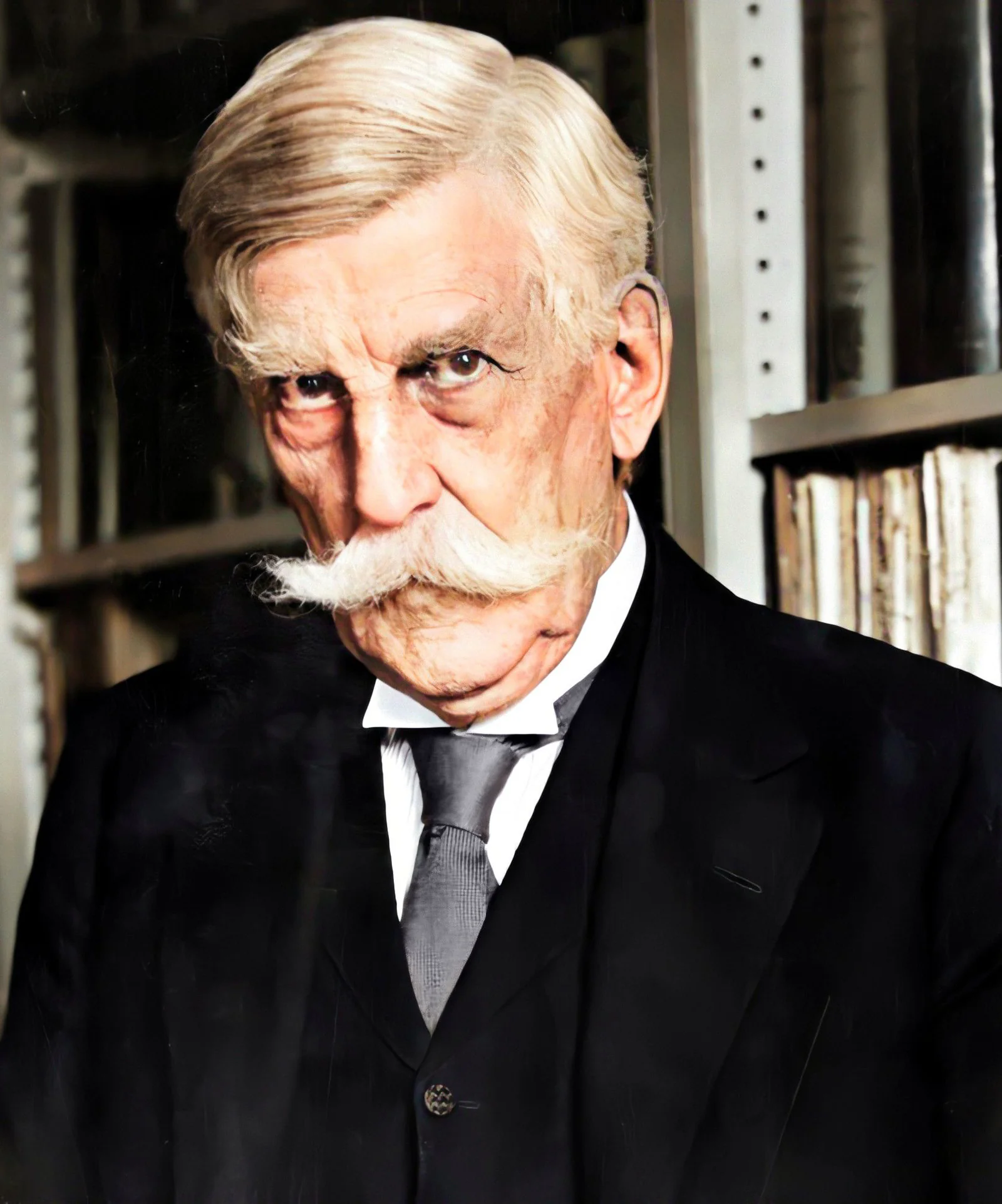
| 34 Quotes | |
| Occup. | Jurist |
| From | USA |
| Spouse | Fanny Bowditch Dixwell (1873-1929) |
| Born | March 8, 1841 Boston, Massachusetts, USA |
| Died | March 6, 1935 Washington, D.C., USA |
| Cause | Natural causes |
| Aged | 93 years |
| Cite | |
Citation Formats
APA Style (7th ed.)
Oliver wendell holmes jr. biography, facts and quotes. (2026, February 2). FixQuotes. https://fixquotes.com/authors/oliver-wendell-holmes-jr/
Chicago Style
"Oliver Wendell Holmes Jr. biography, facts and quotes." FixQuotes. February 2, 2026. https://fixquotes.com/authors/oliver-wendell-holmes-jr/.
MLA Style (9th ed.)
"Oliver Wendell Holmes Jr. biography, facts and quotes." FixQuotes, 2 Feb. 2026, https://fixquotes.com/authors/oliver-wendell-holmes-jr/. Accessed 27 Mar. 2026.
Early Life and Background
Oliver Wendell Holmes Jr. was born on March 8, 1841, in Boston, Massachusetts, into a household where public voice and private discipline overlapped. His father, Oliver Wendell Holmes Sr., was a physician, poet, and essayist at the center of New England letters; his mother, Amelia Lee Jackson Holmes, came from a well-connected Boston family. The younger Holmes grew up amid the civic self-confidence of antebellum Boston, in a city that prized moral argument, educated speech, and the authority of institutions.That inherited assurance was broken - and remade - by war. In 1861 he left Harvard as the Civil War opened, joining the 20th Massachusetts Volunteer Infantry. He fought at Ball's Bluff, Antietam, and Fredericksburg, was wounded three times, and watched comrades die in numbers that made political abstractions feel obscene. The battlefield left him with a lifelong stoicism and a sober sense that law and government are not moral essays but arrangements hammered out under pressure, sustained only as long as people will bear their costs.
Education and Formative Influences
After mustering out in 1864, Holmes returned to Harvard, completed his degree, and entered Harvard Law School, graduating in 1866. He read widely in history and philosophy and absorbed the era's evolutionary thinking, finding in it a vocabulary for change without sentimentality. In 1870 he married Fanny Bowditch Dixwell, a sharp-minded Bostonian; the marriage was devoted and childless, and their long domestic stability gave him cover for an inward life that was both guarded and intensely observant. He edited the American Law Review, practiced in Boston, and began the habit that would define him: treating legal doctrine as something made by human beings in time, not discovered in the sky.Career, Major Works, and Turning Points
Holmes rose through Massachusetts public life as a jurist: appointed to the Supreme Judicial Court of Massachusetts in 1882, became its chief justice in 1899, and in 1902 Theodore Roosevelt elevated him to the U.S. Supreme Court, where he served until 1932. His book The Common Law (1881) announced his central claim - that legal rules grow from experience, conflict, and social need rather than pure logic - and it set the tone for American legal realism. On the Supreme Court he wrote opinions that became touchstones: Schenck v. United States (1919) and Abrams v. United States (1919, dissent) on free speech; Lochner-era dissents resisting aggressive judicial invalidation of economic regulation; and Buck v. Bell (1927), a chilling reminder that his deference to majorities could harden into cruelty when joined to the era's eugenic certainties.Philosophy, Style, and Themes
Holmes' inner life was a discipline of doubt. The war taught him that conviction can be sincere and still be wrong, and that institutions must manage disagreement without pretending it can be purified away. He distrusted inflated language in law because he had seen how words can recruit bodies to die. That skepticism underlies his aphorism, “Certitude is not the test of certainty. We have been cocksure of many things that were not so”. The line is less a shrug than a self-warning: he aimed to keep his own mind from mistaking forceful belief for truth, and to keep courts from turning their preferences into constitutional fate.His jurisprudence married restraint to a hard-edged account of conflict. Holmes treated rights as real but bounded, social accommodations rather than metaphysical endowments, hence the enduring clarity of, “The right to swing my fist ends where the other man's nose begins”. For him, law was a practical truce, always negotiated at the boundary where one will collides with another. He also insisted that interpretation is historical and contextual - the judge must hear language as a living instrument, not a museum piece: “A word is not a crystal, transparent and unchanged; it is the skin of a living thought and may vary greatly in color and content according to the circumstances and time in which it is used”. This was Holmes the psychologist of legal meaning: attentive to how power, fear, custom, and circumstance tint what a community thinks it is saying.
Legacy and Influence
Holmes died on March 6, 1935, in Washington, D.C., having become a national symbol of the learned, modern judge - brisk, unsentimental, and intellectually brave. His greatest influence runs through legal realism, modern First Amendment thought, and the idea that constitutional law must reckon with time, context, and the limits of judicial competence. Admirers celebrate his dissents as models of compressed force and his willingness to let democratic experiments proceed; critics note that the same deference helped enable some of the darkest policies of his age. The enduring Holmes is therefore not a saint of liberty but a monument to the costs of intellectual honesty: a jurist who tried to build law without illusions, and who forced later generations to ask whether a society can be governed by experience alone without losing its conscience.Our collection contains 34 quotes written by Oliver, under the main topics: Witty One-Liners - Motivational - Truth - Wisdom - Justice.
Other people related to Oliver: Francis Biddle (Lawyer), Alger Hiss (Public Servant), William Henry Moody (Politician), Frederick Pollock (Judge), Joseph McKenna (Politician)
Source / external links