
Oliver Wendell Holmes Sr. Biography Quotes 78 Report mistakes
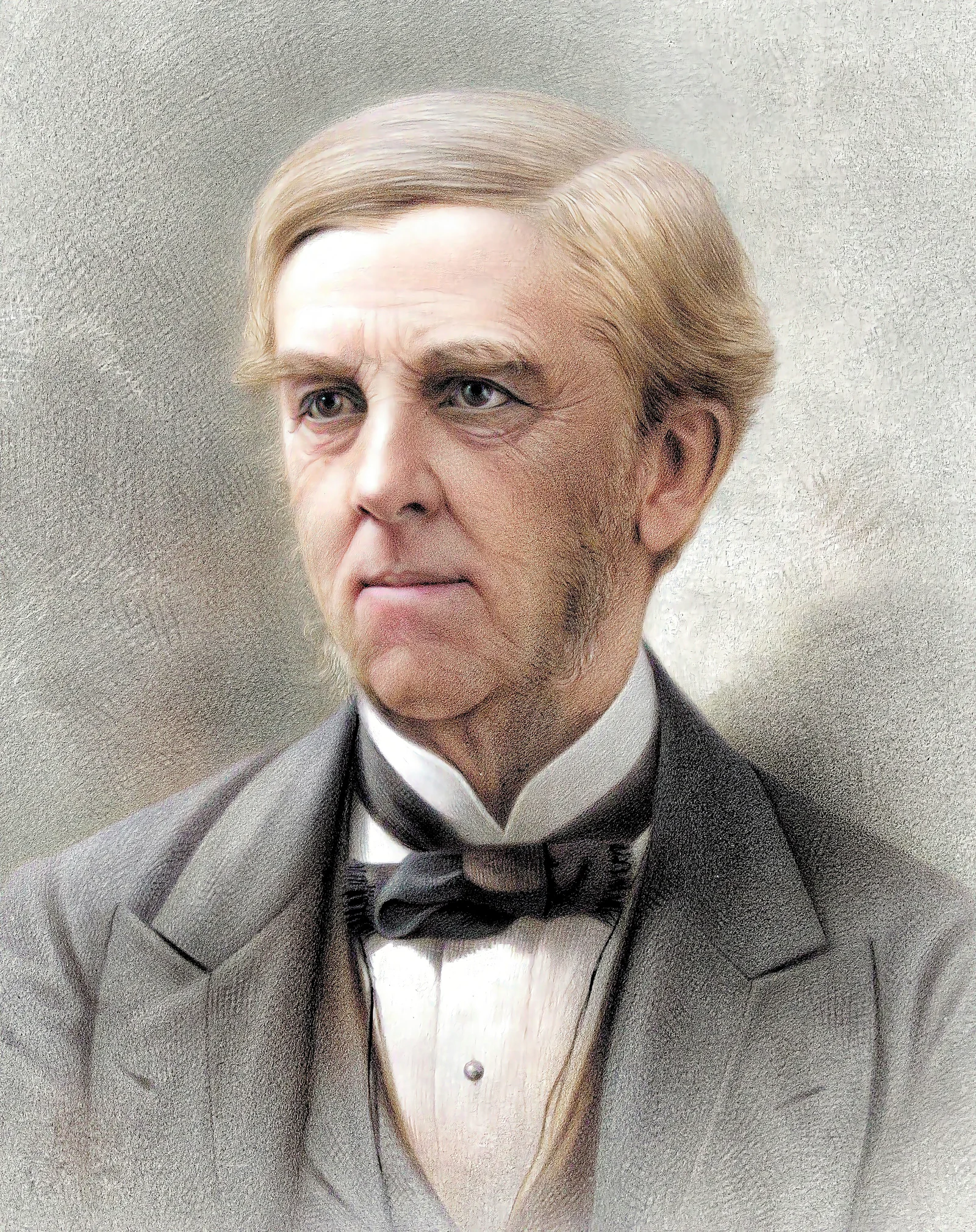
| 78 Quotes | |
| Occup. | Poet |
| From | USA |
| Born | August 29, 1809 Cambridge, Massachusetts, USA |
| Died | October 8, 1894 Boston, Massachusetts, USA |
| Aged | 85 years |
| Cite | |
Citation Formats
APA Style (7th ed.)
Oliver wendell holmes sr. biography, facts and quotes. (2026, February 2). FixQuotes. https://fixquotes.com/authors/oliver-wendell-holmes-sr/
Chicago Style
"Oliver Wendell Holmes Sr. biography, facts and quotes." FixQuotes. February 2, 2026. https://fixquotes.com/authors/oliver-wendell-holmes-sr/.
MLA Style (9th ed.)
"Oliver Wendell Holmes Sr. biography, facts and quotes." FixQuotes, 2 Feb. 2026, https://fixquotes.com/authors/oliver-wendell-holmes-sr/. Accessed 23 Mar. 2026.
Early Life and Background
Oliver Wendell Holmes Sr. was born on August 29, 1809, in Cambridge, Massachusetts, into the confident but watchful world of post-Revolution New England. His father, Abiel Holmes, a Congregational minister and historian, carried the region's sense of providential mission; his mother, Sarah Wendell Holmes, connected him to old Boston lineages that prized learning as a civic duty. The boy grew up in the orbit of Harvard and the pulpit, where wit was tolerated when it served moral clarity, and where public speech was an instrument of authority.That environment gave Holmes an early double consciousness: an affection for inherited order and an impatience with cant. He watched Boston's gentility harden into social ritual even as the young republic expanded and argued about slavery, reform, and the meaning of progress. From the start he behaved like a man who would both belong and tease his own class - a stance that later made him a poet of the fireside circle and also its sly diagnostician.
Education and Formative Influences
Holmes entered Harvard College and graduated in 1829, absorbing the classics, the argumentative swagger of student societies, and the Boston talent for public performance. He then tried law briefly before turning to medicine, studying in Boston and, crucially, in Paris, where the new clinical methods - bedside observation, autopsy, statistical skepticism - impressed him as a moral discipline: the body did not yield to rhetoric. Returning to Massachusetts, he became part of the emerging professional class that trusted expertise over tradition, even when its practitioners still spoke the language of old New England virtue.Career, Major Works, and Turning Points
Holmes established himself as a physician and teacher, eventually serving for decades at Harvard Medical School (including as dean), while simultaneously becoming one of America's best-known poets and essayists. A single burst of patriotic occasion, "Old Ironsides" (1830), made him famous, but his lasting literary identity formed through The Autocrat of the Breakfast-Table (1858) and its sequels, where conversation becomes a laboratory for character. In medicine, his 1843 essay arguing that puerperal fever was contagious attacked complacent obstetrics and anticipated antiseptic thinking; his later work on the "contagiousness" of ideas and behaviors drew the same line from observation to reform. After the Civil War, he remained a national man of letters, publishing poems, biographies, and the novel Elsie Venner (1861), while holding court as a genial skeptic of American innocence.Philosophy, Style, and Themes
Holmes' inner life was a negotiated peace between delight and disillusion. He wanted language to be both instrument and bloodstream, a medium that carried thought without distortion: “Language is the blood of the soul into which thoughts run and out of which they grow”. That belief underwrote his prose style - brisk, aphoristic, and theatrical - and his self-conception as a diagnostician of public feeling. Like a physician palpating symptoms, he listened for the verbal tics of self-deception, the phrases people used to anesthetize themselves against reality.Yet he was no cold rationalist. He treasured affection as a counterweight to doctrine, and his poems repeatedly treat companionship as a lived refuge from time's attrition: “But friendship is the breathing rose, with sweets in every fold”. Still, Holmes distrusted the pieties that made people forget the world in the name of salvation or purity: “Some people are so heavenly minded that they are no earthly good”. Taken together, these lines sketch his psychology - an urbane moralist who feared both sterility and sentimentality, and who used humor as a scalpel to keep tenderness from curdling into illusion. His recurring themes - the seasons of life, the obligations of intellect, the limits of certainty, the comedy of social manners - sit inside that tension.
Legacy and Influence
Holmes helped define the mid-19th century American "fireside" ideal: literature that could sit on the parlor table and still carry sharpened ideas. His essays modeled a distinctly American kind of intellectual conversation - personal, skeptical, public-minded - and his medical writing helped shift U.S. medicine toward evidence and contagion awareness, even when institutions resisted. Later generations remembered him as a Boston Brahmin with a humane sting: a poet-physician who made wit respectable, made moral talk entertaining, and left behind a style of thought in which clarity, sympathy, and skepticism are not enemies but checks on one another.Our collection contains 78 quotes written by Oliver, under the main topics: Witty One-Liners - Motivational - Ethics & Morality - Truth - Wisdom.
Other people related to Oliver: Oliver Wendell Holmes Jr. (Jurist), James Thomas Fields (Publisher), Edwin Percy Whipple (Writer), Edmund C. Stedman (Poet)
Oliver Wendell Holmes Sr. Famous Works
- 1885 A Mortal Antipathy (Novel)
- 1872 The Poet at the Breakfast-Table (Book)
- 1867 The Guardian Angel (Novel)
- 1861 Elsie Venner (Novel)
- 1860 The Professor at the Breakfast-Table (Book)
- 1858 The Autocrat of the Breakfast-Table (Book)
Source / external links