
Omar Khayyam Biography Quotes 11 Report mistakes
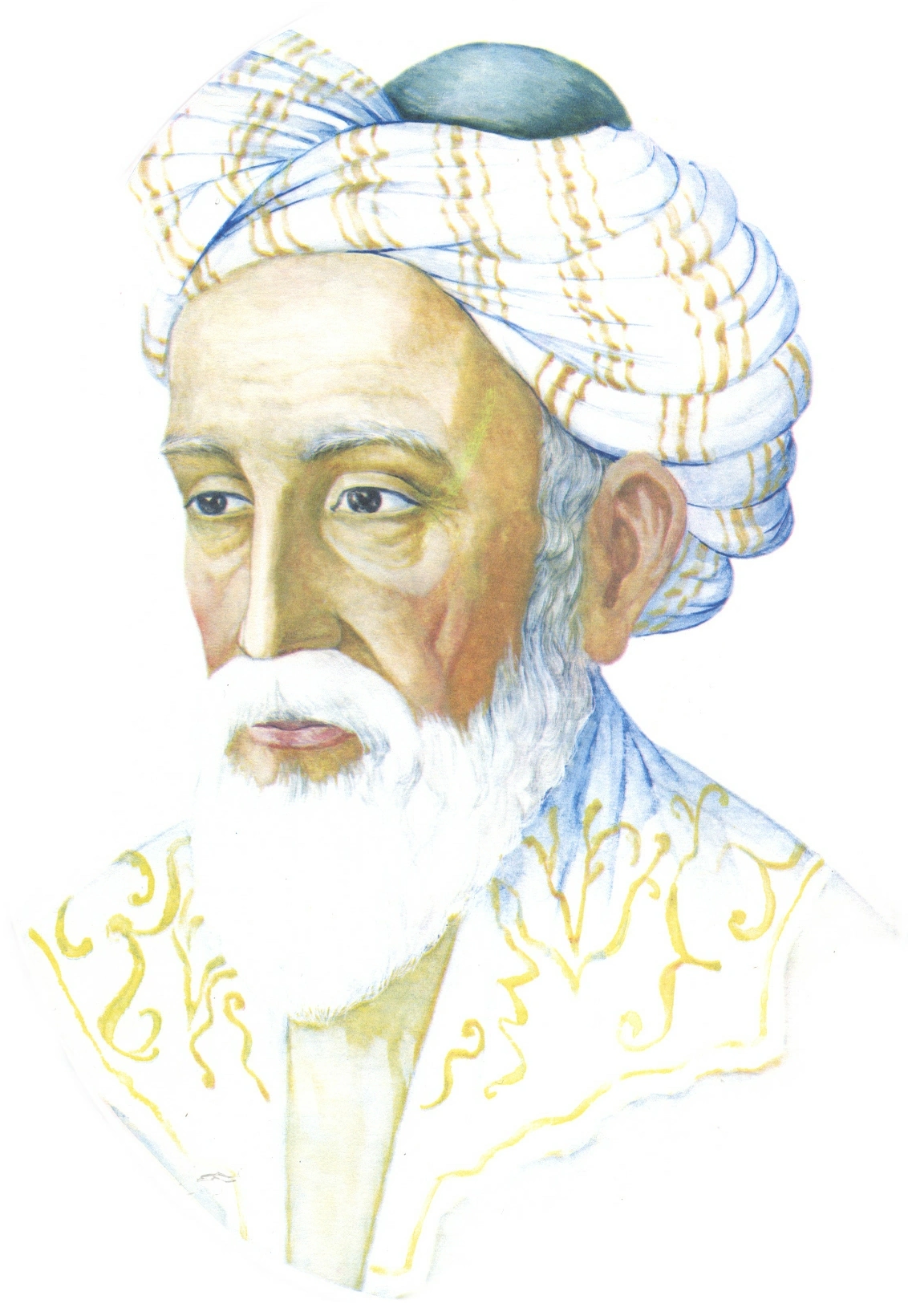
| 11 Quotes | |
| Born as | Ghiyath al-Din Abu'l-Fath Umar ibn Ibrahim al-Nisaburi al-Khayyami |
| Occup. | Poet |
| From | Persia |
| Born | May 15, 1048 Nishapur, Persia |
| Died | December 4, 1131 Nishapur, Persia |
| Aged | 83 years |
| Cite | |
Citation Formats
APA Style (7th ed.)
Omar khayyam biography, facts and quotes. (2026, February 11). FixQuotes. https://fixquotes.com/authors/omar-khayyam/
Chicago Style
"Omar Khayyam biography, facts and quotes." FixQuotes. February 11, 2026. https://fixquotes.com/authors/omar-khayyam/.
MLA Style (9th ed.)
"Omar Khayyam biography, facts and quotes." FixQuotes, 11 Feb. 2026, https://fixquotes.com/authors/omar-khayyam/. Accessed 5 Mar. 2026.
Early Life and Background
Ghiyath al-Din Abu'l-Fath Umar ibn Ibrahim al-Nisaburi al-Khayyami - later known in the West as Omar Khayyam - was born on 1048-05-15 in Nishapur, in northeastern Persia (present-day Iran), a city made wealthy and anxious by its position on the Silk Road and its exposure to dynastic turnover. His byname al-Khayyami, "the tentmaker", likely reflects a family craft or guild association rather than his own trade, yet it hints at the pragmatic, artisan world that sat beneath the region's high scholastic culture.Khayyam grew up under the long shadow of the Seljuk rise, when Persian urban life was being reorganized by Turkic military power, new bureaucracies, and intensified Sunni religious institutions. Nishapur had already seen devastation and renewal in earlier centuries; by Khayyam's youth it was again a place where a gifted mind could encounter both the discipline of madrasa learning and the precariousness of politics. The tension between what can be measured and what can be lost - a city's fortunes, a patron's favor, a life's certainties - would later echo in the fatalism and lucidity attributed to his quatrains.
Education and Formative Influences
Educated in the Persian and Arabic sciences, Khayyam became fluent in the intellectual toolkit of his time: Euclidean geometry, Greek-influenced philosophy in Islamic dress, and the demanding traditions of mathematics and astronomy that flourished in Khorasan. He is associated with leading scholarly circles in Nishapur and likely in Samarkand, and he matured during an era when figures like Ibn Sina (Avicenna) remained a living force in curricula even as theologians contested philosophy's claims. Khayyam's formation was therefore double-edged - rigorous in proof and calculation, yet attentive to the metaphysical questions that proofs could not quiet.Career, Major Works, and Turning Points
Khayyam's most securely attested achievements are scientific: he wrote a Treatise on the Demonstration of Problems of Algebra, classifying and solving cubic equations by geometric methods, and he contributed to astronomical reforms under Seljuk patronage, associated with the court of Malik-Shah I and the vizier Nizam al-Mulk. The calendar work connected to this milieu produced the Jalali calendar, renowned for its accuracy and for embodying an ideal of governance through measurement. Yet Seljuk politics were brittle; after Malik-Shah's death in 1092, courtly protection splintered, and Khayyam appears to have retreated to Nishapur, living as a respected scholar whose public reputation leaned toward mathematics and astronomy even as a very different literary afterlife awaited him.Philosophy, Style, and Themes
The Khayyam who survives in popular memory is the voice of the ruba'i - compact, epigrammatic quatrains that pivot from observation to paradox, from pleasure to metaphysics. Authorship is complicated: many quatrains were likely attributed to him over centuries because his name carried authority and an aura of daring. Still, the Khayyamian persona that coheres in the tradition is psychologically consistent: a mind trained to test claims, skeptical of easy consolations, and alert to the way institutions can simulate certainty. “Myself when young did eagerly frequent doctor and saint, and heard great argument about it and about: but evermore came out by the same door as in I went”. The line is not mere irreverence; it is an intellectual autobiography of dissatisfaction, the experience of leaving disputation unchanged because the deepest questions remain unmastered.That skepticism turns, not into despair, but into a disciplined attentiveness to time. “Living Life Tomorrow's fate, though thou be wise, Thou canst not tell nor yet surmise; Pass, therefore, not today in vain, For it will never come again”. Here carpe diem is not hedonism for its own sake; it is an ethical response to epistemic limits, the choice to honor what is knowable - the present - when the future resists calculation. His imagery of wine and companionship, often read literally, also functions as a critique of sterile abstraction and coercive piety, a preference for embodied fellowship over grand systems. Beneath the convivial surface lies the harder clause of determinism: “The moving finger writes, and having written moves on. Nor all thy piety nor all thy wit, can cancel half a line of it”. A mathematician's respect for irreversible operations becomes a metaphysical stance: life proceeds by laws that ignore our arguments, and wisdom lies in seeing clearly rather than pleading loudly.
Legacy and Influence
In the Persianate world, Khayyam long remained prominent as a scientist while his poetic persona circulated in manuscript anthologies; in the modern West, Edward FitzGerald's 1859 Rubaiyat refashioned him into a Victorian symbol of elegant doubt, exporting a Khayyam who was partly translation, partly invention, and wholly influential. That afterlife reshaped global tastes for brief, philosophically charged lyric, and it fixed certain motifs - wine, fate, the fleeting day - as emblems of Persian wisdom. Yet the deeper legacy is the conjunction he embodies: a scholar capable of exacting mathematical reasoning and a poet, authentic or attributed, who dramatizes the mind's loneliness before ultimate questions. Across nine centuries, Khayyam endures as a case study in how a civilization's highest learning can coexist with, and even generate, a literature of uncertainty.Our collection contains 11 quotes written by Omar, under the main topics: Wisdom - Truth - Live in the Moment - Romantic - Free Will & Fate.
Other people related to Omar: Edward Fitzgerald (Poet), Juan Cole (Educator)
Omar Khayyam Famous Works
- 1120 Rubaiyat of Omar Khayyam (Poetry)
Source / external links