
Omar N. Bradley Biography Quotes 13 Report mistakes
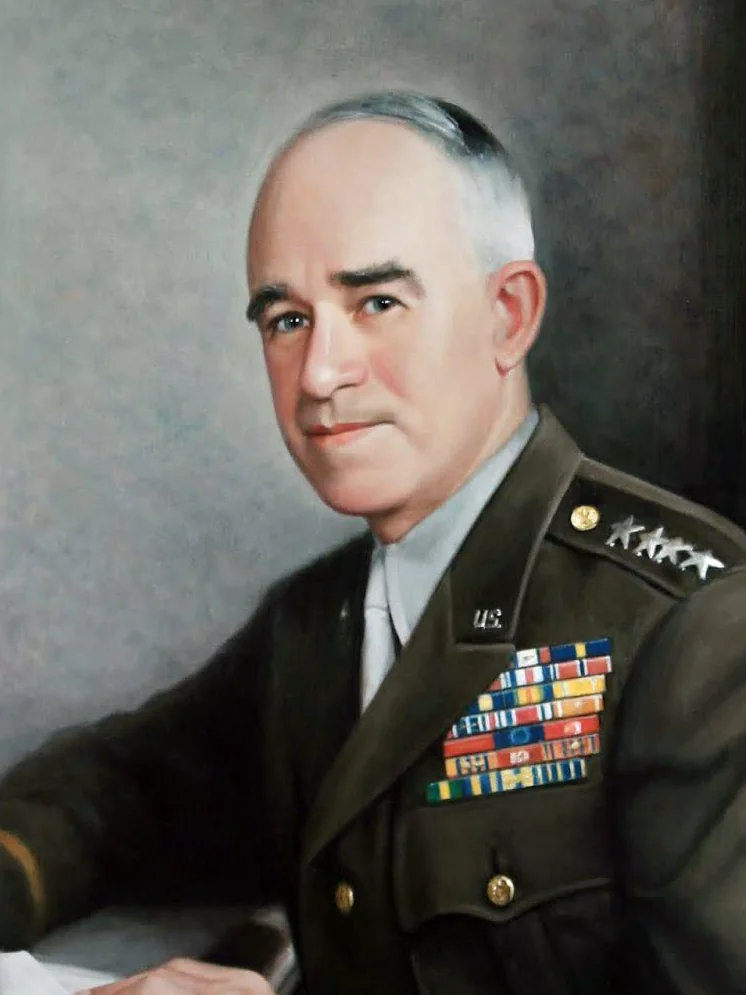
| 13 Quotes | |
| Born as | Omar Nelson Bradley |
| Occup. | Soldier |
| From | USA |
| Born | February 12, 1893 Clark, Missouri, U.S. |
| Died | April 8, 1981 New York City, U.S. |
| Aged | 88 years |
| Cite | |
Citation Formats
APA Style (7th ed.)
Omar n. bradley biography, facts and quotes. (2026, February 11). FixQuotes. https://fixquotes.com/authors/omar-n-bradley/
Chicago Style
"Omar N. Bradley biography, facts and quotes." FixQuotes. February 11, 2026. https://fixquotes.com/authors/omar-n-bradley/.
MLA Style (9th ed.)
"Omar N. Bradley biography, facts and quotes." FixQuotes, 11 Feb. 2026, https://fixquotes.com/authors/omar-n-bradley/. Accessed 12 Feb. 2026.
Early Life and Background
Omar Nelson Bradley was born on February 12, 1893, in rural Clark, Missouri, a small railroad and farming community shaped by Protestant restraint and hard work. His father, John Smith Bradley, worked on the Wabash Railroad; his mother, Sarah Elizabeth (Hubbard) Bradley, held the family together with the practical authority common to Midwestern households of the era. The Bradleys lived without ornament, and the young Bradley absorbed a local ethic that measured character by steadiness rather than display.When Bradley was a teenager his father died, leaving the family financially precarious. He took a job as a bank clerk and seemed headed for a modest, local life, but the loss also hardened his self-command. Friends and teachers remembered him as quiet, disciplined, and untheatrical - a boy who rarely sought attention, yet who could be trusted to finish what others only promised. That inward seriousness became the core of the public figure later labeled the "GI's general".
Education and Formative Influences
In 1911 Bradley entered the U.S. Military Academy at West Point, graduating in 1915 in the famed "class the stars fell on", which included Dwight D. Eisenhower and many future generals. West Point refined his appetite for procedure, logistics, and responsibility over rhetoric; it also showed him how a democratic army is held together by habit and fairness, not charisma alone. Commissioned in the infantry, he missed combat in World War I, serving instead in stateside training and instructional posts - a frustration that pushed him toward mastery of preparation, doctrine, and the patient building of units.Career, Major Works, and Turning Points
Bradley rose steadily between the wars, teaching at West Point, attending the Command and General Staff School, and later helping shape the Army that would fight World War II; his understated competence made him a natural choice for training and planning work, and in 1941-42 he became a close collaborator of Eisenhower. In North Africa he commanded II Corps after Kasserine, then led U.S. forces in Sicily; his defining wartime role came as commander of First U.S. Army in Normandy and then of 12th Army Group, the largest American field command in history, driving across France, surviving the Ardennes crisis, and pressing into Germany in 1945. After the war he headed the Veterans Administration, then served as Army Chief of Staff (1948-49) and the first Chairman of the Joint Chiefs of Staff (1949-53), navigating the Berlin crisis, NATO's early consolidation, and the Korean War debates; his memoir A Soldier's Story (1951) presented his guiding belief that modern war is won as much by organization and coalition discipline as by battlefield genius.Philosophy, Style, and Themes
Bradley's leadership style was deliberately unromantic: he distrusted theatrical command and preferred clear orders, measurable objectives, and relentless attention to supply, replacements, and morale. Where some commanders cultivated legend, he cultivated systems, believing that armies collapse less from lack of bravery than from breakdowns in cohesion and purpose. "Leadership is intangible, and therefore no weapon ever designed can replace it". In Bradley's psychology, that intangibility was both warning and promise - warning that gadgets cannot save a leader from moral responsibility, and promise that ordinary citizens can be shaped into effective soldiers when treated with competence and respect.His public reflections after 1945 revealed a man sobered by the scale of mechanized killing and wary of strategic fashions that made war sound clean. "Ours is a world of nuclear giants and ethical infants. We know more about war that we know about peace, more about killing that we know about living". The line captures a characteristic Bradley tension: he accepted force as sometimes necessary, yet he feared the moral lag between invention and judgment. That fear sharpened into a doctrine of prevention rather than bravado - "The way to win an atomic war is to make certain it never starts". Even at his most critical, he remained a disciplined institutionalist, arguing that civilian control, alliances, and restrained strategy were not softness but survival.
Legacy and Influence
Bradley died on April 8, 1981, in New York City, having become the last surviving five-star officer of World War II and an emblem of professional, democratic soldiering. His influence endures less in a single dazzling tactical innovation than in a model of command that prizes coalition management, measured strategy, and care for the ordinary soldier, traits that shaped American civil-military norms during the early Cold War. In memory he remains the counterweight to glamour: a commander who proved that quiet competence can move continents, and a strategist who warned that the next war's technology might outpace the human maturity required to prevent it.Our collection contains 13 quotes written by Omar, under the main topics: Motivational - Ethics & Morality - Leadership - Life - Equality.
Other people related to Omar: Norman Cota (Soldier), George C. Marshall (Soldier), Louis A. Johnson (Public Servant)