
Oprah Winfrey Biography Quotes 52 Report mistakes
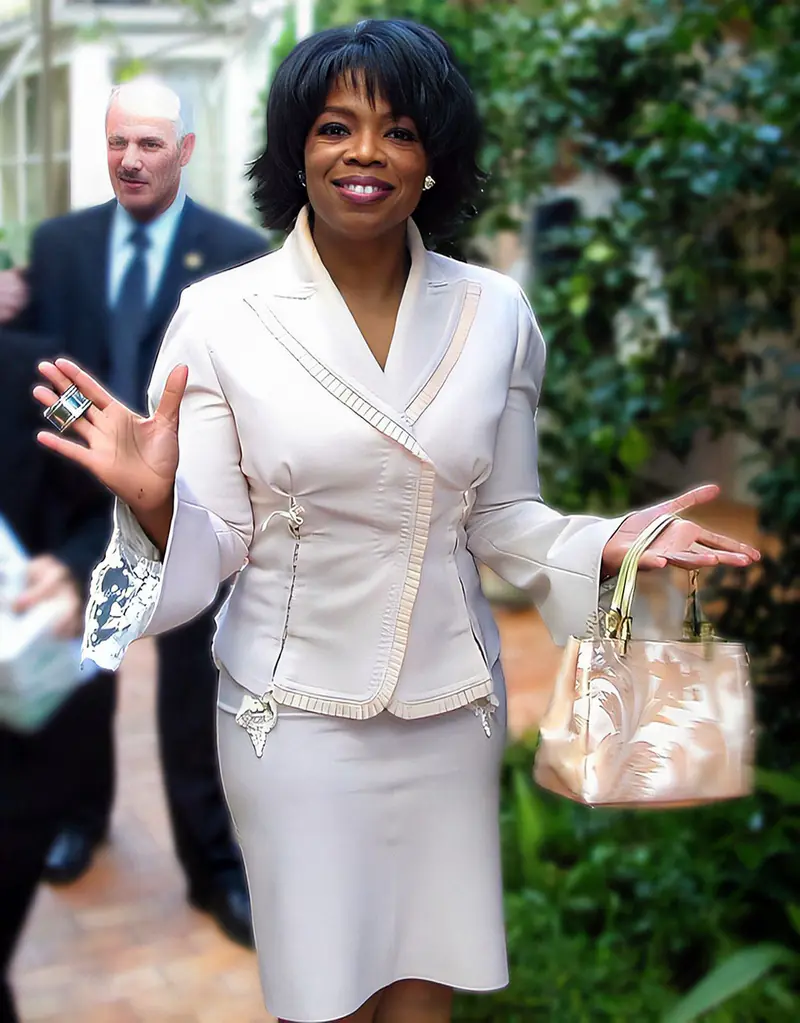
Attr: Alan Light, CC BY 2.0
| 52 Quotes | |
| Born as | Oprah Gail Winfrey |
| Occup. | Entertainer |
| From | USA |
| Born | January 29, 1954 Kosciusko, Mississippi, USA |
| Age | 71 years |
Oprah Gail Winfrey was born on January 29, 1954, in Kosciusko, Mississippi, to Vernita Lee and Vernon Winfrey. Her earliest years unfolded in the segregated South, where poverty was not an abstraction but a daily mathematics of food, clothing, and shelter. Raised largely by her maternal grandmother, Hattie Mae Lee, in rural Mississippi, she absorbed the cadences of Black church life and the discipline of work, learning early to read aloud and to perform language as both refuge and instrument.
Childhood also carried severe trauma, including sexual abuse, and the dislocations of moving between households in Mississippi, Milwaukee, and later Nashville. The combination of public vulnerability and private self-command became a defining tension: she learned how quickly a story could be used against you, and how powerfully it could also be used to save you. By her teens, after turbulent periods and a pregnancy that ended in infant loss, she relocated to live with her father in Tennessee, where structure, expectations, and study offered a different future.
Education and Formative Influences
In Nashville she attended East Nashville High School and emerged as a standout in speech and debate, winning oratorical contests that hinted at her future medium. She enrolled at Tennessee State University, a historically Black university, studying speech communication and performing arts while already working in broadcasting. The era mattered: post-civil-rights gains existed alongside backlash and entrenched inequity, and Winfrey learned to navigate institutions that wanted her voice but often not her authority.
Career, Major Works, and Turning Points
Winfrey broke into television as a teen at WVOL radio and then at Nashville's WLAC-TV, later becoming the first Black female news anchor at Nashville's WTVF-TV. In 1976 she moved to Baltimore's WJZ-TV, co-hosting People Are Talking, where her conversational warmth proved more potent than conventional news posture. The decisive turning point came in 1984 when she relocated to Chicago to host AM Chicago; within months it overtook Phil Donahue in ratings, and in 1986 it was relaunched nationally as The Oprah Winfrey Show. Through Harpo Productions, she controlled her platform and built a vertically integrated empire - television, film, publishing, and live events - while acting in The Color Purple (1985), producing projects such as Beloved (1998), and later launching O, The Oprah Magazine (2000), the Oxygen Network (co-founded, 1999), and OWN: Oprah Winfrey Network (2011). Her book club, philanthropic initiatives, and the Oprah Winfrey Leadership Academy for Girls in South Africa (opened 2007) expanded her influence from entertainment into education and civic life.
Philosophy, Style, and Themes
Winfrey's on-screen style fused confession with craft. She treated talk not as diversion but as a form of witnessing, building interviews around emotional facts - shame, longing, regret - and then translating those into choices. The approach was partly therapeutic and partly theatrical, but its core was control: she set the terms of vulnerability, including her own, and turned personal history into a public vocabulary for growth. Her recurring subject was not celebrity but repair - how people re-author themselves after harm, and how private pain can be metabolized into public purpose.
Her guiding ideas are blunt, behavioral, and inward-facing. "Turn your wounds into wisdom". captures the psychological engine of her career: trauma is neither denied nor glamorized, but alchemized into discernment and service. Likewise, "The thing you fear most has no power. Your fear of it is what has the power. Facing the truth really will set you free". reflects her insistence that liberation begins with naming - a theme that shaped her interviews on abuse, addiction, and family rupture. Even her optimism is framed as a practice rather than a mood: "The more you praise and celebrate your life, the more there is in life to celebrate". , a line that reveals her belief that attention is destiny - what you rehearse internally becomes what you can sustain externally.
Legacy and Influence
Winfrey reshaped American media by proving that empathy could be a mass-market force and that a Black woman could own the means of production in an industry built on gatekeeping. Her influence spans genres: the modern confessional interview, the celebrity-and-issue hybrid format, the commercialization of self-help, and the philanthropic expectation placed on cultural titans. She also attracted critique for an outsized role in taste-making and for turning spiritual and therapeutic language into consumer pathways, yet her enduring achievement is structural as much as personal - she widened who could be centered, what could be said at noon on national television, and how storytelling could move from entertainment to a blueprint for survival and meaning.
Our collection contains 52 quotes who is written by Oprah, under the main topics: Witty One-Liners - Motivational - Wisdom - Love - Meaning of Life.
Other people realated to Oprah: Alice Walker (Author), Phil Donahue (Entertainer), Brené Brown (Author), Whoopi Goldberg (Actress), Mitch Albom (Writer), Tony Robbins (Author), Ernest Gaines (Writer), Marianne Williamson (Author), Deepak Chopra (Philosopher), Barbara Kingsolver (Novelist)
Source / external links