
Orlando Gibbons Biography Quotes 2 Report mistakes
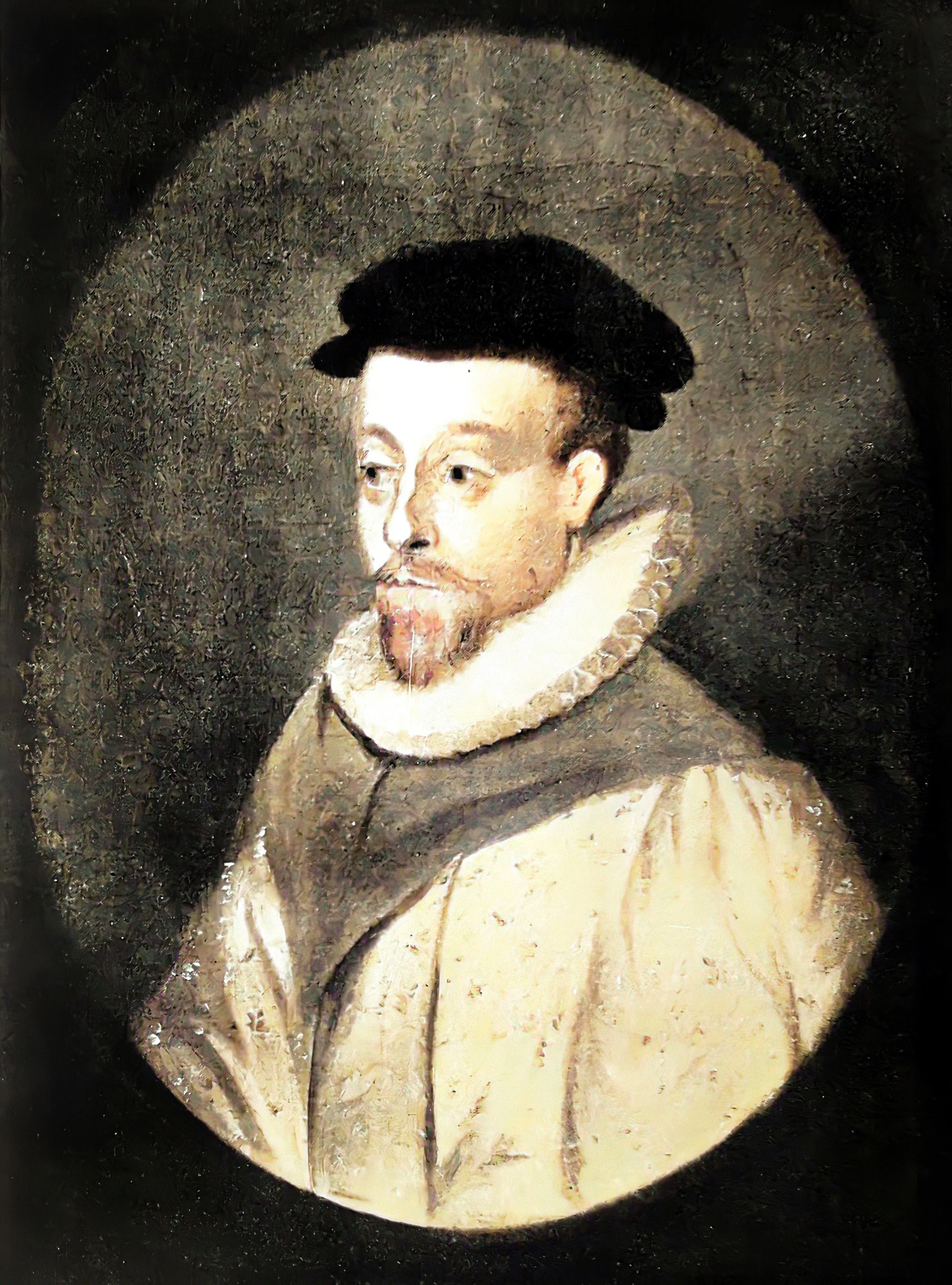
| 2 Quotes | |
| Occup. | Composer |
| From | England |
| Born | December 25, 1583 England |
| Died | June 5, 1625 England |
| Aged | 41 years |
| Cite | |
Citation Formats
APA Style (7th ed.)
Orlando gibbons biography, facts and quotes. (2026, February 11). FixQuotes. https://fixquotes.com/authors/orlando-gibbons/
Chicago Style
"Orlando Gibbons biography, facts and quotes." FixQuotes. February 11, 2026. https://fixquotes.com/authors/orlando-gibbons/.
MLA Style (9th ed.)
"Orlando Gibbons biography, facts and quotes." FixQuotes, 11 Feb. 2026, https://fixquotes.com/authors/orlando-gibbons/. Accessed 28 Mar. 2026.
Early Life and Background
Orlando Gibbons was born on December 25, 1583, in Oxford, in a household where music was not an ornament but a trade. The Gibbons family belonged to the professional class of Tudor and early Stuart performers: his father, William Gibbons, worked as a musician, and Orlando grew up alongside brothers who also made careers in church and court music. England in his childhood was shifting from the long late-Elizabethan settlement toward a new Jacobean confidence, and sacred music was negotiating careful boundaries - richly expressive, yet constrained by liturgical clarity and the political memory of religious conflict.Oxford gave him an early sense of institutional sound: chapel acoustics, collegiate choirs, and the disciplined routine of daily services. That environment helped form a temperament often described by later listeners as poised and inward - a composer who seems to think in clean lines and balanced sonorities, even when emotion presses close to the surface. His earliest years coincided with the flowering of the English madrigal and the expansion of keyboard culture, and he would absorb both without becoming a mere stylistic follower of either.
Education and Formative Influences
As a boy he entered the Choir of King's College, Cambridge (from 1596), receiving the rigorous training that turned talented children into literate musicians: sight-reading, counterpoint, liturgical practice, and the daily discipline of singing. At Cambridge he encountered the late style of William Byrd and Thomas Tallis as a living inheritance, and he learned the grammar of polyphony alongside the new emphasis on textual intelligibility prized by English church authorities. He later took the MusB at Cambridge (1606), a credential that signaled not only mastery of technique but readiness for the professional world of chapels, patrons, and print.Career, Major Works, and Turning Points
Gibbons's adult career centered on the royal and ecclesiastical establishments that defined prestige in early Stuart music. He became a Gentleman of the Chapel Royal in 1603, at the start of James I's reign, placing him inside the court's daily worship and ceremonial calendar; he also served as virginalist and, later, as organist of the Chapel Royal (1623). In print he emerged early and decisively: his madrigal anthology The First Set of Madrigals and Mottets (1612) showed a composer fluent in English text-setting and Italianate forms, while his anthem output for the Anglican rite - including "This is the record of John", "O clap your hands", and "Almighty and everlasting God" - refined a style of luminous counterpoint that could still project words clearly. His keyboard pieces, circulated in manuscripts such as the Fitzwilliam Virginal Book, pair courtly virtuosity with architectural balance. He died suddenly on June 5, 1625, in Canterbury while attending the new king Charles I on a royal progress, a death that cut short what looked like a widening authority in English sacred music.Philosophy, Style, and Themes
Gibbons's music repeatedly returns to proportion - not as dry mathematics, but as a moral and spiritual order. The Jacobean court prized ceremony, symmetry, and controlled magnificence, and his writing answers that taste with a composer's sense that beauty is built, not merely felt. The impulse is captured by the maxim, “It is proportion that beautifies everything, the whole universe consists of it, and music is measured by it”. In his anthems, this belief sounds like calm mastery: points of imitation unfold with inevitability; dissonance appears sparingly, then resolves with the quiet relief of an ethical conclusion. Even when the text is urgent, his handling suggests an inner discipline - a mind that trusts structure to carry intensity without theatrical display.Yet proportion does not mean coldness. Gibbons was drawn to moments when speech breaks into song and the human voice reveals what ordinary language cannot hold. The image of final utterance in “The silver swan, who, living had no note, When death approached unlocked her silent throat”. matches his special gift for musical epiphany: a phrase that seems restrained, then opens into radiance at precisely the moment the text demands revelation. His best work balances public devotion with private feeling - a devotional psychology in which clarity is itself an emotion, and composure becomes the vehicle for awe. That tension - controlled surface, concentrated interior - is the engine of his enduring sound.
Legacy and Influence
Gibbons became, after Byrd, one of the defining voices of English church music, a standard-bearer for the Chapel Royal tradition whose anthems have remained continuously performable because they unite technical craft with direct vocal appeal. Later Anglican composers treated him as a model of lucid polyphony and dignified word-setting, and performers have kept his keyboard music alive as a bridge between the Elizabethan virginalists and the more harmonically adventurous styles that followed. His early death fixed his image as a composer of distilled excellence - a figure whose work seems to speak with the authority of an era, while still sounding intensely personal in its measured, shining restraint.Our collection contains 2 quotes written by Orlando, under the main topics: Wisdom - Mortality.
Source / external links