
Oscar Levant Biography Quotes 25 Report mistakes
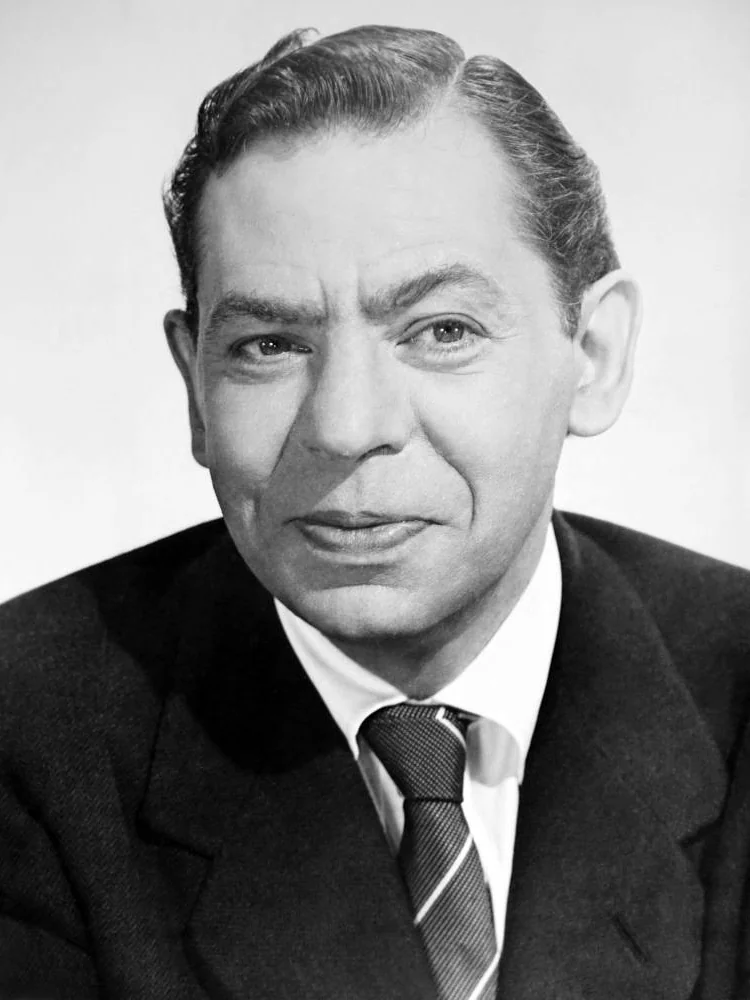
Attr: posterazzi.com
| 25 Quotes | |
| Occup. | Composer |
| From | USA |
| Born | December 27, 1906 Pittsburgh, Pennsylvania, USA |
| Died | August 14, 1972 Beverly Hills, California, USA |
| Aged | 65 years |
| Cite | |
Citation Formats
APA Style (7th ed.)
Oscar levant biography, facts and quotes. (2026, February 11). FixQuotes. https://fixquotes.com/authors/oscar-levant/
Chicago Style
"Oscar Levant biography, facts and quotes." FixQuotes. February 11, 2026. https://fixquotes.com/authors/oscar-levant/.
MLA Style (9th ed.)
"Oscar Levant biography, facts and quotes." FixQuotes, 11 Feb. 2026, https://fixquotes.com/authors/oscar-levant/. Accessed 26 Mar. 2026.
Early Life and Background
Oscar Levant was born on December 27, 1906, in Pittsburgh, Pennsylvania, into a Jewish family whose restlessness mirrored the era's American churn. When he was still young the family moved to New York City, where the noise of vaudeville, Tin Pan Alley, and the new seriousness of concert life collided. He grew up watching talent become commerce in real time, a child of a country learning to sell its own modernity.From early on he projected two selves: the disciplined musician and the compulsive commentator. Friends and colleagues later described him as frighteningly quick, a man who could turn dread into a punch line before it swallowed him. The public eventually mistook that comic velocity for ease, but it was also a defense: the need to stay verbally one step ahead of his own spiraling moods and appetites.
Education and Formative Influences
In New York he studied piano seriously and moved through the professionalizing musical world that had begun to form around conservatories, Broadway pits, and radio studios. He absorbed Romantic pianism and the sharper new modernism simultaneously, developing a particular devotion to George Gershwin - not only the sound, but the example of a composer who could speak fluently to both Carnegie Hall and the street. Levant's early work as an arranger and songwriter trained him in speed, clarity, and the brutal economy demanded by commercial music, while his concert ambitions kept pulling him toward larger forms and more exacting standards.Career, Major Works, and Turning Points
Levant became one of the most recognizable musician-personalities of mid-century America: a composer and pianist who also wrote, acted, and appeared constantly on radio and television. In Hollywood he worked as a composer and arranger and acted in films such as An American in Paris (1951) and The Band Wagon (1953), often cast as the sardonic pianist because he could play the part and be the part at once. As a concert performer he was prized for his Gershwin interpretations - including performances of Rhapsody in Blue and the Concerto in F - and for a pungent, unsentimental musical intelligence. His books and memoiristic writing, especially The Memoirs of an Amnesiac (1965), made his inner life part of his public career, and his repeated hospitalizations and struggles with addiction and depression turned notoriety into a darker kind of fame, one that revealed how costly his "candor" really was.Philosophy, Style, and Themes
Levant's humor was not a detachable accessory but an instrument of self-diagnosis, aimed as sharply at his own mind as at any audience. He made witticism do the work of confession, reducing stigma by enlarging it into theater: “There's a fine line between genius and insanity. I have erased this line”. The line he claimed to erase was, in practice, the line he patrolled daily - between performance and breakdown, between the virtuoso's control and the patient's helplessness. Even the joke's bravado implies fear: if the boundary is gone, then anything - applause, panic, pills - can pour through.His style, whether at the piano or on a talk show, favored clarity, timing, and an almost surgical refusal of sentimentality. He distrusted glamour as a kind of social anesthesia, yet he also understood its logic from the inside: “Behind the phony tinsel of Hollywood lies the real tinsel”. That paradox was central to him - the idea that the counterfeit and the authentic can be made of the same glittering material, and that an industry built on illusion can still expose unpleasant truths. His bleakest insight was that pleasure often arrives late, as recollection rather than presence: “Happiness isn't something you experience; it's something you remember”. In Levant, that becomes a psychological map of depression - a life in which the present is endured, the past is curated into bearable stories, and the future is postponed by the next performance.
Legacy and Influence
Levant endures as a prototype for the modern American cultural figure who is simultaneously expert and entertainer - a serious musician forced into public personality, then using that personality to smuggle seriousness back in. He helped fix Gershwin in the popular imagination not as "light" music but as a genuine American classical voice, and he demonstrated that virtuosity could coexist with comic frankness about mental illness and addiction, even when that frankness was self-wounding. Later performers, writers, and comedians recognized in him an early, unnervingly articulate case of celebrity as both stage and sickroom: a man who made the audience laugh, then made them realize what the laughter had been covering.Our collection contains 25 quotes written by Oscar, under the main topics: Witty One-Liners - Sarcastic - Anxiety - Humility - Happiness.
Other people related to Oscar: Clifton Fadiman (Writer), Jack Paar (Entertainer), Vincente Minnelli (Director)