
Oscar Wilde Biography Quotes 167 Report mistakes
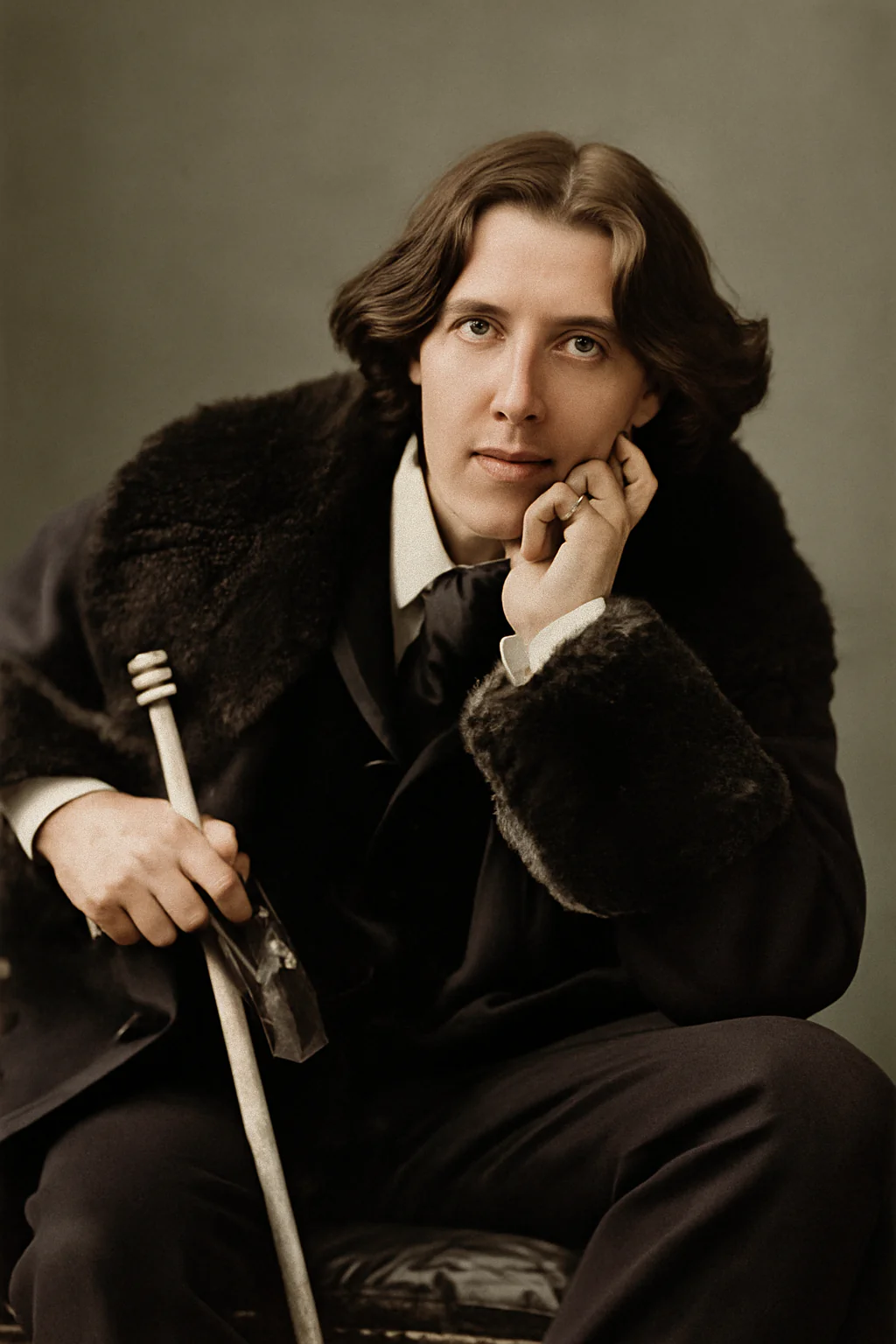
| 167 Quotes | |
| Born as | Oscar Fingal O'Flahertie Wills Wilde |
| Occup. | Dramatist |
| From | Ireland |
| Born | October 16, 1854 Dublin, Ireland |
| Died | November 30, 1900 Paris, France |
| Cause | Meningitis |
| Aged | 46 years |
| Cite | |
Citation Formats
APA Style (7th ed.)
Oscar wilde biography, facts and quotes. (2026, February 7). FixQuotes. https://fixquotes.com/authors/oscar-wilde/
Chicago Style
"Oscar Wilde biography, facts and quotes." FixQuotes. February 7, 2026. https://fixquotes.com/authors/oscar-wilde/.
MLA Style (9th ed.)
"Oscar Wilde biography, facts and quotes." FixQuotes, 7 Feb. 2026, https://fixquotes.com/authors/oscar-wilde/. Accessed 26 Mar. 2026.
Early Life and Background
Oscar Fingal O'Flahertie Wills Wilde was born on 1854-10-16 in Dublin, Ireland, into a house where reputation and performance were daily disciplines. His father, Sir William Wilde, was a celebrated surgeon and antiquarian; his mother, Jane Francesca Elgee, wrote nationalist verse and salon journalism as "Speranza". The family moved in the orbit of mid-Victorian professional ambition and Irish political argument, giving Wilde an early sense that identity could be authored, revised, and defended in public.Childhood brought both privilege and fracture. The Wildes endured the death of Oscar's younger sister Isola in 1867, a private grief that later sharpened his sensitivity to innocence, loss, and the moral theatrics of mourning. Dublin itself, caught between imperial administration and Irish cultural revival, offered Wilde a double education: the rhetoric of authority and the counter-rhetoric of wit, insinuation, and style.
Education and Formative Influences
Wilde studied at Portora Royal School in Enniskillen, then at Trinity College Dublin, and at Magdalen College, Oxford, where he absorbed the aesthetic teachings of Walter Pater and the art criticism of John Ruskin. Prizes for Greek and classical study trained his ear for epigram and paradox, while Oxford's Aesthetic Movement taught him to treat taste as a worldview rather than a hobby. By the late 1870s he was already a crafted public figure, learning how to use dress, talk, and social circulation as instruments of authorship.Career, Major Works, and Turning Points
After establishing himself in London as a critic and apostle of aestheticism, Wilde toured the United States in 1882, then wrote fiction and essays that fused moral inquiry with decorative surface: "The Happy Prince and Other Tales" (1888), "The Picture of Dorian Gray" (1890-1891), and the social comedies that made him the era's most quoted dramatist, including "Lady Windermere's Fan" (1892), "A Woman of No Importance" (1893), "An Ideal Husband" (1895), and "The Importance of Being Earnest" (1895). His peak coincided with catastrophe: the trials of 1895, triggered by his conflict with the Marquess of Queensberry and bound up with his relationship with Lord Alfred Douglas, led to conviction for "gross indecency" and imprisonment. In prison he wrote the long letter later titled "De Profundis", and after release the bleak, controlled "The Ballad of Reading Gaol" (1898). Exile and illness followed; he died in Paris on 1900-11-30.Philosophy, Style, and Themes
Wilde's style is often mistaken for lightness, but its engine is psychological: the need to keep freedom alive inside a society that policed desire, speech, and class manners. He believed truth could be told most accurately through performance, turning conversation into a mask that reveals rather than conceals: “Man is least himself when he talks in his own person. Give him a mask, and he will tell you the truth”. That principle shapes his drama, where characters do not confess so much as sparkle into self-recognition, and where a well-placed lie can be more honest than a pious fact.Temptation, self-invention, and the comedy of moral judgment run through his work as both critique and confession. “The only way to get rid of temptation is to yield to it... I can resist everything but temptation”. captures the Dorian Gray dilemma: appetite is pursued as liberation, yet the cost is a divided self, forced to hide its evidence. Even when Wilde mocks society, he maps its emotional economy with surgical clarity, as in his insight that intimacy breeds verdicts rather than mercy: “Children begin by loving their parents; after a time they judge them; rarely, if ever, do they forgive them”. Across the comedies and the prison writings, he returns to the same wound - the hunger to be adored without being possessed, and to be seen without being sentenced.
Legacy and Influence
Wilde endures as a master dramatist because his sentences are engineered for the stage and for the mind: they move like laughter and land like diagnosis. His downfall became a case study in the violence of Victorian respectability, while his prison writings widened his reputation from entertainer to moral witness. In the 20th and 21st centuries he became a patron figure for queer history, a touchstone for debates about art and scandal, and a model for writers who treat style as an ethical instrument. The plays remain repertory staples, "Dorian Gray" continues to renew arguments about beauty and corruption, and Wilde's life - brilliant, reckless, punished, and still rhetorically undefeated - keeps reminding readers that society's strictest laws often fear the imagination most.Our collection contains 167 quotes written by Oscar, under the main topics: Witty One-Liners - Motivational - Ethics & Morality - Truth - Wisdom.
Other people related to Oscar: Stephen Fry (Comedian), Louis Kronenberger (Critic), Junichiro Tanizaki (Author), Arthur Ransome (Author), Lord Alfred Douglas (Poet), Robert Baldwin Ross (Celebrity), Frank Harris (Author), Steven Morrissey (Musician), Lillie Langtry (Actress), Arthur Symons (Poet)
Frequently Asked Questions
- Oscar Wilde poems: The Ballad of Reading Gaol, Ravenna, The Sphinx, Requiescat, Symphony in Yellow, Helas!, Impression du Matin, Charmides
- Oscar Wilde famous works: The Picture of Dorian Gray, The Importance of Being Earnest, An Ideal Husband, Lady Windermere's Fan, Salome, The Ballad of Reading Gaol, De Profundis
- Oscar Wilde books: The Picture of Dorian Gray, The Happy Prince and Other Tales, A House of Pomegranates, Intentions, De Profundis, The Soul of Man Under Socialism
- Oscar Wilde plays: Lady Windermere's Fan, A Woman of No Importance, An Ideal Husband, The Importance of Being Earnest, Salome, The Duchess of Padua
- Who was the man who destroyed Oscar Wilde? Lord Alfred Douglas
- Did Oscar Wilde have children? Yes, he had two sons.
- What was Oscar Wilde's cause of death? Cerebral meningitis
- How old was Oscar Wilde? He became 46 years old
Source / external links