
Otto Frank Biography Quotes 3 Report mistakes
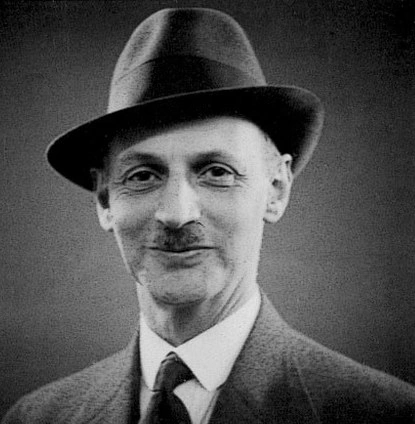
| 3 Quotes | |
| Born as | Otto Loupen Frank |
| Occup. | Celebrity |
| From | Germany |
| Born | May 12, 1889 |
| Died | August 19, 1980 Birsfelden, Switzerland |
| Cause | Lung cancer |
| Aged | 91 years |
| Cite | |
Citation Formats
APA Style (7th ed.)
Otto frank biography, facts and quotes. (2026, February 11). FixQuotes. https://fixquotes.com/authors/otto-frank/
Chicago Style
"Otto Frank biography, facts and quotes." FixQuotes. February 11, 2026. https://fixquotes.com/authors/otto-frank/.
MLA Style (9th ed.)
"Otto Frank biography, facts and quotes." FixQuotes, 11 Feb. 2026, https://fixquotes.com/authors/otto-frank/. Accessed 13 Feb. 2026.
Early Life and Background
Otto Loupen Frank was born on May 12, 1889, in Frankfurt am Main, in the German Empire, into a liberal, assimilated Jewish family rooted in the citys commercial life. His father, Michael Frank, ran a banking business; the household valued civic duty, culture, and German belonging, assumptions later shattered by the political aftershocks of World War I and the rise of modern antisemitism. Otto grew up amid Frankfurts confident bourgeois order, a world of clubs, concerts, and predictable law - and learned early the habits of restraint and responsibility that would mark his later public demeanor.The war years accelerated his passage into adulthood. He served as an officer in the German army during World War I, an experience that combined patriotism with disillusion as Germanys defeat and Weimar turbulence remade the national mood. In the 1920s he married Edith Hollander (from Aachen), and their daughters Margot (1926) and Anne (1929) were born in Frankfurt. By 1933, after Adolf Hitlers appointment as chancellor and the rapid consolidation of Nazi power, the Franks faced the stark calculus of survival that confronted German Jews across class lines.
Education and Formative Influences
Otto Frank received a solid middle-class education in Frankfurt and then entered the practical world of commerce and banking, training for a respectable, stable career. Less a public intellectual than a disciplined organizer, he absorbed a Weimar-era confidence in rational management and international trade - skills that later helped him rebuild in exile. His formative influences were not schools alone but systems: military hierarchy, business routine, and the cosmopolitan networks of German-Jewish life that made emigration to the Netherlands thinkable when the state turned predatory.Career, Major Works, and Turning Points
In 1933 Otto moved first to Amsterdam, then brought Edith and the girls to join him, establishing Opekta (pectin for jam-making) and later Pectacon, trading in spices and seasoning. The German invasion of the Netherlands in May 1940 closed the circle: anti-Jewish measures tightened, and in July 1942 - after Margot received a call-up notice for forced labor - the family went into hiding in the Achterhuis, the Secret Annex behind Otto's Prinsengracht offices, aided by Miep and Jan Gies, Johannes Kleiman, Victor Kugler, and Bep Voskuijl. Arrested on August 4, 1944, the Franks were deported; Otto survived Auschwitz, while Edith died there and Anne and Margot perished in Bergen-Belsen in early 1945. Returning to Amsterdam, Otto received Annes preserved writings from Miep Gies and undertook the work that defined his later life: editing and publishing Het Achterhuis (The Diary of a Young Girl) in 1947, then shepherding translations, stage and film adaptations, and defending the diaries authenticity through decades of scrutiny.Philosophy, Style, and Themes
Otto Franks inner life is best approached through his posture rather than rhetoric: controlled, courteous, almost deliberately plain, as if clarity itself were a moral response to chaos. Yet his restraint hid a radical vulnerability created by the camps and by the return to an ordinary world without his family. Letters and testimonies show a man living on a knife-edge between administrative competence and private grief, keeping his footing by continuing to hope even when hope became psychologically punishing.Reading Annes diary forced Otto into a second bereavement - not only of a daughter, but of a self he thought he knew. "For me, it was a revelation. There, was revealed a completely different Anne to the child that I had lost. I had no idea of the depths of her thoughts and feelings". That sentence captures his central theme: belated recognition. He had to accept that parental authority can be blind, and that a young persons interiority may be deeper than the adults managing her fate. After liberation, his language circles the torment of waiting, the mind refusing closure: "I just can't think how I would go on without children having lost Edith already... It's too upsetting for me to write about them. Naturally, I still hope, and wait, wait, wait". Even his optimism became an ethical discipline - refusing to turn victims into abstractions, insisting instead on the human scale of dread, rumor, and fragile expectation.
Legacy and Influence
Otto Frank died on August 19, 1980, having spent the final decades of his life as custodian of Annes words and as a public witness to the Holocaust. He helped catalyze what the diary became: not a single familys tragedy alone, but a gateway text through which millions first grasped Nazi persecution as lived experience, in kitchens and offices as much as in camps. Through the Anne Frank House in Amsterdam, the Otto Frank Fund, and his careful stewardship of editions and rights, he shaped a global memory culture that links literature to conscience - and he modeled a difficult form of postwar agency: transforming private loss into an enduring, educative record without claiming to heal it.Our collection contains 3 quotes written by Otto, under the main topics: Daughter - Family.
Other people related to Otto: Anne Frank (Writer), Frances Goodrich (Dramatist)
Source / external links