
Otto von Bismarck Biography Quotes 26 Report mistakes
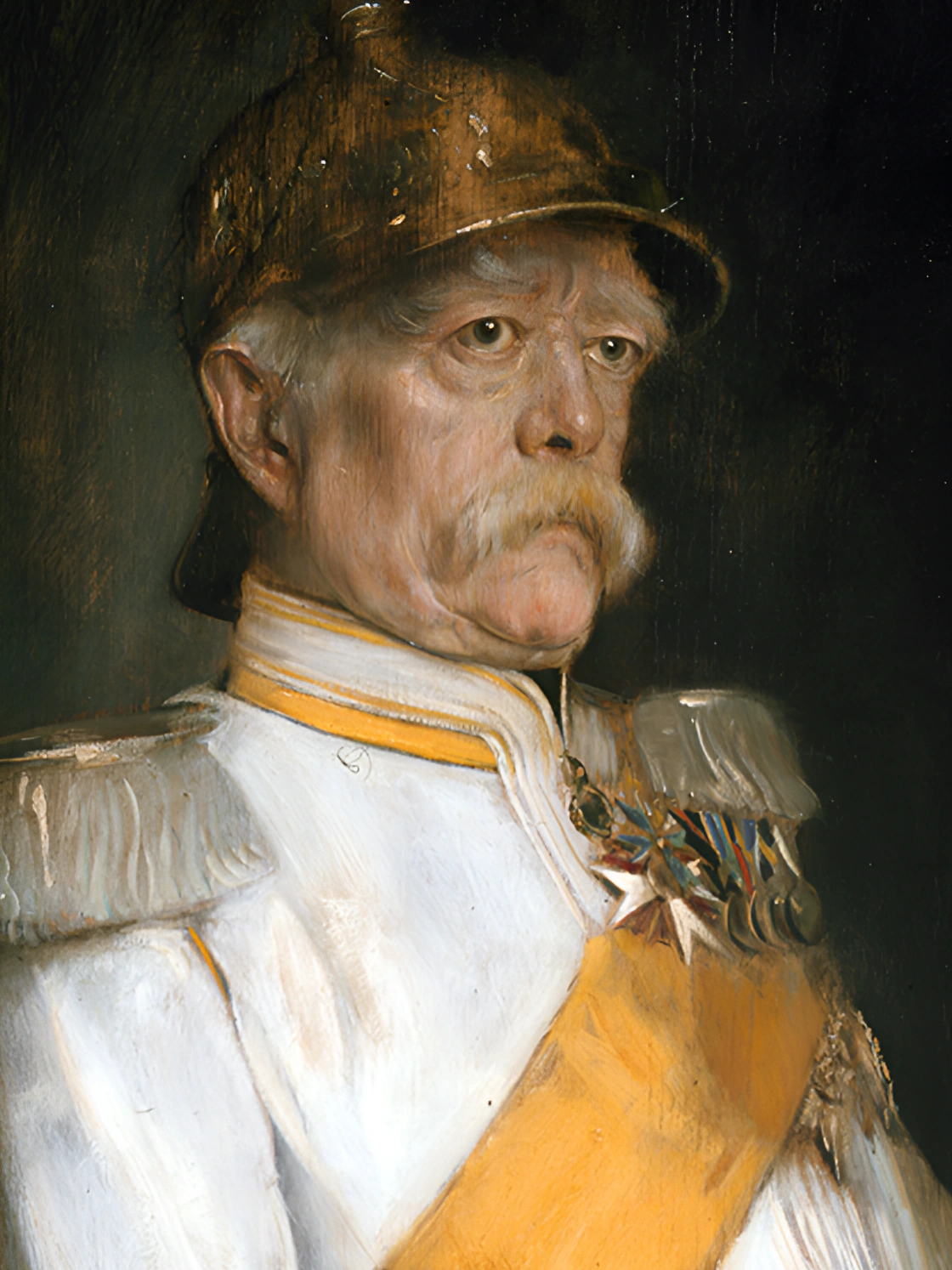
| 26 Quotes | |
| Born as | Otto Eduard Leopold von Bismarck |
| Occup. | Leader |
| From | Germany |
| Born | April 1, 1815 Schoenhausen, Prussia |
| Died | June 30, 1898 Friedrichsruh, Germany |
| Aged | 83 years |
| Cite | |
Citation Formats
APA Style (7th ed.)
Otto von bismarck biography, facts and quotes. (2026, February 11). FixQuotes. https://fixquotes.com/authors/otto-von-bismarck/
Chicago Style
"Otto von Bismarck biography, facts and quotes." FixQuotes. February 11, 2026. https://fixquotes.com/authors/otto-von-bismarck/.
MLA Style (9th ed.)
"Otto von Bismarck biography, facts and quotes." FixQuotes, 11 Feb. 2026, https://fixquotes.com/authors/otto-von-bismarck/. Accessed 27 Mar. 2026.
Early Life and Background
Otto Eduard Leopold von Bismarck was born on April 1, 1815, at Schonhausen in Prussian Saxony, into a landed Junker world that had survived Napoleon and now bristled under the settlement of Vienna. His father, Karl Wilhelm Ferdinand von Bismarck, was a country squire with old nobility but little drive; his mother, Wilhelmine Luise Mencken, came from an educated Berlin civil-service milieu. That split origin mattered: he absorbed the manor house instinct for hierarchy and land, yet also a metropolitan respect for administration, law, and the power of the state.Restless, proud, and quick to take offense, the young Bismarck built a reputation for dangerous wit and a taste for risk. He oscillated between bouts of discipline and bursts of self-indulgence, as if testing how far personality could bend circumstance. In the 1830s and 1840s, as Prussia felt the tremors of liberal nationalism and the aftershocks of the French Revolution, he learned early that order was never a given - it was a construction that could collapse if elites hesitated.
Education and Formative Influences
He studied law at the University of Gottingen and later Berlin, joined student corps, dueled, and cultivated a hard masculine style that later served him in political combat. After a short, dissatisfied stint in the Prussian civil service, he retreated to manage family estates in Pomerania, where he underwent a religious deepening under pietist influence and entered the conservative networks of the Prussian landed class. The revolutions of 1848, which he opposed as a deputy in the United Diet and later the Landtag, fixed his conviction that concession invited further demands, and that monarchy, army, and bureaucracy must move in concert if the state was to survive modern mass politics.Career, Major Works, and Turning Points
Bismarck rose through diplomacy - envoy to the German Confederation in Frankfurt (1851), ambassador to Russia in St. Petersburg (1859), then to France (1862) - and became Prussian minister-president in September 1862 amid a constitutional crisis over army reform. His career pivoted on a cold sequence of wars and settlements: the Danish War (1864), the Austro-Prussian War (1866), and the Franco-Prussian War (1870-71), each carefully framed to isolate opponents and consolidate Prussian leadership. The North German Confederation (1867) became the scaffolding for the German Empire proclaimed at Versailles in January 1871, with Bismarck as chancellor. In office he fought on several fronts: the Kulturkampf against Catholic political power, protective tariffs and economic management after 1879, and pioneering social insurance (health, accident, and old-age) to undercut socialism while expanding state authority. He maintained a continental balance through the League of the Three Emperors, the Dual Alliance with Austria-Hungary, and the Reinsurance Treaty with Russia, but his dominance ended in 1890 when Kaiser Wilhelm II forced his resignation; he spent his final years at Friedrichsruh and died on June 30, 1898.Philosophy, Style, and Themes
Bismarck practiced power as a craft rather than a creed: he distrusted grand designs, preferred pressure to proclamation, and treated constitutions as tools to be bent without breaking. His famous maxim, “Politics is the art of the possible”. was not modesty but method - a way to translate ambition into steps the moment could bear. Underneath lay a psychological realism sharpened by 1848: he believed crowds, parties, and newspapers were volatile forces that had to be contained, co-opted, or outflanked. His contempt for the press - “A journalist is a person who has mistaken their calling”. - reveals a temperament that prized disciplined secrecy and loathed intermediaries who could not be ordered like officials.Yet his realism was not simple militarism. He understood war as an instrument that carried moral and political costs, and he had seen enough of its aftermath to fear its momentum: “Anyone who has ever looked into the glazed eyes of a soldier dying on the battlefield will think hard before starting a war”. This tension - readiness to use force, paired with anxiety about its uncontrollability - shaped his post-1871 system, which aimed to make Germany "satiated" and to freeze gains through alliances. His inner life often reads as a duel between appetite and restraint: the gambler who tried, after the great win, to lock the table.
Legacy and Influence
Bismarck forged modern Germany, not as a romantic nation-builder but as a state-maker who fused monarchy, army, and parliamentary forms into a hard, flexible machine. He left durable institutions - federal structures, welfare-state precedents, and a professional diplomatic tradition - along with a political culture trained to expect salvation from executive mastery. His greatest achievement, the balance of power he curated after 1871, proved dependent on his personal calibration; once removed, his system was altered, and later leaders inherited a stronger Germany without his restraints. He endures as the archetype of the modern political strategist: admired for the clarity of his ends, feared for the bluntness of his means, and studied for how personality can steer an era.Our collection contains 26 quotes written by Otto, under the main topics: Witty One-Liners - Truth - Justice - Leadership - Honesty & Integrity.
Other people related to Otto: Ferdinand Lassalle (Politician)
Otto von Bismarck Famous Works
- 1898 Reflections and Reminiscences (Memoir)