
Owen Arthur Biography Quotes 5 Report mistakes
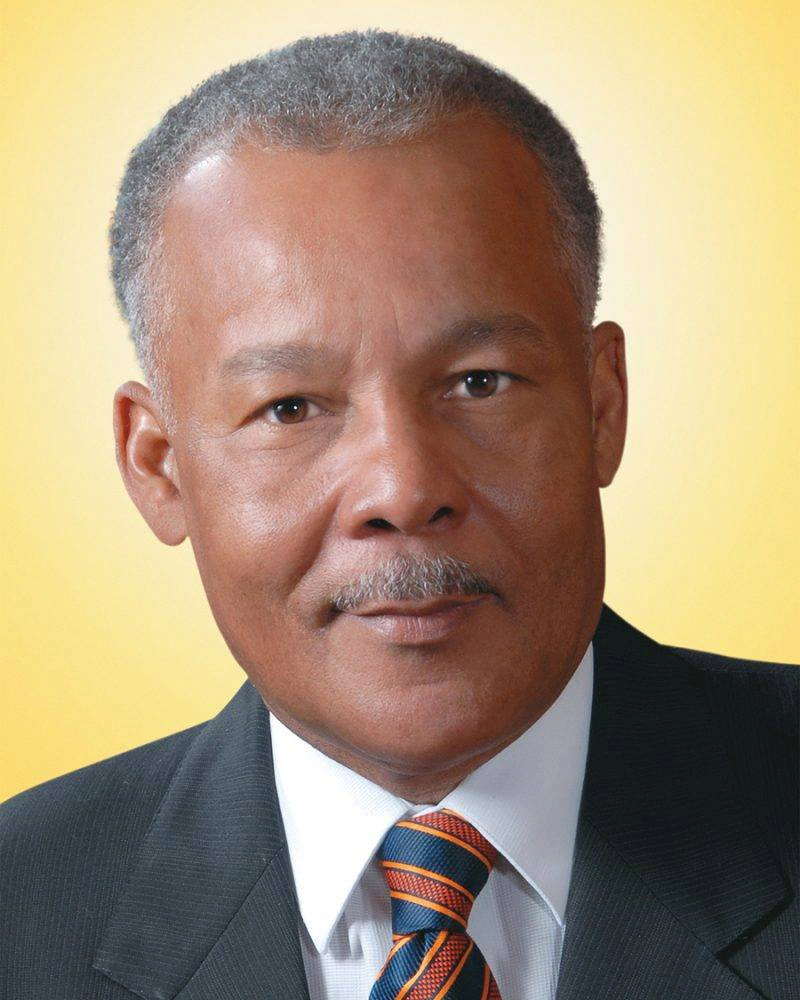
| 5 Quotes | |
| Born as | Owen Seymour Arthur |
| Occup. | Statesman |
| From | Barbados |
| Born | October 17, 1949 Saint Peter, Barbados |
| Age | 76 years |
| Cite | |
Citation Formats
APA Style (7th ed.)
Owen arthur biography, facts and quotes. (2026, February 11). FixQuotes. https://fixquotes.com/authors/owen-arthur/
Chicago Style
"Owen Arthur biography, facts and quotes." FixQuotes. February 11, 2026. https://fixquotes.com/authors/owen-arthur/.
MLA Style (9th ed.)
"Owen Arthur biography, facts and quotes." FixQuotes, 11 Feb. 2026, https://fixquotes.com/authors/owen-arthur/. Accessed 8 Mar. 2026.
Early Life and Background
Owen Seymour Arthur was born on October 17, 1949, in Barbados, a small island newly independent (1966) and still defining the reach of its sovereignty in trade, education, and social policy. He grew up in a society where the promise of self-government was real but fragile: plantation-era inequalities lingered, tourism and sugar were exposed to global swings, and political legitimacy depended on whether ordinary Barbadians felt the dividends of independence in wages, housing, and dignity.That setting helped shape Arthur's inner posture as a statesman - at once technocratic and intensely patriotic. He came of age watching the Barbados Labour Party (BLP) and the Democratic Labour Party (DLP) treat governance as a contest over competence and fairness, not spectacle. The island's size also imposed a psychological discipline: reputations were intimate, public decisions were personal, and leadership demanded emotional restraint under scrutiny.
Education and Formative Influences
Arthur was educated in Barbados before reading economics at the University of the West Indies (UWI), where the postcolonial Caribbean was debating how to convert political independence into economic autonomy. In that intellectual climate - shaped by development economics, regional integration arguments, and the hard arithmetic of small-state vulnerability - he learned to treat policy as both an ethical choice and a balance-sheet problem. His later public voice would repeatedly return to UWI-style reasoning: define the constraint, widen the options, then bargain relentlessly for the best outcome.Career, Major Works, and Turning Points
Arthur rose through the BLP as an economist and policy mind, serving as a government minister before becoming Prime Minister of Barbados in 1994, a post he held until 2008. His tenure coincided with the consolidation of a services-driven economy, the intensification of globalization, and the search for credible small-state strategies in finance, tourism, education, and diplomacy. He was also a central Caribbean figure in negotiations around hemispheric trade initiatives and regional coordination, arguing that Barbados and CARICOM needed leverage through rules, alliances, and institutional seriousness rather than rhetoric. A key turning point was his ability to project steadiness after the early-1990s austerity trauma, offering voters a governing style that prioritized macroeconomic order, investment confidence, and incremental social uplift - and then absorbing the political costs when growth, debt, and expectation collided late in his administration.Philosophy, Style, and Themes
Arthur's public philosophy fused realism about power with a moral insistence that policy must serve everyday life. He was a leader who spoke the language of spreadsheets yet kept returning to a social contract: stability was not an end in itself but a tool to protect people from shocks they did not cause. In that sense, his temperament was less crusader than custodian - convinced that institutions, not charisma, make small democracies survivable. He treated international negotiation as a form of domestic welfare policy: every tariff schedule, airlift agreement, or tax treaty ultimately had to justify itself in jobs, prices, and opportunity.His style also revealed a lifelong preoccupation with communication as governance. “Help the man-in-the-street make sense of the bewildering”. That line captures a psychological trait visible throughout his career: the belief that confusion is politically dangerous and that clarity is a public service. He could be wry about the blurred boundary between message and power - “I am satisfied that all politicians were meant to be journalists and all journalists meant to be politicians”. Beneath the humor sits a caution: narratives can govern as much as budgets. And for Arthur, persuasion had to be anchored in civic purpose rather than mere victory. “Let us go forward in this battle fortified by conviction that those who labour in the service of a great and good cause will never fail”. In his best moments, that conviction translated into a disciplined, institution-building pragmatism: a small state survives by educating its people, bargaining smartly abroad, and maintaining enough social cohesion that sacrifice feels shared.
Legacy and Influence
Arthur remains one of Barbados' defining late-20th- and early-21st-century leaders: a prime minister associated with competence, regional advocacy, and the attempt to steer a small, open economy through volatile global currents. Admirers remember a steady hand and an economist's insistence on credibility; critics recall how technocratic confidence can harden into distance when households feel pressure. Either way, his influence endures in the model of Caribbean statesmanship he exemplified - policy-literate, negotiation-focused, and grounded in the belief that national dignity is built not only by symbols but by institutions that work.Our collection contains 5 quotes written by Owen, under the main topics: Witty One-Liners - Motivational - Health - Peace - Teaching.
Other people related to Owen: Mia Mottley (President)
Source / external links