
Owen Hart Biography Quotes 30 Report mistakes
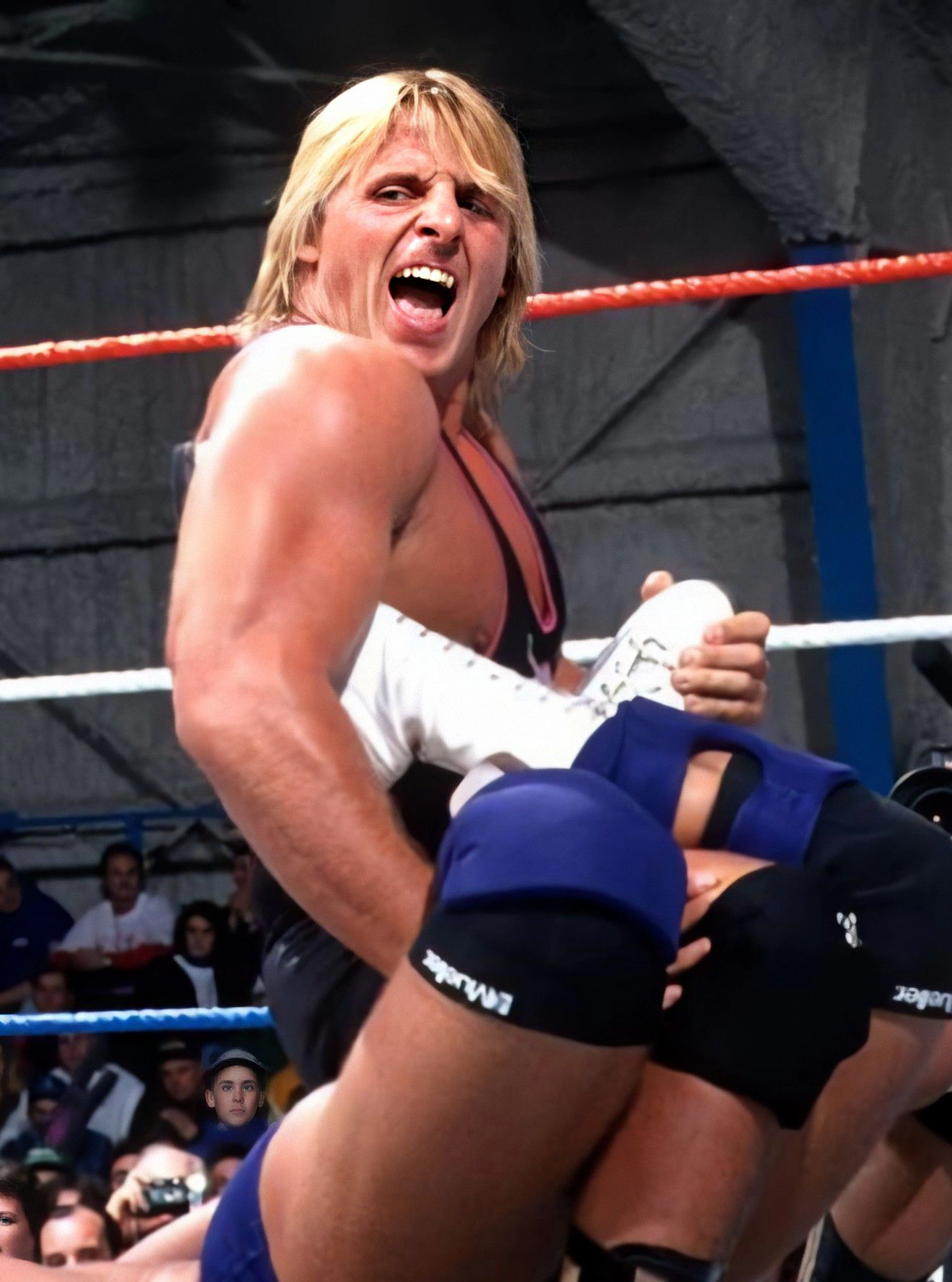
| 30 Quotes | |
| Born as | Owen James Hart |
| Occup. | Entertainer |
| From | Canada |
| Spouse | Martha Hart |
| Born | May 7, 1965 Calgary, Alberta, Canada |
| Died | May 23, 1999 Kansas City, Missouri, USA |
| Cause | Fell from a height of 78 feet while being lowered into the ring |
| Aged | 34 years |
| Cite | |
Citation Formats
APA Style (7th ed.)
Owen hart biography, facts and quotes. (2026, February 28). FixQuotes. https://fixquotes.com/authors/owen-hart/
Chicago Style
"Owen Hart biography, facts and quotes." FixQuotes. February 28, 2026. https://fixquotes.com/authors/owen-hart/.
MLA Style (9th ed.)
"Owen Hart biography, facts and quotes." FixQuotes, 28 Feb. 2026, https://fixquotes.com/authors/owen-hart/. Accessed 25 Mar. 2026.
Early Life and Background
Owen James Hart was born on May 7, 1965, in Calgary, Alberta, the youngest of twelve children in the boisterous, tightly knit Hart household. The family home was a crossroads of immigrant grit, Catholic discipline, and sporting ambition, shaped by father Stu Hart, a promoter and trainer, and mother Helen, who held the domestic center while the wrestling business pulled everyone outward. In a city that prided itself on toughness and self-reliance, the Harts lived with a constant sense that work had to be proven, not proclaimed.
From childhood, Owen absorbed the paradox that would define his inner life: he was raised inside a myth factory but learned to distrust mythmaking. The famous Hart "Dungeon" was both playground and proving ground, where pain tolerance and humility were currencies. His natural buoyancy and mischief - the traits fans later recognized in his comedic timing - were, at home, survival skills in a crowded family where attention was scarce and standards were punishing.
Education and Formative Influences
Hart attended school in Calgary and, like many of his siblings, moved between ordinary teenage life and the extraordinary apprenticeship of Stampede Wrestling, the family promotion. Training under Stu Hart and older brothers gave him a technical base early, but his real formation came from contrast: the Western Canadian circuit demanded rugged realism, while tours abroad - especially Japan - rewarded conditioning, precision, and credibility. Those environments encouraged a performer who wanted to be taken seriously for craft, not for lineage, even as the Hart name opened doors and set traps.
Career, Major Works, and Turning Points
Hart debuted in the late 1980s, gaining polish in Stampede before wrestling extensively in Japan and Europe, then breaking into the World Wrestling Federation in 1988 as part of the tag team The Hart Foundation with brother Bret. His career became a study in reinvention: from respected tag specialist to cocky breakout singles star, he won the WWF Intercontinental Championship (1994), multiple tag titles, and the King of the Ring (1994), and became a central figure in the 1997-1998 Hart Foundation stable amid the era's nationalist angles and anti-hero storytelling. Personally, he sought separation from Bret's shadow while publicly playing the foil - a performer whose athleticism and comic cruelty could make crowds adore him or burn for him. The defining tragedy came on May 23, 1999, when a stunt entrance at WWF Over the Edge in Kansas City went wrong; Hart fell from the rafters and died at 34, a death that hardened debates about risk, corporate responsibility, and the human cost of spectacle.
Philosophy, Style, and Themes
Hart's psychology as an entertainer was rooted in a craftsman's humility and a prankster's instinct for tension release. He framed his identity around in-ring competence rather than physiques or monologues: “Some guys can do more talking in the ring, other guys do posing, body building, whatever the hell they do in the ring. But I don't have the big body, and I'm not the big smooth talker, but I can get in the ring and wrestle”. That sentence reveals a lifelong argument with the industry's loudest values, and also an anxiety - that being overlooked could be solved only by being undeniable between the ropes.
His best work fused crisp technique with a refusal to waste motion, a philosophy that made him skeptical of empty acrobatics and protective of wrestling's internal logic: “I see these guys, they throw a guy into the ropes and they do a back flip and then clothesline the guy and it looks stupid. Why don't you just clothesline the guy?” Yet he understood showmanship as obligation, not vanity: “It's good to go out and entertain these people, and you've got them on the edge of their seat, they're standing up. Then you know that you've done your job, you've entertained them. My way of entertaining them is going out and wrestling. Everyone's got their different ways”. In that blend - realism plus playfulness, discipline plus teasing - he found a persona that could be both technically elite and emotionally legible, a man insisting that excellence itself could be comedy, drama, and truth.
Legacy and Influence
Hart's legacy is twofold: as an underappreciated master technician whose timing and footwork influenced a generation of hybrid wrestlers, and as the center of one of modern wrestling's most enduring ethical fault lines. His widow, Martha Hart, pursued legal action and later helped create the Owen Hart Foundation, turning grief into philanthropy and a broader critique of preventable risk. In fan memory, Owen remains the rare performer who could make a match feel like sport and theater at once - a worker's worker, always chasing identity beyond family fame, and ultimately a symbol of how much brilliance the business can demand, and how much it can take.
Our collection contains 30 quotes written by Owen, under the main topics: Motivational - Art - Sarcastic - Deep - Victory.
Source / external links