
P. J. O'Rourke Biography Quotes 44 Report mistakes
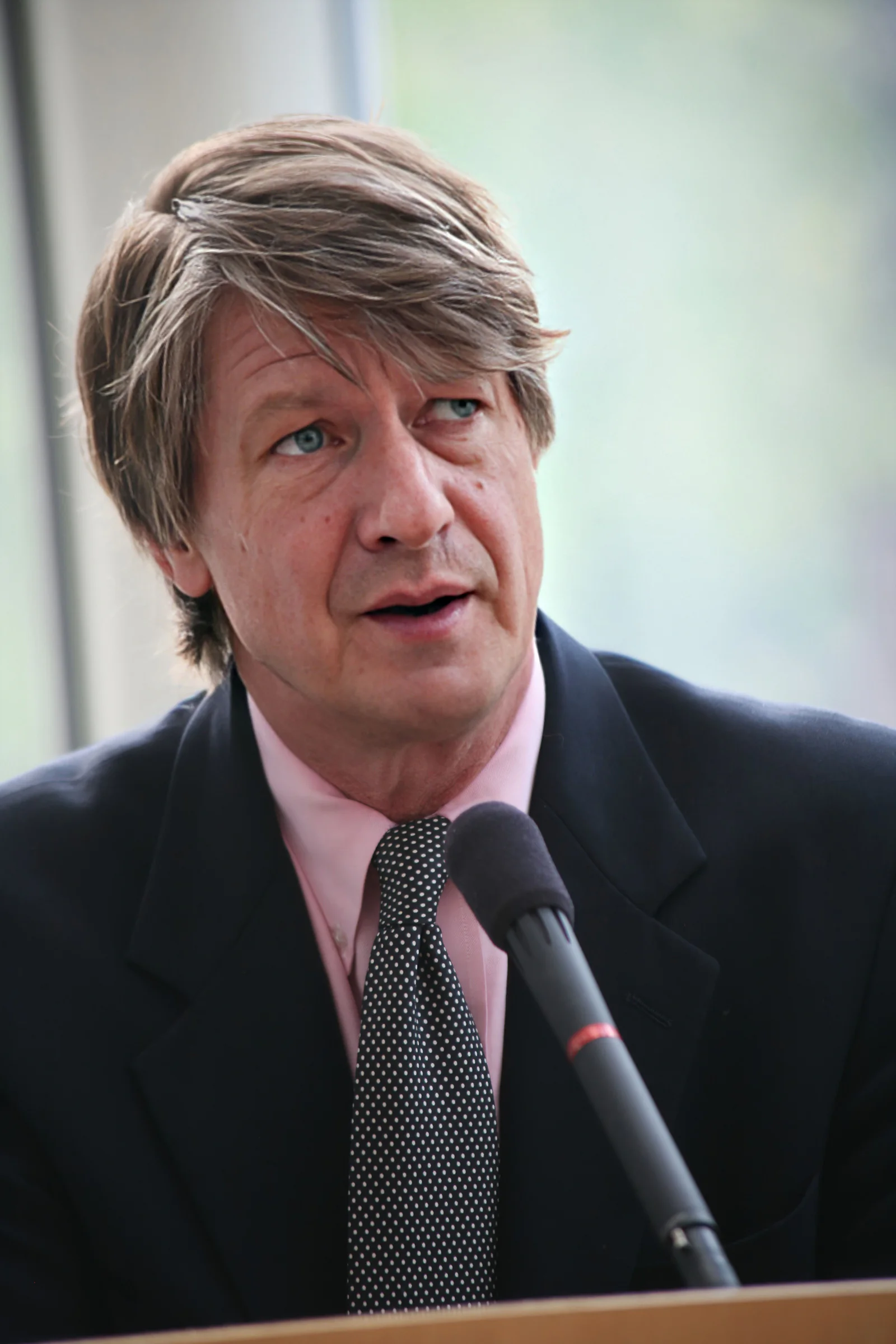
Attr: Cato Institute., CC BY-SA 3.0
| 44 Quotes | |
| Born as | Patrick Jake O'Rourke |
| Occup. | Journalist |
| From | USA |
| Born | November 14, 1947 Toledo, Ohio, USA |
| Age | 78 years |
| Cite | |
Citation Formats
APA Style (7th ed.)
P. j. o'rourke biography, facts and quotes. (2026, February 2). FixQuotes. https://fixquotes.com/authors/p-j-orourke/
Chicago Style
"P. J. O'Rourke biography, facts and quotes." FixQuotes. February 2, 2026. https://fixquotes.com/authors/p-j-orourke/.
MLA Style (9th ed.)
"P. J. O'Rourke biography, facts and quotes." FixQuotes, 2 Feb. 2026, https://fixquotes.com/authors/p-j-orourke/. Accessed 6 Mar. 2026.
Early Life and Background
Patrick Jake O'Rourke was born on November 14, 1947, in Toledo, Ohio, into a large Irish Catholic family whose dinner-table arguments and Rust Belt practicality gave him a lifelong ear for how ordinary Americans talk about money, status, and politics. Mid-century Toledo was a place where manufacturing rhythms and parish life set the tempo, and the young O'Rourke grew up amid the postwar confidence that America could build anything - alongside the quieter anxieties of the Cold War and the social tremors that would soon arrive.As the 1950s gave way to the 1960s, O'Rourke absorbed the era's contradictions: prosperity next to urban decline, idealism next to institutional mistrust. He learned early that public virtue and private self-interest are rarely separable, a perception sharpened by watching local power brokers, school authorities, and the small hypocrisies of respectable life. The comedic surface of his later work often masked the sensibility of someone who had seen how quickly slogans replace thought, and how often people believe what flatters them.
Education and Formative Influences
O'Rourke attended Miami University in Oxford, Ohio, where he wrote and edited for the student paper and discovered that satire could be both weapon and shield. The late 1960s campus ferment - Vietnam, generational revolt, and the rise of the counterculture - pushed him through early leftist sympathies and into a more skeptical libertarian outlook, less from ideology than from experience with groupthink and moral vanity. In the tradition of American humorists from Mark Twain to H. L. Mencken, he learned to treat politics as a study in incentives, vanity, and unintended consequences, and he cultivated a reporter's appetite for real places and real people rather than theory.Career, Major Works, and Turning Points
After graduation he entered the magazine world and helped edit National Lampoon in the early 1970s, a crucible for aggressive, high-speed comedy that trained him to combine reporting, parody, and cultural critique. He later became a prominent voice at Rolling Stone, The Atlantic, and especially the conservative monthly The American Spectator, building a signature style: a travel writer's eye for detail paired with a polemicist's instinct for pressure points. His best-known books - including Parliament of Whores (1991), Give War a Chance (1992), All the Trouble in the World (1994), and Eat the Rich (1998) - turned global reporting into arguments about corruption, incentives, and the limits of state planning, while later work such as Don't Vote! (2010) and The Baby Boom (2014) extended his scrutiny to American electoral theater and generational self-mythology. The turning point was less a party conversion than a craft decision: he would chase politics across borders and eras, insisting that jokes were not an escape from reality but a way to describe it accurately.Philosophy, Style, and Themes
O'Rourke's inner life, as it appears on the page, is animated by distrust of sanctimony and a fear of being conned - by politicians, by crowds, and by his own appetites. He wrote as a pleasure-seeking moralist: someone who liked fast cars, travel, and good meals, yet could not stop asking who pays and who lies. The humor is bawdy and conversational, but it is built on a reporter's notebooks and a biographer's attention to character. He favored scenes over abstractions, treating ideology as an emotional need - often a substitute for humility - and he used laughter to puncture the self-importance that allows cruelty to dress as benevolence.His political psychology centered on incentives and power. He could compress an entire theory of corruption into a single line: “When buying and selling are controlled by legislation, the first things to be bought and sold are legislators”. Behind the gag is a bleak anthropology - that people rationalize self-interest, and that systems should be judged by what they reward, not what they promise. He was equally suspicious of therapeutic explanations for social disorder, arguing that the deeper illness is moral and cognitive rather than chemical: "Anyway, no drug, not even alcohol, causes the fundamental ills of society. If we're looking for the source of our troubles, we shouldn't test people for drugs, we should test them for stupidity, ignorance
Our collection contains 44 quotes written by J. O'Rourke, under the main topics: Witty One-Liners - Ethics & Morality - Justice - Dark Humor - Sarcastic.
P. J. O'Rourke Famous Works
- 2014 The Baby Boom (Book)
- 2010 Don't Vote! (Book)
- 2007 On The Wealth of Nations (Book)
- 2004 Peace Kills: America's Fun New Imperialism (Book)
- 2001 The CEO of the Sofa (Book)
- 1994 All the Trouble in the World (Book)
- 1992 Give War a Chance (Book)
- 1991 Parliament of Whores (Book)
Source / external links