
Paddy Chayefsky Biography Quotes 7 Report mistakes
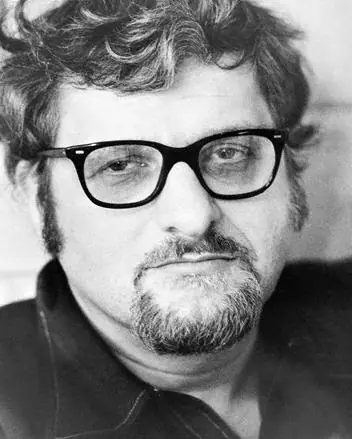
| 7 Quotes | |
| Occup. | Playwright |
| From | USA |
| Born | January 23, 1923 |
| Died | August 1, 1981 |
| Aged | 58 years |
| Cite | Cite this page |
Citation Formats
APA Style (7th ed.)
Chayefsky, Paddy. (n.d.). Paddy Chayefsky. FixQuotes. https://fixquotes.com/authors/paddy-chayefsky/
Chicago Style
Chayefsky, Paddy. "Paddy Chayefsky." FixQuotes. Accessed February 3, 2026. https://fixquotes.com/authors/paddy-chayefsky/.
MLA Style (9th ed.)
"Paddy Chayefsky." FixQuotes, https://fixquotes.com/authors/paddy-chayefsky/. Accessed 3 Feb. 2026.
Sidney Aaron Chayefsky was born on January 23, 1923, in the Bronx, New York City, to Jewish immigrant parents shaped by the pressures and ambitions of interwar America. He grew up amid the crowded, argumentative energy of New York, where radios, newspapers, and street-corner debate made public life feel intimate. That early proximity to ordinary voices - the cadences of storekeepers, hustlers, secretaries, and exhausted strivers - became his lifelong ear for dialogue and his moral allegiance to the "little" people trapped inside big systems.
World War II tore him out of the borough and into the machinery of the state. Drafted into the U.S. Army, he served in Europe and was wounded (and reportedly earned a Purple Heart). The war did not romanticize him; it clarified his suspicion of rhetoric and his interest in how institutions launder violence into noble language. By the time he returned home, the United States was remaking itself into a corporate-media superpower, and Chayefsky would spend his career mapping the human cost of that transformation.
Education and Formative Influences
After the war he used the GI Bill to attend City College of New York, an incubator for working-class intellectuals in the postwar years. He wrote early fiction and absorbed a tradition of socially attentive American realism - the idea that a sentence should sound like a person, and that drama should locate power not in abstractions but in payrolls, apartments, and hospitals. New York theater and the emerging live-television scene offered him a new kind of stage: intimate, immediate, and hungry for stories that sounded like the country was speaking to itself.
Career, Major Works, and Turning Points
Chayefsky first became indispensable in the golden age of live TV drama, writing teleplays such as "Marty" (1953), which was adapted into the 1955 film that won the Academy Award for Best Picture and earned him his first Oscar for screenplay. He followed with scripts that treated everyday life as consequential - "The Bachelor Party" (1957), "The Goddess" (1958), and later the adaptation of "The Hospital" (1971), a caustic portrait of institutional collapse that won him a second Oscar. His most famous rupture came with "Network" (1976), written under the pseudonym "Sidney Lumet" in a famous credit dispute, and rewarded with his third Oscar - making him the only writer to win three solo screenwriting Academy Awards. In later years he pushed into novelistic, paranoid satire with "Altered States" (1980), then died in New York on August 1, 1981, at 58, leaving a body of work that reads like a diagnosis of postwar American consciousness.
Philosophy, Style, and Themes
Chayefsky wrote like a moral realist with a satirist's fuse: dialogue that feels overheard, scenes built from procedural detail, and eruptions of speech that expose the hidden theology of modern life - money, prestige, ratings, and professional self-deception. He distrusted the romance of inspiration and treated writing as a trade learned through stamina and revision. "Artists don't talk about art. Artists talk about work. If I have anything to say to young writers, it's stop thinking of writing as art. Think of it as work". That credo was not anti-art; it was anti-mystification, a way to keep sentimentality from softening what he saw as brutal truths.
His inner life, across the work, is marked by a lonely independence bordering on defiance - the stance of a man who would not be absorbed by any studio, party line, or fashionable cynicism. "I'm a man without a corporation". That alienation becomes a theme: individuals trapped inside organizations that speak in slogans while bodies and souls absorb the consequences. In "Network" he makes the mass medium a national nervous system that feeds on outrage and turns democracy into spectacle, insisting, "Television is democracy at its ugliest". Even when he veered into operatic satire, his target stayed consistent: systems that demand performance from human beings and call the performance truth.
Legacy and Influence
Chayefsky endures as a foundational American dramatist of institutions - a writer who made boardrooms, newsrooms, and hospitals as theatrically charged as living rooms. His realism helped define the standards of television drama, while his later satire anticipated the fusion of politics, entertainment, and rage-driven broadcasting that would dominate decades after his death. Screenwriters still cite his structural rigor, his ear for speech, and his refusal to flatter power; playwrights inherit his faith that ordinary people, rendered precisely, can carry the weight of a whole era.
Our collection contains 7 quotes who is written by Paddy, under the main topics: Witty One-Liners - Ethics & Morality - Justice - Freedom - Work Ethic.
Paddy Chayefsky Famous Works
- 1980 Altered States (Screenplay)
- 1976 Network (Screenplay)
- 1971 The Hospital (Screenplay)
- 1954 Middle of the Night (Play)
- 1953 Marty (Teleplay)
Source / external links