
Paracelsus Biography Quotes 32 Report mistakes
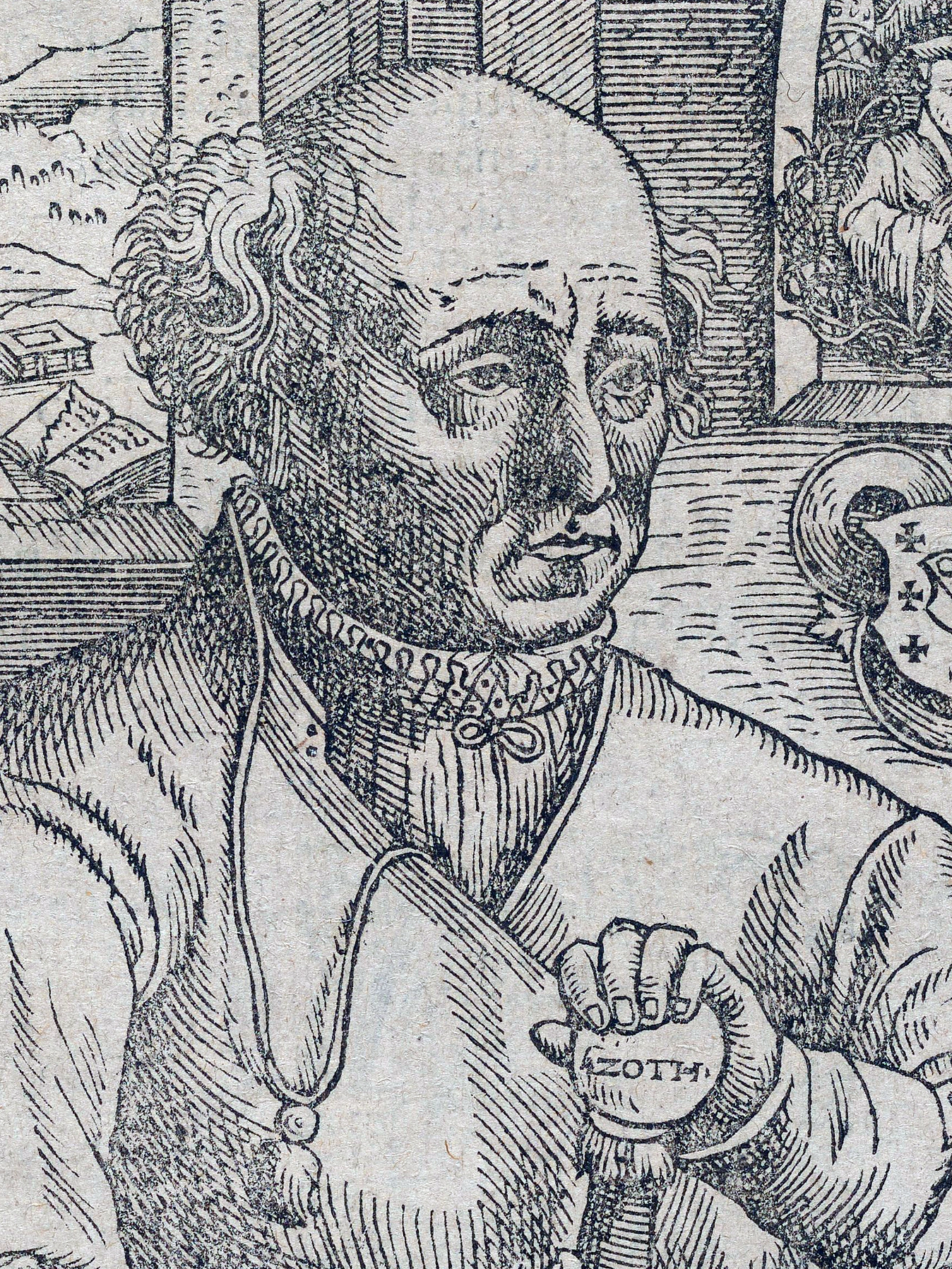
| 32 Quotes | |
| Born as | Theophrastus von Hohenheim |
| Known as | Philippus Aureolus Theophrastus Bombastus von Hohenheim |
| Occup. | Scientist |
| From | Switzerland |
| Born | November 11, 1493 Einsiedeln, Switzerland |
| Died | September 24, 1541 Salzburg, Austria |
| Aged | 47 years |
| Cite | |
Citation Formats
APA Style (7th ed.)
Paracelsus biography, facts and quotes. (2026, February 13). FixQuotes. https://fixquotes.com/authors/paracelsus/
Chicago Style
"Paracelsus biography, facts and quotes." FixQuotes. February 13, 2026. https://fixquotes.com/authors/paracelsus/.
MLA Style (9th ed.)
"Paracelsus biography, facts and quotes." FixQuotes, 13 Feb. 2026, https://fixquotes.com/authors/paracelsus/. Accessed 5 Mar. 2026.
Early Life and Background
Theophrastus Philippus Aureolus Bombastus von Hohenheim, later known as Paracelsus, was born on 1493-11-11 in Einsiedeln in the Swiss Confederacy, a landscape of pilgrimage, alpine remedies, and hard mineral work. His father, Wilhelm von Hohenheim, practiced medicine and moved the family to Villach in Carinthia (then within the Habsburg world), where mining and smelting exposed the young Paracelsus to the brutal intimacy between earth, metal, and human lungs. That early proximity to miners and foundries mattered: he learned that illness was not only an imbalance of humors but a consequence of craft, dust, and poisonous vapors.He grew up during Europe’s hinge years - the late medieval order giving way to printing, Reformation, and new wars of doctrine. The authority of universities and the prestige of Latin learning still held, yet the credibility of experience was rising in workshops, apothecaries, and battlefields. Paracelsus carried a volatile temperament into that world: restless, combative, and drawn to the margins where knowledge was practical and danger immediate. He adopted the name “Paracelsus” as a declaration of independence from inherited authorities, and he cultivated a public persona that made enemies quickly and disciples just as fast.
Education and Formative Influences
His formal education is partly obscured by legend, but he plausibly studied in German-speaking centers and drew on late scholastic medicine while rejecting its complacency. More decisive were his itinerant apprenticeships: he sought surgeons, barber-surgeons, miners, alchemists, and folk healers, traveling widely through Central Europe and likely into Italy. He absorbed Renaissance natural magic, Christianized alchemy, and the “book of nature” ethos, while the Reformation era’s iconoclasm encouraged him to treat Galen and Avicenna as fallible idols rather than masters.Career, Major Works, and Turning Points
Paracelsus worked as an army surgeon and wandering physician before his most dramatic appointment: in 1527 he became city physician of Basel and a lecturer tied to the university, where he scandalized colleagues by teaching in German and attacking the inherited canon. The Basel period collapsed within a year amid lawsuits and polemics, sending him back onto the road, writing and disputing from town to town. His influence crystallized through treatises circulated in manuscript and, after his death on 1541-09-24 in Salzburg, increasingly in print: “Die grosse Wundartzney” (Great Surgery Book, 1536) established his authority among surgeons; “Paragranum” and “Opus Paramirum” framed a new medical philosophy; and his chemical writings advanced iatrochemistry, including the therapeutic use of minerals and carefully prepared compounds. He also described occupational diseases among miners and smelter workers, turning labor into evidence and physiology into a social question.Philosophy, Style, and Themes
Paracelsus tried to rebuild medicine from the ground up: disease had specific causes, often external, and demanded targeted remedies rather than routine balancing of humors. His medicine fused alchemy, astrology, Christian theology, and hands-on observation - not as decorative metaphors, but as an attempt to map correspondences between body, world, and spirit. His famous maxim, “Poison is in everything, and no thing is without poison. The dosage makes it either a poison or a remedy”. , is less a slogan than a psychology: he distrusted absolutes, believed power lay in proportion, and treated healing as a disciplined negotiation with danger. This helped license new drugs and methods while also inviting excess from followers who imitated his confidence without his caution.His prose and lectures mixed prophecy, insult, and practical instruction, mirroring an inner life that craved certainty yet fed on conflict. He insisted that the physician be a reader of processes, not merely a compounder of recipes: “Medicine is not only a science; it is also an art. It does not consist of compounding pills and plasters; it deals with the very processes of life, which must be understood before they may be guided”. That insistence reveals a mind impatient with rote learning and haunted by the gap between theory and suffering. Beneath his combative posture lay a cosmological tenderness toward the human creature: “Man is a microcosm, or a little world, because he is an extract from all the stars and planets of the whole firmament, from the earth and the elements; and so he is their quintessence”. In Paracelsus, the cosmic analogy was not escapism - it was a demand that medicine respect the whole person, including environment, vocation, and spirit.
Legacy and Influence
Paracelsus became a fault line in early modern science: reviled by Galenists, canonized by “Paracelsians”, and mined selectively by later chemists and physicians. His advocacy of chemically prepared remedies helped open the path toward pharmacology and toxicology, even as his metaphysics resisted later mechanistic biology. He pushed medicine toward observation, specificity of causes, and the moral responsibility of the practitioner, while his language - half laboratory, half apocalypse - kept alive the idea that healing is both technical and existential. In the long view, his greatest legacy is not a single discovery but a remodeled ambition: to make the physician accountable to nature, to experience, and to the patient’s lived world.Our collection contains 32 quotes written by Paracelsus, under the main topics: Ethics & Morality - Wisdom - Art - Meaning of Life - Doctor.
Paracelsus Famous Works
- 1536 Die grosse Wundartzney (Book)
Source / external links