
Paramahansa Yogananda Biography Quotes 8 Report mistakes
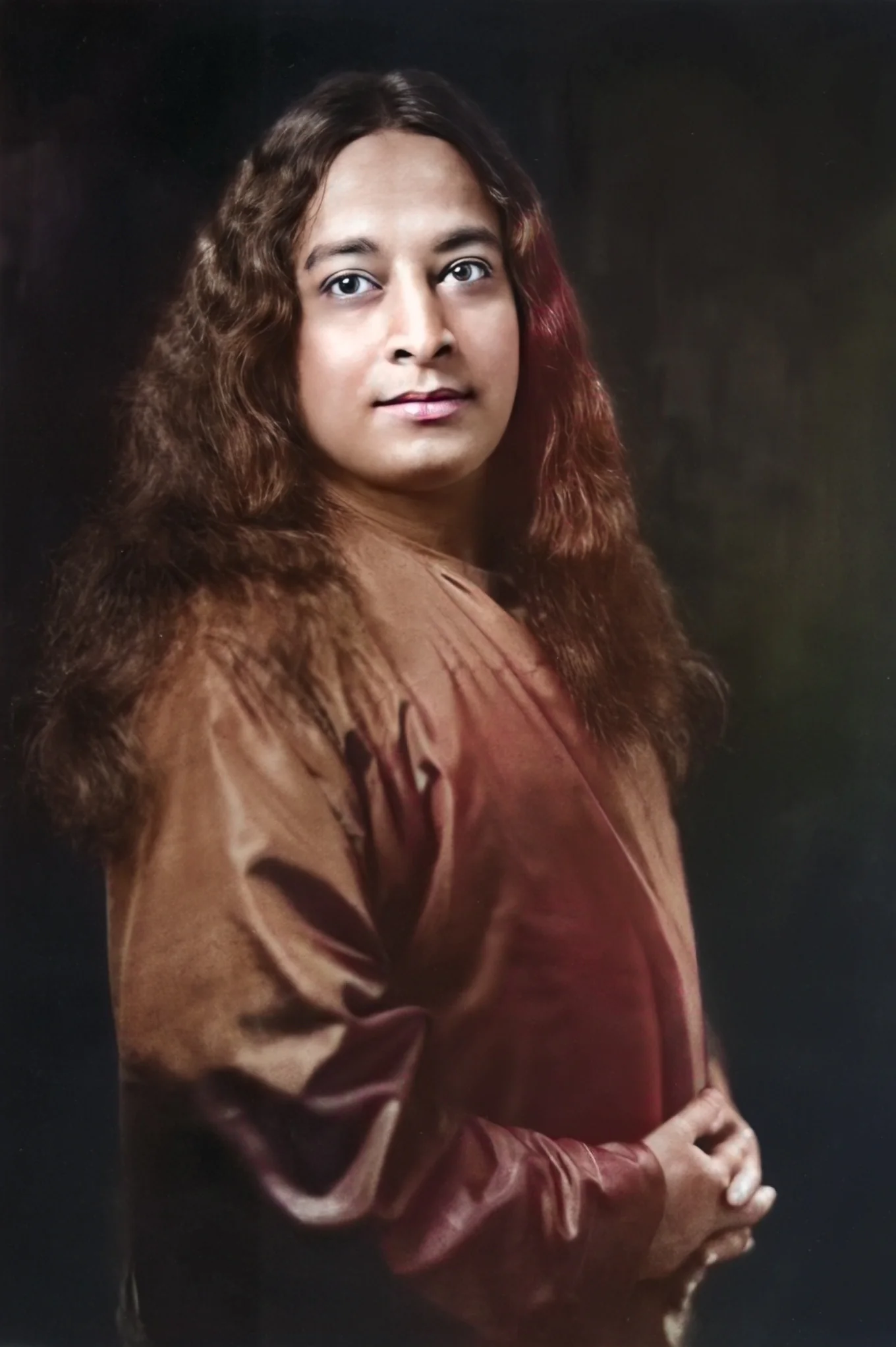
| 8 Quotes | |
| Born as | Mukunda Lal Ghosh |
| Occup. | Leader |
| From | India |
| Born | January 5, 1893 Gorakhpur, Uttar Pradesh, India |
| Died | March 7, 1952 Los Angeles, California, United States |
| Cause | Heart Attack |
| Aged | 59 years |
| Cite | |
Citation Formats
APA Style (7th ed.)
Paramahansa yogananda biography, facts and quotes. (2026, February 11). FixQuotes. https://fixquotes.com/authors/paramahansa-yogananda/
Chicago Style
"Paramahansa Yogananda biography, facts and quotes." FixQuotes. February 11, 2026. https://fixquotes.com/authors/paramahansa-yogananda/.
MLA Style (9th ed.)
"Paramahansa Yogananda biography, facts and quotes." FixQuotes, 11 Feb. 2026, https://fixquotes.com/authors/paramahansa-yogananda/. Accessed 26 Mar. 2026.
Early Life and Background
Mukunda Lal Ghosh was born on January 5, 1893, in Gorakhpur, in the North-Western Provinces of British India (now Uttar Pradesh), into a Bengali Kayastha family whose life bridged colonial modernity and devotional tradition. His father, Bhagabati Charan Ghosh, worked for the railways, and the family moved frequently - an itinerant childhood that exposed him to a cross-section of India under the Raj, from garrison towns to pilgrimage centers, where public religion and private longing often coexisted uneasily.From early boyhood, he described a single-minded hunger for direct experience of the divine, not merely inherited belief. The deaths and disruptions common to the era - illness, distance, and the pressures of an empire that reordered Indian life - intensified his inwardness rather than dispersing it. Family piety, especially his mother Gyana Prabha (whom he later remembered as spiritually intuitive), gave him a language for prayer, but his temperament pushed beyond comfort toward testing: he sought teachers, signs, and disciplines that could turn yearning into certainty.
Education and Formative Influences
He was educated in Calcutta (now Kolkata), including studies at Scottish Church College, but his real formation came from the meeting he pursued with relentless focus: Swami Sri Yukteswar Giri, a disciple in the lineage of Lahiri Mahasaya. Under Sri Yukteswar, Mukunda encountered a rigorous, reform-minded monasticism that aimed to reconcile yoga with reason and to present India to the modern world without superstition. Initiated into the monastic order, he took the name Yogananda; the training emphasized Kriya Yoga, self-discipline, and an ethic of service that could survive both temple and street, as India's nationalist awakening and spiritual revival moved in parallel currents.Career, Major Works, and Turning Points
Yogananda first built institutions in India, founding a school that blended education with yoga ideals, before a decisive turn outward: in 1920 he traveled to the United States as India's delegate to a religious congress in Boston, then settled into the long work of translation - not only of Sanskrit concepts into English words, but of inner practices into a form Western seekers could adopt. He established the Self-Realization Fellowship (SRF) in Los Angeles (1925), lectured widely during the interwar years, and became a recognizable public face of yoga before it was fashionable, insisting on meditation rather than mere calisthenics. His classic autobiography, Autobiography of a Yogi (1946), shaped his global reputation, presenting saints, science, and miracle stories alongside a disciplined program of spiritual practice. He died on March 7, 1952, in Los Angeles, shortly after speaking at a banquet honoring India's ambassador, at a moment when independent India was trying to define itself on the world stage.Philosophy, Style, and Themes
Yogananda's inner life, as he portrayed it, was a contest between ecstatic devotion and strict self-mastery - a psychology he made explicit in his moral teaching. “There are always two forces warring against each other within us”. The line is more than aphorism; it names the engine of his method: meditation as a daily adjudication between impulse and intention, restlessness and attention, egoic desire and what he called the soul's freedom. For audiences shaped by industrial pace and modern anxiety, his counsel leaned toward equilibrium, not withdrawal: “Remain calm, serene, always in command of yourself. You will then find out how easy it is to get along”. Calm, in his framework, was not temperament but attainment - the measurable outcome of breath, concentration, and ethical restraint.His prose and lectures combined devotional warmth with an almost managerial practicality: techniques, schedules, measurable habits, and the promise that experience could verify belief. Yet he resisted a solitary spirituality. He repeatedly framed love as training, not sentiment, arguing that joy widens when it becomes relational rather than possessive: “The happiness of one's own heart alone cannot satisfy the soul; one must try to include, as necessary to one's own happiness, the happiness of others”. That insistence shaped SRF as a lay-centered movement - householders and monastics - aiming to cultivate holiness in ordinary life. Thematically, he sought synthesis: East and West, devotion and experiment, personal liberation and public usefulness, presenting yoga as both inward science and outward ethic.
Legacy and Influence
Yogananda's enduring influence lies in how he rebranded yoga for a global century without severing it from lineage. Autobiography of a Yogi became a gateway text for later spiritual explorers, while SRF institutionalized meditation instruction, monastic discipline, and a publishing program that stabilized his message after his death. In the longer history of modern religion, he stands as a pivotal mediator: a colonial-era Indian teacher who used American platforms to project a universalist Hindu spirituality, helping to normalize meditation in Western life and setting patterns later gurus would imitate - sometimes with less restraint than his own emphasis on self-control, service, and interior verification.Our collection contains 8 quotes written by Paramahansa, under the main topics: Truth - Wisdom - Friendship - Failure - Self-Discipline.
Paramahansa Yogananda Famous Works
- 1995 God Talks With Arjuna: The Bhagavad Gita (Book)
- 1986 The Divine Romance (Book)
- 1975 Man's Eternal Quest (Book)
- 1949 Whispers From Eternity (Book)
- 1946 Autobiography of a Yogi (Book)
Source / external links