
Patrick Mahomes Biography Quotes 9 Report mistakes
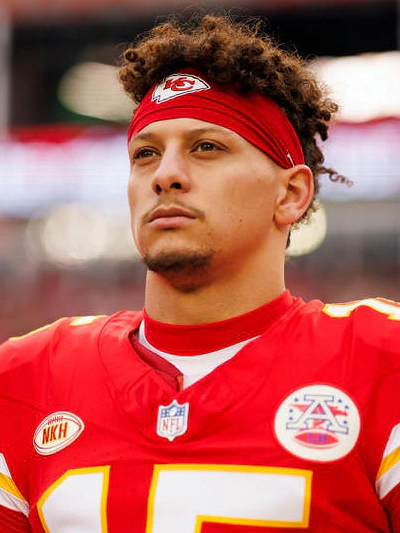
Attr: biography.com
| 9 Quotes | |
| Born as | Patrick Lavon Mahomes II |
| Known as | Patrick Mahomes II |
| Occup. | Athlete |
| From | USA |
| Spouse | Brittany Mahomes |
| Born | September 17, 1995 Tyler, Texas, USA |
| Age | 30 years |
| Cite | |
Citation Formats
APA Style (7th ed.)
Patrick mahomes biography, facts and quotes. (2026, March 19). FixQuotes. https://fixquotes.com/authors/patrick-mahomes/
Chicago Style
"Patrick Mahomes biography, facts and quotes." FixQuotes. March 19, 2026. https://fixquotes.com/authors/patrick-mahomes/.
MLA Style (9th ed.)
"Patrick Mahomes biography, facts and quotes." FixQuotes, 19 Mar. 2026, https://fixquotes.com/authors/patrick-mahomes/. Accessed 19 Mar. 2026.
Early Life and Background
Patrick Lavon Mahomes II was born on September 17, 1995, in Tyler, Texas, into a household where elite sport was not an abstraction but a daily grammar. His father, Pat Mahomes, was a Major League Baseball pitcher whose career took the family through clubhouses, road trips, and the unstable rhythms of professional athletics. His mother, Randi Martin, provided steadiness as the family navigated separation and the demands of a public sports life. Raised largely in Whitehouse, near Tyler, Mahomes grew up around adults who treated pressure as routine, failure as temporary, and preparation as a craft. That atmosphere gave him an early familiarity with competition without making him brittle; he learned that performance was inseparable from recovery, adjustment, and the ability to start over the next day.His childhood was marked by range rather than specialization. He excelled in baseball, football, and basketball at Whitehouse High School, becoming the kind of multisport athlete whose instincts were formed by constant improvisation. Baseball sharpened his arm angles and touch, basketball developed spatial awareness and off-platform balance, and football gave those gifts dramatic purpose. Even before he became a national figure, observers noticed that his game did not look assembled in the conventional quarterback laboratory. It looked inherited from a broader athletic education - one shaped by timing, hand-eye coordination, and comfort in chaos. That blend of pedigree and experimentation became central to both his identity and his later revolutionizing effect on the NFL.
Education and Formative Influences
At Whitehouse High, Mahomes became a prolific quarterback while also drawing real professional interest as a baseball prospect; he famously threw a no-hitter with 16 strikeouts, evidence of a live arm that might have taken him to the major leagues by a different route. He committed to Texas Tech University, where coach Kliff Kingsbury's spread offense gave him room to test the outer edges of his talent. After redshirting in 2014, he emerged as a full-time starter in 2015 and became one of the most productive passers in college football, culminating in the astonishing 2016 game against Oklahoma in which he threw for 734 yards and accounted for 819 total yards. Yet his development was not merely statistical. In Lubbock he learned to absorb blame, process frenetic games, and operate as the emotional center of a team whose style demanded aggression without fear. He left Texas Tech after his junior season for the 2017 NFL Draft, carrying both gaudy numbers and questions from traditional evaluators who mistook creativity for recklessness.Career, Major Works, and Turning Points
The Kansas City Chiefs selected Mahomes tenth overall in 2017 after head coach Andy Reid and general manager Brett Veach traded up, a franchise-defining act of conviction. He sat behind Alex Smith for most of his rookie year, then detonated in 2018 with 5, 097 passing yards and 50 touchdown passes, winning NFL MVP and announcing a new quarterbacking vocabulary built on sidearm throws, deep-platform manipulation, and calm under duress. In 2019 he led Kansas City to victory in Super Bowl LIV, the franchise's first title in 50 years, then signed a landmark long-term contract in 2020 that symbolized both personal value and institutional trust. A lopsided loss to Tom Brady and the Tampa Bay Buccaneers in Super Bowl LV became a revealing setback, but Mahomes responded by broadening his game, winning league MVP again in 2022 and capturing Super Bowl LVII and Super Bowl LVIII, with another championship game MVP confirming that his brilliance was not a novelty but a repeatable standard. Alongside his wife Brittany and growing family, he also became a visible civic and commercial figure in Kansas City, extending his presence beyond the field through philanthropy, ownership stakes, and a public image built on both charisma and discipline.Philosophy, Style, and Themes
Mahomes' psychology is rooted in competitive dissatisfaction. His public language repeatedly returns to process, correction, and unfinished work rather than self-mythology. “I always feel like I didn't do as good as I could have done. That just kind of comes with being a competitor”. That sentence is a key to his inner life: he treats excellence not as arrival but as evidence that more remains. Likewise, “The next play you always get an opportunity to do better”. The line sounds simple, but it explains his unusual immunity to the emotional whiplash of modern quarterbacking. He neither romanticizes failure nor lets it harden into paralysis. A sack, interception, or blown lead becomes material for the next decision. This mentality, formed in part by a childhood around professional baseball's unforgiving schedule, helps explain why he can produce his most audacious work late, hurt, or under postseason pressure.His style on the field marries playground invention to disciplined reading. The no-look pass, the cross-body throw, the sudden escape from a collapsing pocket - these are not random flourishes but acts grounded in study, peripheral vision, and trust in timing. What separates Mahomes from mere improvisers is that his creativity usually serves a collective end. “I didn't set any statistical goals at the beginning of the season. My goals were to win the AFC West, win games in the playoffs and then try to win the Super Bowl”. That team-first framing is not public-relations varnish; it aligns with how he distributes responsibility, praises teammates, and absorbs scrutiny. In an era that often turns quarterbacks into isolated brands, Mahomes presents stardom as stewardship - of tempo, belief, and the shared conviction that a game is rarely out of reach.
Legacy and Influence
Mahomes' legacy is already dual: he is both a historically accomplished quarterback and a stylistic watershed. He entered a league increasingly shaped by spread concepts and accelerated it, proving that unconventional arm talent, mobility, and off-platform imagination could anchor a championship offense rather than merely decorate one. Younger quarterbacks are now evaluated through a Mahomes-influenced lens, with scouts more willing to prize adaptability, baseball-like release angles, and creative processing. Just as important, he has become a central sports figure of 21st-century America - biracial, media-savvy, commercially powerful, and identified with a city he helped restore to dynastic relevance. If his career continues near its current trajectory, he will belong not just in debates about the best of his generation but among the defining athletes of his era, a player whose greatest innovation was to make wonder feel dependable.Our collection contains 9 quotes written by Patrick.
Source / external links