
Patty Hearst Biography Quotes 30 Report mistakes
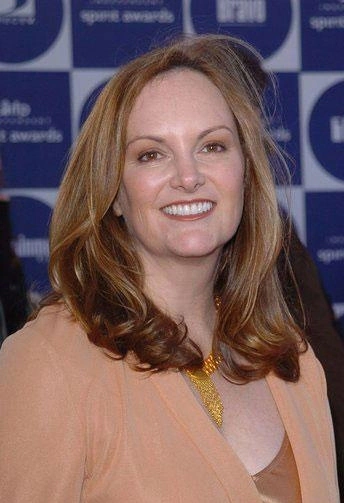
| 30 Quotes | |
| Occup. | Celebrity |
| From | USA |
| Born | February 20, 1954 |
| Age | 72 years |
| Cite | |
Citation Formats
APA Style (7th ed.)
Patty hearst biography, facts and quotes. (2026, February 22). FixQuotes. https://fixquotes.com/authors/patty-hearst/
Chicago Style
"Patty Hearst biography, facts and quotes." FixQuotes. February 22, 2026. https://fixquotes.com/authors/patty-hearst/.
MLA Style (9th ed.)
"Patty Hearst biography, facts and quotes." FixQuotes, 22 Feb. 2026, https://fixquotes.com/authors/patty-hearst/. Accessed 24 Mar. 2026.
Early Life and Background
Patricia Campbell Hearst was born February 20, 1954, in San Francisco, California, into the most visible branch of an American dynastic press family. She was the granddaughter of newspaper magnate William Randolph Hearst, and the daughter of Randolph A. Hearst and Catherine Woodville Hearst. The Hearst name carried its own mythology - wealth built on headlines, influence sharpened by politics, and a public that felt entitled to the family story.Her childhood unfolded between privilege and scrutiny, shaped by the quiet discipline of elite routines and the louder lesson that image is never private. By the early 1970s she was living in Berkeley, California, studying and moving in a world where the Vietnam War, Watergate, and radical politics compressed American trust. That era mattered: to be young then was to watch institutions fray, while extremists on the margins argued that spectacle could substitute for power.
Education and Formative Influences
Hearst attended private schools and, after graduating from Crystal Springs Uplands School, studied at Menlo College before continuing at the University of California, Berkeley. Berkeley was not just a campus but a symbol - the afterglow of the Free Speech Movement and a crossroads of leftist rhetoric, underground militancy, and media attention. For Hearst, the collision between an inherited public identity and a culture suspicious of inherited power created a tension that would later be exploited: the desire to be ordinary, and the impossibility of ever being anonymous.Career, Major Works, and Turning Points
On February 4, 1974, Hearst was kidnapped from her Berkeley apartment by the Symbionese Liberation Army (SLA), a small, violent revolutionary group. After weeks of captivity, recordings announced she had joined them, taking the nom de guerre "Tania"; she was later captured on April 15, 1974, on surveillance footage during the Hibernia Bank robbery in San Francisco. Arrested in 1975, she argued coercion, abuse, and brainwashing; prosecutors argued willing participation. Convicted in 1976 of bank robbery, she was sentenced to seven years, had her sentence commuted by President Jimmy Carter in 1979, and received a full pardon from President Bill Clinton in 2001. She later wrote a memoir, Every Secret Thing (1982), married her former bodyguard Bernard Shaw in 1979, and built a quieter public life that still lived in the long shadow of that single, national psychodrama.Philosophy, Style, and Themes
Hearst is not a celebrity in the conventional sense of craft but in the modern sense of being a living argument. Her story sits at the junction of trauma, ideology, and media - a case study in how a body can become a headline and how a headline can harden into a moral verdict. The central theme is contested agency: what it means to choose under fear, isolation, and domination, and how quickly the public demands a simplified narrative. Even decades later, she returns to the evidentiary quarrel not as a parlor debate but as a scar that never quite stops aching: “Well, you know, one lawyer says I'm the only witness and I'm not credible. Another lawyer says this witness - there's tons of evidence that's been available for years”. The line reveals a psychology trained by trial - a person who learned to speak in the grammar of credibility, witnesses, and files, because her inner life was repeatedly cross-examined.She also frames extremism less as romance than as a search for conflict that easily metastasizes. “It's hard to know what to say about somebody like that, except there are people who look for trouble. And trouble is very easy to find when you go looking for it”. That is not the language of manifesto; it is the language of someone who watched ideology become a permission slip for cruelty. Her retrospective comparisons sharpen this: “I think Charles Manson was a hair's breath away from just being a terrorist. He wanted to start a war, too”. Underneath is a grim coherence - that the SLA, Manson, and later forms of political violence all share a hunger for theater, a belief that fear is a kind of leverage, and a willingness to recruit the vulnerable as symbols.
Legacy and Influence
Hearst remains one of the defining American figures for debates about coercive persuasion, hostage survival strategies, and the limits of legal storytelling. The case influenced how the public talks about "Stockholm syndrome", even as experts dispute the term, and it forced courts, journalists, and viewers to confront how trauma can mimic consent. Her life after prison - marriage, motherhood, guarded public appearances, and the long effort to live beyond an iconized crisis - adds a final layer: celebrity as a permanent record. She endures as a cautionary tale about political extremism, media spectacle, and the human cost of reducing a complicated survival story to a single frozen image.Our collection contains 30 quotes written by Patty, under the main topics: Wisdom - Dark Humor - Justice - Book - War.
Other people related to Patty: Natasha Richardson (Actress)
Source / external links