
Paul Bailey Biography Quotes 1 Report mistakes
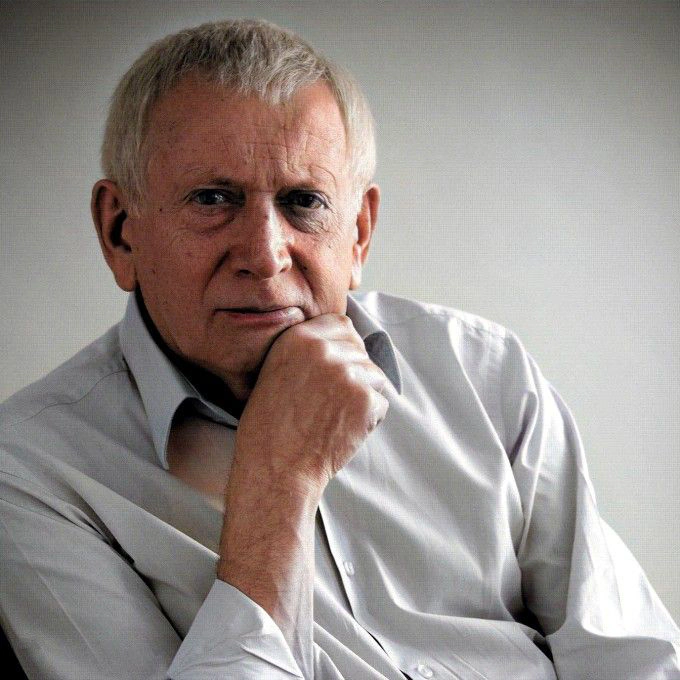
| 1 Quotes | |
| Occup. | Novelist |
| From | USA |
| Born | February 16, 1937 |
| Age | 89 years |
| Cite | |
Citation Formats
APA Style (7th ed.)
Paul bailey biography, facts and quotes. (2026, February 11). FixQuotes. https://fixquotes.com/authors/paul-bailey/
Chicago Style
"Paul Bailey biography, facts and quotes." FixQuotes. February 11, 2026. https://fixquotes.com/authors/paul-bailey/.
MLA Style (9th ed.)
"Paul Bailey biography, facts and quotes." FixQuotes, 11 Feb. 2026, https://fixquotes.com/authors/paul-bailey/. Accessed 6 Mar. 2026.
Early Life and Background
Paul Bailey was born on February 16, 1937, in England, not the United States, and his life and work cannot be understood apart from the class-stratified, ration-scarred aftermath of World War II. He grew up in London in a milieu where aspiration and embarrassment lived side by side - the public language of respectability against the private pressures of money, illness, and family legend. Those tensions would later become his emotional engine: the fear of being found out, the hunger to be seen, and the sharp eye for how people perform their roles when society gives them few.From early on he registered the theatricality of ordinary life - the way speech, clothing, and manners became armor. Bailey was openly gay in an era when homosexuality in Britain was criminalized (decriminalization in England and Wales came in 1967), and that historical fact matters not as a label but as a daily climate: it sharpened his sense of secrecy, scrutiny, and the costs of tenderness. His later fiction would return obsessively to loneliness and the longing for connection, not in abstract terms but as something lived through bodies, rooms, and the social weather of a particular street and decade.
Education and Formative Influences
Bailey left school relatively early and educated himself through voracious reading and by learning the disciplines of style the hard way - by listening to voices, studying the English novel, and absorbing the moral intelligence of writers who treated character as destiny. He moved through jobs and literary circles where biography, criticism, and fiction mingled, building a sensibility that was both high-literary and street-alert: the Jamesian attention to motive, the Dickensian relish for the telling detail, and a modern, postwar skepticism about heroic narratives. The Britain of his youth - austerity giving way to the consumer 1960s - provided him with a changing stage on which questions of class, taste, and self-invention could be dramatized with unusual acuity.Career, Major Works, and Turning Points
Bailey emerged as a novelist with an exacting ear and a biographer-critic with a strong instinct for psychological portraiture, publishing fiction that often tested how far sympathy could be stretched without snapping. His novel "At the Jerusalem" (1967) announced a writer fascinated by community as both refuge and trap, and he later took on Henry James directly in "An Immaculate Mistake" (1990), a comic and melancholy act of ventriloquism that doubled as a study of artistic conscience. Alongside the novels, Bailey became known for major literary biographies, including his acclaimed life of Charles Dickens (1998), where the crowded social world of the Victorian novel met Bailey's own preoccupations with performance, appetite, and the moral drama of attention - what it means to look at others, and to be looked at in return.Philosophy, Style, and Themes
Bailey's inner life, as it surfaces in the work, is governed by a duel between authority and vulnerability. He writes with a controlled, lucid surface that allows pain to appear without melodrama: the sentences do not beg for pity, but they make pity unavoidable. His comedy, when it comes, is rarely decorative - it is the way characters protect themselves from humiliation, and the way the author protects the reader from sentimentality. He is preoccupied with lives that feel slightly out of register with their surroundings: the too-sensitive, the socially miscast, the aging, the solitary, the people who have rehearsed explanations so long they have begun to believe them.A key to Bailey's psychology is his belief in compulsion as the only honest origin of art, and this is why he valued work that felt wrestled into being rather than manufactured. “Blanche is written with a terrible authority, the authority that comes from artistic necessity when the writer is compelled to write by his demon, rather than by his agent or promoter”. That sentence, though aimed at another book, reads like Bailey's self-portrait: his best work is animated by the fear that life will go to waste unless it is transmuted into form. The recurring themes - class embarrassment, erotic secrecy, the ache of dependency, the moral hazard of observation - are treated not as slogans but as pressures shaping speech and silence. Bailey's style is thus ethical as much as aesthetic: to describe precisely is, for him, a way of refusing cruelty, including the soft cruelty of vagueness.
Legacy and Influence
Bailey endures as a writer who bridged genres and temperaments: novelist, biographer, critic, and stylist of uncommon nerve. His fiction remains a record of postwar British feeling from the inside - not the headline history of Swinging London, but the quieter history of rooms, lodgings, shame, and desire as they were actually lived. As a biographer, he modeled an approach that prized narrative force without flattening contradiction, showing how great writers manufactured their public selves from private urgencies. For readers and younger writers, Bailey's lasting influence is his insistence that the hardest subjects - loneliness, need, the terror of aging, the comedy of self-deception - can be rendered with clarity and wit, and that literary authority, when earned, comes less from posture than from necessity.Our collection contains 1 quotes written by Paul, under the main topics: Writing.
Paul Bailey Famous Works
- 1986 Gabriel's Lament (Novel)
- 1980 Old Soldiers (Novel)
- 1977 Peter Smart's Confessions (Novel)
- 1973 A Distant Likeness (Novel)
- 1970 Trespasses (Novel)
- 1967 At the Jerusalem (Novel)
Source / external links