
Paul Castellano Biography Quotes 3 Report mistakes
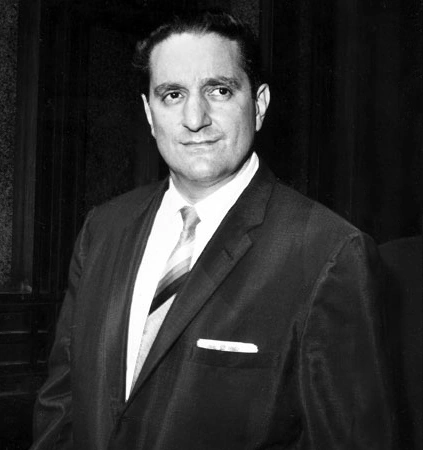
| 3 Quotes | |
| Born as | Constantino P. Castellano |
| Occup. | Criminal |
| From | USA |
| Born | June 20, 1915 Brooklyn, New York City, New York, U.S. |
| Died | December 16, 1985 Manhattan, New York City, New York, U.S. |
| Aged | 70 years |
| Cite | |
Citation Formats
APA Style (7th ed.)
Paul castellano biography, facts and quotes. (2026, February 11). FixQuotes. https://fixquotes.com/authors/paul-castellano/
Chicago Style
"Paul Castellano biography, facts and quotes." FixQuotes. February 11, 2026. https://fixquotes.com/authors/paul-castellano/.
MLA Style (9th ed.)
"Paul Castellano biography, facts and quotes." FixQuotes, 11 Feb. 2026, https://fixquotes.com/authors/paul-castellano/. Accessed 4 Mar. 2026.
Early Life and Background
Constantino Paul Castellano was born on June 20, 1915, in New York City to an Italian immigrant family rooted in the working-class neighborhoods that fed the early 20th-century underworld. Brooklyn, where he came of age, was a borough of cramped apartments, dock labor, and tight-knit parish life, but also of street crews that offered status and income when legitimate ladders felt blocked. From the start, his world was shaped by the informal power of kinship and local bosses - a parallel civic order that rewarded discretion, loyalty, and the ability to handle money.Castellano grew into a broad-shouldered, managerial figure rather than a romantic outlaw: less interested in the swagger of corner crews than in the quiet authority of men who controlled supply lines, trucking routes, and payrolls. Family ties were not incidental to his ascent; they were the architecture of it. He later married into the Gambino circle, becoming a close relative of Carlo Gambino, a connection that gave his ambitions a runway and bound his fate to the internal politics of one of America's most powerful Mafia organizations.
Education and Formative Influences
He left school early and learned his real curriculum in Brooklyn's marketplaces and back rooms, where credit, fear, and reputation functioned like currency. Castellano absorbed an immigrant-era ethic that prized the provider and the patriarch, but he also internalized the post-Prohibition lesson that modern rackets required management: accountants, lawyers, and a temperament that could delay gratification. The city around him - New York's booming consumer economy and its sprawling unions, construction sites, and slaughterhouses - offered a graduate program in how legitimate systems could be bent without breaking.Career, Major Works, and Turning Points
By mid-century Castellano was a rising captain in what became known as the Gambino crime family, building influence through traditional extortion and loan-sharking but distinguishing himself in more "white-collar" directions: control of meat and poultry distribution, ties to trucking and labor, and the systematic use of intermediaries. When Carlo Gambino died in 1976, he named Castellano as boss over Aniello Dellacroce, a decision that stabilized the top in the short term while planting a long-term grievance among street crews who felt bypassed. Castellano ran the family from a corporate-style mansion in Todt Hill, Staten Island, projecting boardroom authority even as federal pressure intensified through wiretaps and the developing RICO strategy. In 1985, amid internal revolt led by John Gotti and others, Castellano was assassinated outside Sparks Steak House in Manhattan on December 16, 1985, a killing that became a public marker of the era's shift from discreet oligarchy to headline-driven volatility.Philosophy, Style, and Themes
Castellano's inner life reads as a study in control - control of appetites, subordinates, information, and risk. He behaved less like a street fighter than a CEO of illicit markets, preferring to rule by allocation: who got which crews, which unions, which vendors, which streams of tribute. His style depended on hierarchy and the assumption that order, once established, could be maintained through ritual and precedent. Yet that same belief left him exposed to a changing Mafia culture in the late 1970s and 1980s, when younger crews wanted visibility, cash, and autonomy, and when federal surveillance punished any centralized, communicative leadership.His worldview treated law as an instrument to be managed rather than a moral boundary. “We're not children here. The law is-how should I put it? A convenience. Or a convenience for some people, and an inconvenience for other people”. That sentence captures a psychological posture: he did not romanticize rebellion; he rationalized it, turning illegality into logistics. At the same time, he elevated personal obligation above formal institutions: “There are certain promises you make that are more sacred than anything that happens in a court of law, I don't care how many Bibles you put your hand on”. In Castellano's mental universe, trust was enforceable not by courts but by reputation and retaliation, and betrayal was not merely strategic failure but existential humiliation - a theme that helps explain the ruthlessness of internal discipline and the terror of losing face. Even his fatalism about the life he chose is telling: “This life of ours, this is a wonderful life. If you can get through life like this and get away with it, hey that's great. But it's very predictable. There's so many ways you can screw it up”. It is the voice of a man who saw crime not as chaos but as a narrow path, where one misread ambition, one loose mouth, or one misjudged successor could end everything.
Legacy and Influence
Castellano's legacy is inseparable from the way he died: his murder announced the decline of the old, quiet-capital model of Mafia leadership and the rise of a more media-saturated, impulsive regime that ultimately accelerated law-enforcement victories. Yet his influence endures in how organized crime is understood - not merely as street violence, but as governance of markets through family ties, labor leverage, and the disciplined conversion of intimidation into revenue. As a biographical figure, he remains a paradox: a man who tried to professionalize a brutal tradition, only to be undone by the very human variables - pride, succession, loyalty, fear - that no manager can fully control.Our collection contains 3 quotes written by Paul, under the main topics: Justice - Life - Honesty & Integrity.
Other people related to Paul: John Gotti (Criminal)
Source / external links