
Paul Cezanne Biography Quotes 44 Report mistakes
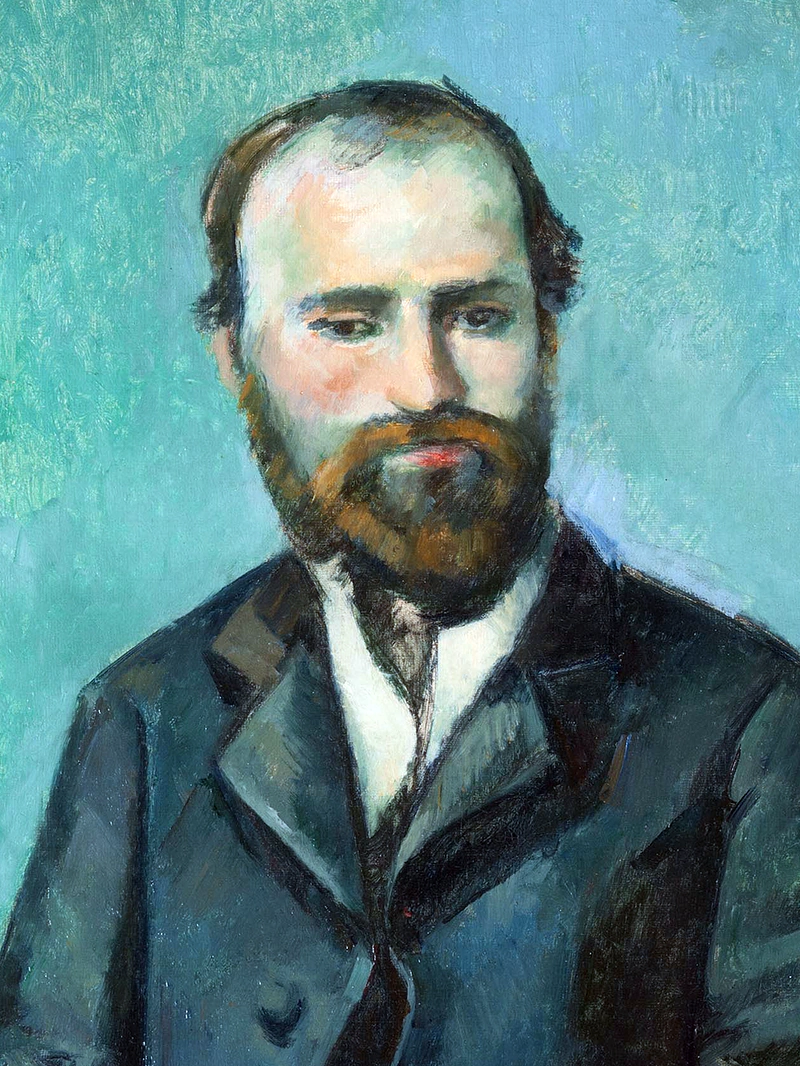
Attr: Carnegie Museum of Art
| 44 Quotes | |
| Known as | Cezanne |
| Occup. | Artist |
| From | France |
| Born | January 19, 1839 Aix-en-Provence, France |
| Died | October 22, 1906 Aix-en-Provence, France |
| Cause | Pneumonia |
| Aged | 67 years |
| Cite | |
Citation Formats
APA Style (7th ed.)
Paul cezanne biography, facts and quotes. (2026, February 11). FixQuotes. https://fixquotes.com/authors/paul-cezanne/
Chicago Style
"Paul Cezanne biography, facts and quotes." FixQuotes. February 11, 2026. https://fixquotes.com/authors/paul-cezanne/.
MLA Style (9th ed.)
"Paul Cezanne biography, facts and quotes." FixQuotes, 11 Feb. 2026, https://fixquotes.com/authors/paul-cezanne/. Accessed 6 Mar. 2026.
Early Life and Background
Paul Cezanne was born on 1839-01-19 in Aix-en-Provence, in the sunlit but socially stratified south of France, and he carried that provincial gravity all his life. His father, Louis-Auguste Cezanne, rose from hat-making to banking and property, becoming a formidable presence whose money could enable art yet whose expectations could choke it. The family home and landscape around Aix - its orchards, quarries, and the mass of Mont Sainte-Victoire - formed an early visual alphabet that would later become a lifelong motif, not as nostalgia but as a testing ground for perception.A shy, stubborn boy with bouts of intensity, Cezanne forged a crucial friendship at the College Bourbon with Emile Zola and Baptistin Baille, a trio that shared books, ambition, and the ache to escape local limits. Zola left for Paris and fame; Cezanne vacillated between loyalty to Aix and the magnetic harshness of the capital. That push-pull - security versus risk, solitude versus recognition - became the emotional meter of his career, amplifying his sensitivity to judgment and his fierce need to build a painting that could stand without apology.
Education and Formative Influences
Pressed toward a respectable life, Cezanne studied law in Aix while drawing obsessively, then reluctantly entered Paris in the early 1860s, where the Louvre and the academies offered both instruction and humiliation. He copied the old masters, absorbed Delacroix's color and Courbet's density, and encountered the ferment that would become Impressionism; yet he never fit comfortably within any camp. Repeated rejections by the Salon hardened his suspicion of official taste, while contact with Camille Pissarro in the 1870s steadied him into a more disciplined, observing practice, turning raw temperament into method.Career, Major Works, and Turning Points
Cezanne's early paintings were dark, impastoed, and psychologically charged; after the Franco-Prussian War he worked closely with Pissarro at Pontoise and Auvers, lightening his palette and clarifying structure. He exhibited with the Impressionists in 1874 and 1877, meeting ridicule that reinforced his retreat from Paris into long stretches around Aix and L'Estaque, where he pursued still lifes, portraits, bathers, and above all the architecture of nature in landscapes. Key works such as "The House of the Hanged Man" (1873), "The Card Players" (1890s), "Still Life with Apples" (1890s), "Mont Sainte-Victoire" series (1880s-1900s), and the late "Large Bathers" (c. 1898-1906) show a steady turn from optical impression toward constructed sensation. His personal life remained guarded: he maintained a long, often hidden relationship with Hortense Fiquet, married her in 1886, and had a son; inheritance after his father's death gave him financial independence, and a 1895 exhibition organized by Ambroise Vollard in Paris helped consolidate his late recognition. He died on 1906-10-22 in Aix-en-Provence after collapsing while painting outdoors, a literal end to a life spent testing vision against weather, time, and doubt.Philosophy, Style, and Themes
Cezanne's art is often described as a bridge between Impressionism and Cubism, but his inner aim was more intimate and strenuous: to make perception durable. He distrusted mere virtuosity and sought a painting that could hold the pressure of lived experience - the tremor of looking, the slowness of comprehension, the refusal of easy finish. The repeated returns to apples, jugs, table edges, and Sainte-Victoire were not limited subjects but controlled experiments: how color could model form, how a tilted plane could convey presence, how a landscape could become a kind of architecture without losing its air. Anxiety was not incidental; it was part of the work's engine, the fear that the next mark could collapse the whole structure.His own remarks expose a psychology of vulnerability harnessed into rigor. “It's so fine and yet so terrible to stand in front of a blank canvas”. That terror is visible in his calibrated brushstrokes - strokes that do not dissolve into atmosphere so much as assemble it, as if each touch must earn its necessity. He rejected copying as a dead end, insisting, “Painting from nature is not copying the object; it is realizing one's sensations”. Sensation, for him, was not fleeting pleasure but a disciplined translation of experience into relations of tone, temperature, and weight; an apple becomes a problem of gravity, a mountain a problem of endurance. Beneath the severity lies a credo of feeling as origin and proof: “A work of art which did not begin in emotion is not art”. Emotion in Cezanne is rarely theatrical; it is the quiet, stubborn insistence that the world can be re-seen until it yields a new order.
Legacy and Influence
By the time of his death, Cezanne had become the painter other painters measured themselves against, a solitary who changed the grammar of modern art. Picasso and Braque drew from his faceted planes and structural color toward Cubism; Matisse absorbed his chromatic firmness; later modernists found in his method a model of truthfulness without illustration. His influence endures because it is not a style to imitate but a moral stance toward seeing: patient, skeptical, and brave enough to rebuild the visible world from sensation into form.Our collection contains 44 quotes written by Paul, under the main topics: Wisdom - Truth - Art - Nature - Gratitude.
Other people related to Paul: Bridget Riley (Artist), Henri Matisse (Artist), Emile Zola (Novelist), Georges Braque (Artist), Camille Pissarro (Artist), Maurice de Vlaminck (Artist), Albert Barnes (Theologian), William S. Paley (Businessman), Octave Mirbeau (Writer), Edward G. Robinson (Actor)
Source / external links