
Paul Dirac Biography Quotes 10 Report mistakes
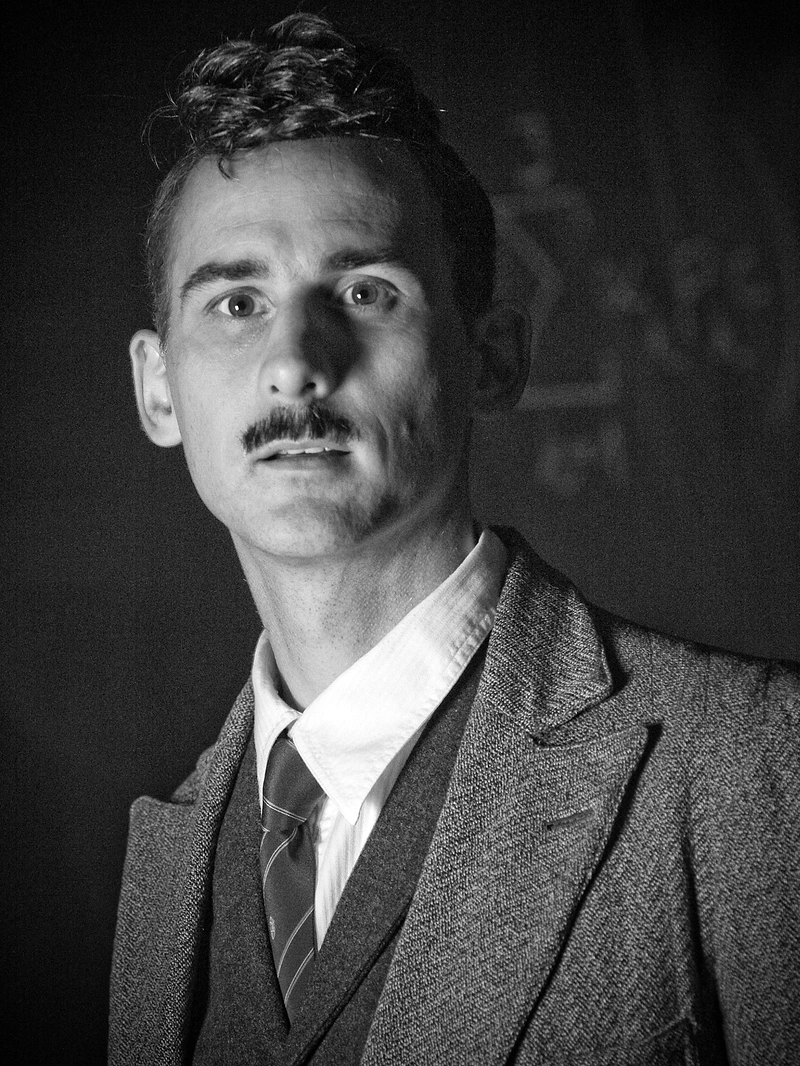
Attr: meteorologiaenred.com
| 10 Quotes | |
| Born as | Paul Adrien Maurice Dirac |
| Known as | P. A. M. Dirac |
| Occup. | Physicist |
| From | United Kingdom |
| Born | August 8, 1902 Bristol, England |
| Died | October 20, 1984 Tallahassee, Florida, United States |
| Aged | 82 years |
| Cite | |
Citation Formats
APA Style (7th ed.)
Paul dirac biography, facts and quotes. (2026, February 11). FixQuotes. https://fixquotes.com/authors/paul-dirac/
Chicago Style
"Paul Dirac biography, facts and quotes." FixQuotes. February 11, 2026. https://fixquotes.com/authors/paul-dirac/.
MLA Style (9th ed.)
"Paul Dirac biography, facts and quotes." FixQuotes, 11 Feb. 2026, https://fixquotes.com/authors/paul-dirac/. Accessed 27 Mar. 2026.
Early Life and Background
Paul Adrien Maurice Dirac was born on August 8, 1902, in Bristol, England, into a household where language, discipline, and reticence shaped his inner weather. His father, Charles Dirac, a Swiss-born French teacher, enforced French at home with a rigidity that made conversation feel like an exam; his mother, Florence Hannah Holten, offered a softer counterweight. The family lived in a city of engineering works and shipyards, and the young Dirac learned early to prefer the impersonal clarity of diagrams to the social risks of speech.That preference hardened into a lifelong temperament: famously laconic, intolerant of imprecision, and more comfortable with symbols than with small talk. Personal tragedy also shadowed his early adulthood - his younger brother Felix died by suicide in 1925 - and those close to Dirac sensed that the neatness of mathematics offered not escape but a way to keep grief and disorder at a bearable distance. In an era when British society still carried Victorian habits of restraint, Dirac took restraint to an extreme and made it productive.
Education and Formative Influences
Dirac trained first as an engineer at the University of Bristol (BEng, 1921), then pivoted to mathematics and theoretical physics, earning a BSc (1923) and moving to St John's College, Cambridge. There he found in Ralph Fowler a crucial advocate who steered him into the new quantum theory and gave him access to current work from the Continent; Dirac absorbed Heisenberg's matrix mechanics with an almost surgical calm, translating its novelty into a more general, more elegant formalism. Cambridge in the 1920s was a node where British empiricism met the European revolution in physics, and Dirac's formative influence was the conviction that the right notation was not cosmetic - it was thought itself.Career, Major Works, and Turning Points
In 1925-1926 Dirac produced foundational papers that recast quantum mechanics through transformation theory and the algebra of observables; in 1927 he introduced the quantum theory of radiation, anticipating quantum electrodynamics by quantizing the electromagnetic field and formalizing emission and absorption. His decisive turning point came in 1928 with the Dirac equation, marrying quantum mechanics with special relativity and predicting electron spin naturally; its unsettling implication - negative-energy solutions - led him to a bold hypothesis of antimatter, vindicated experimentally with the positron (1932). He shared the 1933 Nobel Prize in Physics with Erwin Schrodinger and became Lucasian Professor at Cambridge (1932-1969), publishing The Principles of Quantum Mechanics (1930), a text that shaped generations through its austere power and the now-standard bra-ket notation. Later, he pursued magnetic monopoles (1931) and a large-number cosmological hypothesis, and after moving to Florida State University he remained, into old age, a severe conscience for theoretical physics: demanding consistency, willing to be lonely.Philosophy, Style, and Themes
Dirac's intellectual life revolved around a rare fusion of moral seriousness and aesthetic judgment. He treated "beauty" not as an ornament but as a criterion for truth, trusting that nature would reward the simplest deep structure with predictive force. “It seems that if one is working from the point of view of getting beauty in one's equations, and if one has really a sound insight, one is on a sure line of progress”. For him this was not mysticism but a disciplined bet: if an equation was ugly, it was likely provisional; if it was beautiful, it might be fundamental. His near-silent personal manner fit this ethic - he preferred to remove words until only what could not be removed remained.That same severity produced a clear-eyed view of science as a conquest already won in principle, yet blocked by complexity in practice. “The fundamental laws necessary for the mathematical treatment of a large part of physics and the whole of chemistry are thus completely known, and the difficulty lies only in the fact that application of these laws leads to equations that are too complex to be solved”. The remark reveals his psychology: impatience with vagueness, and a stoic acceptance that the world is not obliged to be computationally convenient. He also insisted on the sovereignty of number wherever structure could be stated precisely: “The methods of theoretical physics should be applicable to all those branches of thought in which the essential features are expressible with numbers”. In Dirac this was less imperial ambition than an ethic of honesty - speak only where the symbols can carry the weight, and do not pretend to knowledge when language turns elastic.
Legacy and Influence
Dirac died on October 20, 1984, leaving a legacy that sits at the bedrock of modern physics: the Dirac equation as the gateway to relativistic quantum theory, the concept of antimatter as a triumph of reasoning from mathematics to reality, and a formal language - states, operators, commutators, bras and kets - that became the daily grammar of the field. His influence extends beyond specific results to a standard of taste: a belief that the deepest theories should be simple, coherent, and beautiful, and that intellectual courage sometimes means accepting bizarre implications if the equations demand them. In an age of ever-larger collaborations and ever-more-complicated models, Dirac remains the emblem of the solitary theorist who trusted form as a guide to truth, and who proved that silence, when disciplined, can be extraordinarily generative.Our collection contains 10 quotes written by Paul, under the main topics: Deep - Poetry - Science - God - Investment.
Other people related to Paul: Enrico Fermi (Physicist), Carl D. Anderson (Scientist), Subrahmanyan Chandrasekhar (Scientist)
Paul Dirac Famous Works
- 1966 Lectures on Quantum Mechanics (Book)
- 1933 The Evolution of the Physicist's Picture of Nature (Essay)
- 1933 The Lagrangian in Quantum Mechanics (Non-fiction)
- 1931 Quantised Singularities in the Electromagnetic Field (Non-fiction)
- 1930 The Principles of Quantum Mechanics (Book)
- 1928 The Quantum Theory of the Electron (Non-fiction)
- 1927 The Quantum Theory of the Emission and Absorption of Radiation (Non-fiction)
- 1926 The Fundamental Equations of Quantum Mechanics (Non-fiction)