
Paul Gauguin Biography Quotes 15 Report mistakes
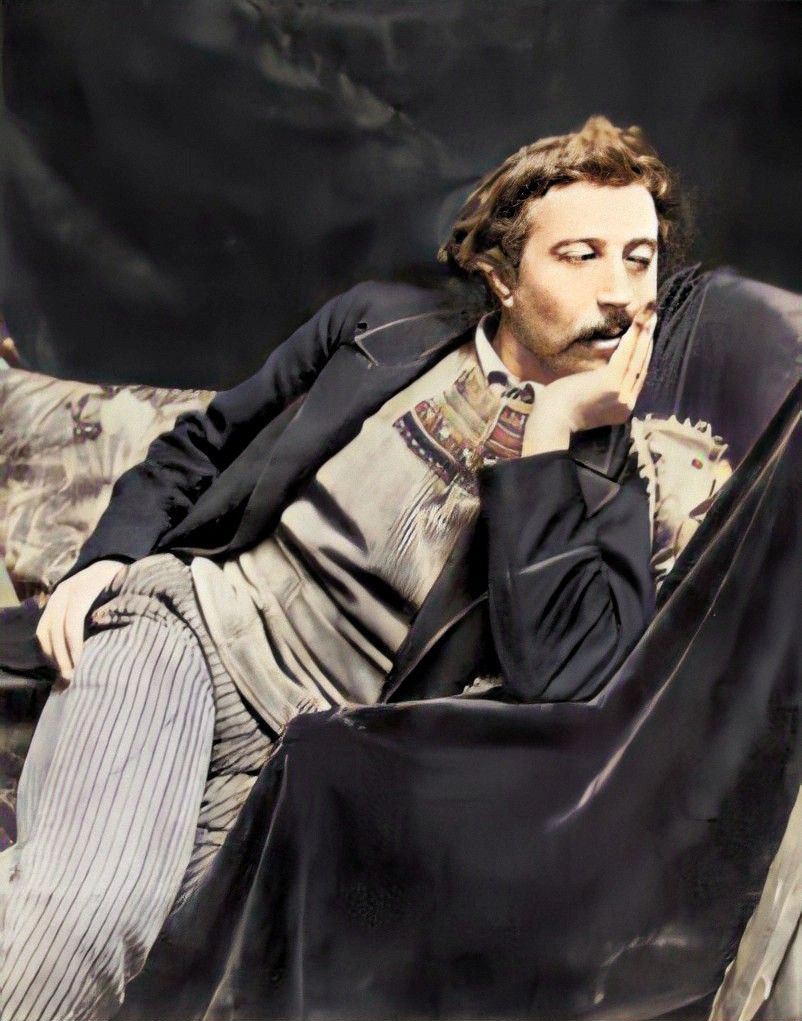
Attr: Louis-Maurice Boutet de Monvel
| 15 Quotes | |
| Born as | Eugène Henri Paul Gauguin |
| Occup. | Artist |
| From | France |
| Born | June 7, 1848 Paris, France |
| Died | May 8, 1903 Atuona, Marquesas Islands, French Polynesia |
| Aged | 54 years |
| Cite | |
Citation Formats
APA Style (7th ed.)
Paul gauguin biography, facts and quotes. (2026, February 11). FixQuotes. https://fixquotes.com/authors/paul-gauguin/
Chicago Style
"Paul Gauguin biography, facts and quotes." FixQuotes. February 11, 2026. https://fixquotes.com/authors/paul-gauguin/.
MLA Style (9th ed.)
"Paul Gauguin biography, facts and quotes." FixQuotes, 11 Feb. 2026, https://fixquotes.com/authors/paul-gauguin/. Accessed 12 Feb. 2026.
Early Life and Background
Eugene Henri Paul Gauguin was born in Paris on June 7, 1848, in the turbulent afterglow of the 1848 Revolution. His father, the journalist Clovis Gauguin, held republican convictions that quickly became dangerous; his mother, Aline Chazal, came from a family marked by political dissent and cultural restlessness. That mixture of ideology and volatility mattered: Gauguin would later treat bourgeois security as a kind of moral anesthesia, and he learned early that a life could be uprooted overnight by forces larger than private will.In 1849 the family attempted to emigrate to Peru, but Clovis died en route, leaving Aline to raise Paul amid the sensory intensity of Lima and the memory of a lost father. Gauguin returned to France as a boy, carrying a dual inheritance - Parisian modernity and an imagined South of color, ritual, and distance. The gap between those worlds became an engine of desire: he would spend his adult life both chasing and manufacturing elsewhere, turning exile into a private mythology.
Education and Formative Influences
Gauguin was not trained early as a painter; he was trained, instead, for movement. After schooling in France he went to sea as a teenager, serving in the merchant marine and then the French navy, experiences that sharpened his taste for horizons and estrangement. Back in Paris in the early 1870s he entered the financial world as a stockbroker, married the Danish woman Mette-Sophie Gad in 1873, and began painting seriously while collecting Impressionist art. Friendships and proximity to Camille Pissarro and the Impressionist circle gave him technique, but the deeper influence was psychological: he discovered that the modern city could be translated into paint, and then felt the translation was insufficient.Career, Major Works, and Turning Points
The crash of 1882 helped shatter his brokerage career and accelerated a choice he had been rehearsing - to gamble everything on art. By 1883 he committed to painting full time, and the domestic consequences were severe: financial precarity, repeated separations, and an eventual break with Mette as he moved between France, Denmark, and Brittany. In Pont-Aven he pushed beyond Impressionism toward simplified forms and symbolic color, collaborating with Emile Bernard in what became Synthetism; works such as "Vision After the Sermon" (1888) announced a new, anti-naturalist intensity. The same year he lived briefly with Vincent van Gogh in Arles, a volatile experiment in brotherhood that ended in rupture and deepened Gauguin's conviction that the artist must be sovereign, even cruelly so. He sought renewal in Martinique (1887) and then Tahiti (1891-1893; 1895-1901), producing "The Spirit of the Dead Watching" (1892) and the monumental "Where Do We Come From? What Are We? Where Are We Going?" (1897), before ending his life in the Marquesas Islands on May 8, 1903, at Hiva Oa, sick, indebted, and still fighting colonial authorities.Philosophy, Style, and Themes
Gauguin's inner life oscillated between hunger for innocence and the will to dominate experience. His letters and choices suggest a man who experienced "civilization" as both threat and seduction, casting Europe as a machine that sterilized sensation and turned the self into an instrument. "Civilization is what makes you sick". The remark is less a travel slogan than a symptom: he framed illness as spiritual contamination and imagined health as elsewhere - in Brittany peasants, in Polynesian bodies, in a premodern time he could never truly enter, only stage. That tension - yearning mixed with appropriation - runs through the biographical record and the canvas alike.Stylistically he built a language of flat planes, strong outlines, and non-local color that treated painting as invention rather than report. "I shut my eyes in order to see". The sentence captures his method: he distrusted optical truth and pursued an inward, remembered, and symbol-laden vision, where a yellow Christ or a violet shadow could be more "real" than daylight. His themes - erotic power, fear, sacred narrative, and mortality - were filtered through this deliberate un-realism, producing images that feel like dreams with hard edges. Underneath is a combative theory of art as rupture: "Art is either plagiarism or revolution". Gauguin lived that maxim as a defense of his departures, and also as permission to break not only with styles but with obligations.
Legacy and Influence
Gauguin's impact on modern art was immediate and vast: his synthetist flattening and symbolic color fed the Nabis, emboldened Fauvism, and offered early Expressionism a model for emotional distortion without academic apology; Picasso and Matisse absorbed his primitivist premise even when they rejected his persona. Yet his legacy is inseparable from the ethical disputes his life provokes - the colonial gaze, the exploitation embedded in his Tahitian and Marquesan years, and the way desire and power structure some of his most famous images. What endures, finally, is the contradiction he made productive: a painter who tried to flee modernity while becoming one of its defining revolutionaries, leaving works that still argue - uncomfortably, brilliantly - that art begins where compliance ends.Our collection contains 15 quotes written by Paul, under the main topics: Witty One-Liners - Wisdom - Art - Mortality - Meaning of Life.
Other people related to Paul: Anthony Quinn (Actor), Pierre Bonnard (Artist), Maurice Denis (Artist), Camille Pissarro (Artist)
Frequently Asked Questions
- Where did Paul Gauguin live: Paul Gauguin lived in several places, including France, Denmark, Tahiti, and the Marquesas Islands.
- Paul Gauguin Cruises: Paul Gauguin Cruises specializes in luxurious small-ship cruises primarily around Tahiti and the South Pacific.
- Paul Gauguin and Van Gogh: Paul Gauguin and Vincent van Gogh were friends who briefly lived together in Arles, France, but their friendship ended due to intense personal conflicts.
- Paul Gauguin Tahiti paintings: Paul Gauguin's Tahiti paintings feature bold colors and figures, depicting the native culture and landscapes, such as 'Where Do We Come From? What Are We? Where Are We Going?'.
- How did Paul Gauguin die: Paul Gauguin died of syphilis on May 8, 1903, in Atuona, Hiva Oa, Marquesas Islands, French Polynesia.
- Paul Gauguin Tahiti: Paul Gauguin lived and painted in Tahiti, which greatly influenced his art style, showcasing vibrant colors and exotic themes.
- Paul Gauguin cruises 2024: Paul Gauguin Cruises offers luxury voyages in 2024 to exotic destinations like Tahiti and French Polynesia.
- How old was Paul Gauguin? He became 54 years old
Source / external links