
Paul Getty Biography Quotes 32 Report mistakes
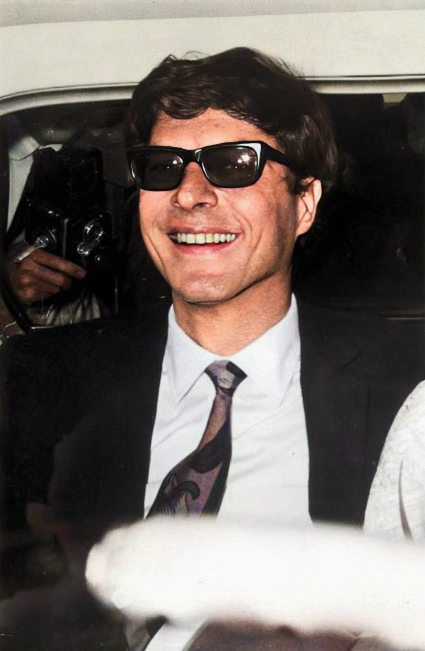
| 32 Quotes | |
| Born as | Eugene Paul Getty |
| Known as | John Paul Getty Jr. |
| Occup. | Businessman |
| From | USA |
| Born | September 7, 1932 Los Angeles, California, U.S. |
| Died | April 17, 2003 London, England, UK |
| Aged | 70 years |
| Cite | |
Citation Formats
APA Style (7th ed.)
Paul getty biography, facts and quotes. (2026, February 11). FixQuotes. https://fixquotes.com/authors/paul-getty/
Chicago Style
"Paul Getty biography, facts and quotes." FixQuotes. February 11, 2026. https://fixquotes.com/authors/paul-getty/.
MLA Style (9th ed.)
"Paul Getty biography, facts and quotes." FixQuotes, 11 Feb. 2026, https://fixquotes.com/authors/paul-getty/. Accessed 4 Mar. 2026.
Early Life and Background
Eugene Paul Getty was born September 7, 1932, in the United States into one of the century's most scrutinized fortunes. He was the eldest son of J. Paul Getty, the oil magnate whose thrift became legend, and Jeanette Dumon Getty, whose marriage to Getty unraveled into distance, recrimination, and eventually divorce. From the start, his family life carried a double inheritance: extraordinary material access and an emotional climate shaped by transactional thinking, suspicion, and performance under judgment.He grew up in a world where money was both shield and weapon. The Getty household moved between rarefied settings in California and Europe, yet intimacy was scarce and expectations were exacting. As a teenager and young man he absorbed a lesson that would haunt the family for decades - that affection might be conditional, and that public identity could eclipse private stability. The Getty name opened doors, but it also fixed him inside a dynasty story he did not fully write.
Education and Formative Influences
Getty was educated at elite institutions in England, including Eton, and later attended Oxford. The interwar and postwar histories that surrounded him - the collapse of old European orders, the rise of American corporate power, and the moral ambiguity of wealth amid rebuilding - framed his early worldview. Even before he held executive authority, he lived close to the machinery of capital and reputation, learning how legacy could be curated as carefully as it could be squandered.Career, Major Works, and Turning Points
He entered the family enterprise in the long shadow of Getty Oil and the wider Getty business constellation, but his adult life became defined as much by personal catastrophe as by boardroom decisions. In 1973, his teenage son, John Paul Getty III, was kidnapped in Rome, a case that turned the family's internal habits outward into a global morality play about privilege, calculation, and paternal distance. Negotiations dragged on, and the eventual ransom arrangement - famously constrained and itemized - intensified public perceptions of Getty family coldness and control. In later years, he operated less as a singular corporate architect than as a custodian of a surname - navigating wealth management, family governance, and the long tail of scandal - while the Getty fortune increasingly expressed itself through philanthropy and the cultural institutions associated with his father, notably the museum and trust that would become central to the family's enduring public role.Philosophy, Style, and Themes
Getty's inner life, as glimpsed through his remarks and the family's public record, suggests a temperament trained to treat risk, discipline, and image as survival tools. He inherited an oilman's belief in effort and timing, condensed into the hard-edged maxim, “My formula for success is rise early, work late, and strike oil”. The line is almost deliberately impersonal: work is virtue, luck is acknowledged but only as something to be "struck", and the self is valued for output. Paired with his admission, “A hatred of failure has always been part of my nature”. , it reads like the emotional engine of a dynasty - fear of loss transmuted into relentless control.Status, to Getty, was both costume and confession. When he observed, “My yachts were, I suppose, outstanding status symbols”. , he offered a rare concession that wealth is not merely utility but theater. Yet the same sensibility could pivot toward culture as refuge and justification. His question, “How does one measure the success of a museum?” , signals a man trying to translate private capital into public meaning - to move from accumulation to evaluation, from possession to legacy. Beneath the remark sits an anxiety familiar to heirs: money is quantifiable, but worth is not, and the institutions built from fortune become stand-ins for a more elusive moral accounting.
Legacy and Influence
Eugene Paul Getty died on April 17, 2003, leaving behind a life inseparable from the Getty saga - a family that helped shape modern ideas about corporate wealth, public philanthropy, and the psychological costs of dynastic power. His era, spanning postwar expansion through late-20th-century media sensationalism, transformed private tragedy into global spectacle, and the 1973 kidnapping remains a cautionary tale about how money can complicate love, loyalty, and decision-making under pressure. While he never eclipsed his father's myth, his story deepens it: the Getty legacy is not only a story of oil and institutions, but also of inheritance as a lived burden, and of the enduring question of what wealth can and cannot repair.Our collection contains 32 quotes written by Paul, under the main topics: Witty One-Liners - Truth - Art - Friendship - Failure.
Source / external links