
Paul Harris Biography Quotes 32 Report mistakes
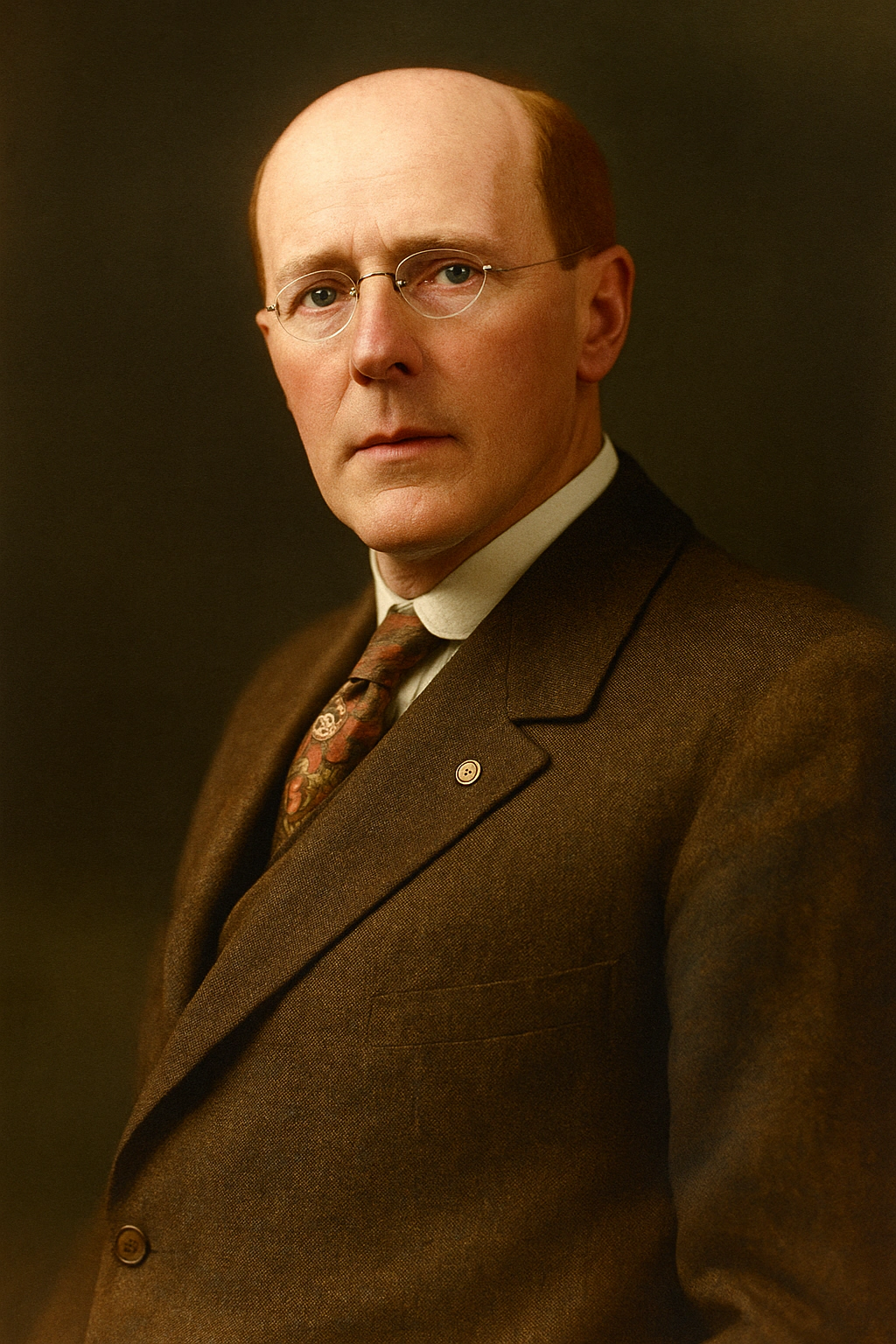
| 32 Quotes | |
| Born as | Paul Percy Harris |
| Known as | Paul P. Harris |
| Occup. | Lawyer |
| From | USA |
| Born | April 19, 1868 Racine, Wisconsin, United States |
| Died | January 27, 1947 Chicago, Illinois, United States |
| Aged | 78 years |
| Cite | |
Citation Formats
APA Style (7th ed.)
Paul harris biography, facts and quotes. (2026, February 11). FixQuotes. https://fixquotes.com/authors/paul-harris/
Chicago Style
"Paul Harris biography, facts and quotes." FixQuotes. February 11, 2026. https://fixquotes.com/authors/paul-harris/.
MLA Style (9th ed.)
"Paul Harris biography, facts and quotes." FixQuotes, 11 Feb. 2026, https://fixquotes.com/authors/paul-harris/. Accessed 12 Feb. 2026.
Early Life and Background
Paul Percy Harris was born on April 19, 1868, in Racine, Wisconsin, into a nation still working out the meaning of union and industrial modernity after the Civil War. His early years were marked by instability and the practical lessons of small-town America at the edge of a rapidly mechanizing economy. The cultural atmosphere around him mixed Midwestern pragmatism with the moral earnestness of Protestant civic life, a blend that would later surface in his insistence that professional success carried public obligations.
Family circumstances and financial uncertainty led to a childhood shaped as much by borrowed households and local mentors as by parents. Harris absorbed, early, the social intelligence required to move between environments, and he learned to read character the way a future organizer does - noticing who could be trusted, who could be rallied, and who could be persuaded to cooperate across differences. That sensitivity to human temperament became a quiet driver of his later efforts to build durable fellowship among competing professionals.
Education and Formative Influences
Harris attended the University of Vermont and later earned his law degree from the University of Iowa in 1891, training for a profession that rewarded argument but depended on reputation. In the years that followed he traveled widely and worked varied jobs before settling into law, experiences that broadened his social range beyond any single region or class. By the time he established himself in Chicago, he had seen enough of boomtown ambition and urban anonymity to understand that the modern city produced opportunity while eroding the informal bonds that once restrained selfishness and encouraged mutual aid.
Career, Major Works, and Turning Points
In Chicago Harris built a legal practice and, more consequentially, devised a new kind of civic fellowship for an era of specialized work and crowded streets. On February 23, 1905, he gathered with three other professionals to form what became the first Rotary Club of Chicago, initially meeting in rotation at members' offices to cultivate trust and practical friendship. Rotary expanded quickly, offering a structured antidote to the isolating churn of urban business life, and Harris spent decades nurturing the movement while resisting the temptation to turn it into a sect or a party. His key texts, including his memoir-like account "My Road to Rotary" and other addresses and writings for the organization, reveal a lawyer-organizer learning to think in terms of institutions - how to design rituals, norms, and incentives so that good intentions could survive leadership changes, economic downturns, and ideological disagreement.
Philosophy, Style, and Themes
Harris wrote and spoke in a plain, civic idiom - less theorist than builder - but his underlying psychology was keenly alert to how fragile cooperation can be. He treated character as a social force, not merely a private virtue, warning that "Personality has power to uplift, power to depress, power to curse, and power to bless". That sentence captures his organizing insight: a club is only as strong as the everyday tone set by its members, and the smallest displays of vanity, prejudice, or contempt can undo months of fellowship. In a city of sharp elbows, he tried to make courtesy strategic - not sentimental, but functional.
His most enduring theme was managed pluralism: the belief that diverse people could collaborate without demanding uniformity of belief. Rotary, in his conception, was a discipline of focusing on shared commitments rather than rehearsing divisive creeds, and he stated it as institutional method: "It has been the way of Rotary to focus thought upon matters in which members are in agreement, rather than upon matters in which they are in disagreement". That approach depended on a liberal respect for conscience, reflected in his insistence that "One's religion is one's own possession and he has a right to it". For Harris, tolerance was not abstract; it was the precondition for sustained service in a heterogeneous, immigrant-rich America where business, faith, and politics routinely collided.
Legacy and Influence
Harris died on January 27, 1947, having lived through the rise of corporate capitalism, the First World War, the Great Depression, and the Second World War - crises that tested whether civic life could be more than rhetoric. His legacy is inseparable from Rotary International, which grew from a Chicago experiment into a global service network that helped normalize the idea that professional associations could pursue public good without being governmental or sectarian. As a biographical subject he remains instructive: a lawyer who understood that institutions are made of moods, habits, and restrained egos, and who bet that friendship across occupation, class, and creed could be engineered - not perfectly, but persistently - into a durable form of modern civic solidarity.
Our collection contains 32 quotes written by Paul, under the main topics: Ethics & Morality - Wisdom - Justice - Music - Leadership.
Frequently Asked Questions
- Paul Harris Society: Rotary recognition for donors giving US$1,000+ to The Rotary Foundation each year
- Paul Harris Fellow pin value: Recognition for a US$1,000 donation; resale value is nominal
- Paul Harris religion: Not publicly specified; Rotary is nonsectarian
- Paul Harris wife: Jean Thomson Harris
- Was Paul Harris a Freemason: Yes, member of Garden City Lodge No. 141 (Chicago)
- How old was Paul Harris? He became 78 years old
Source / external links