
Paul Klee Biography Quotes 18 Report mistakes
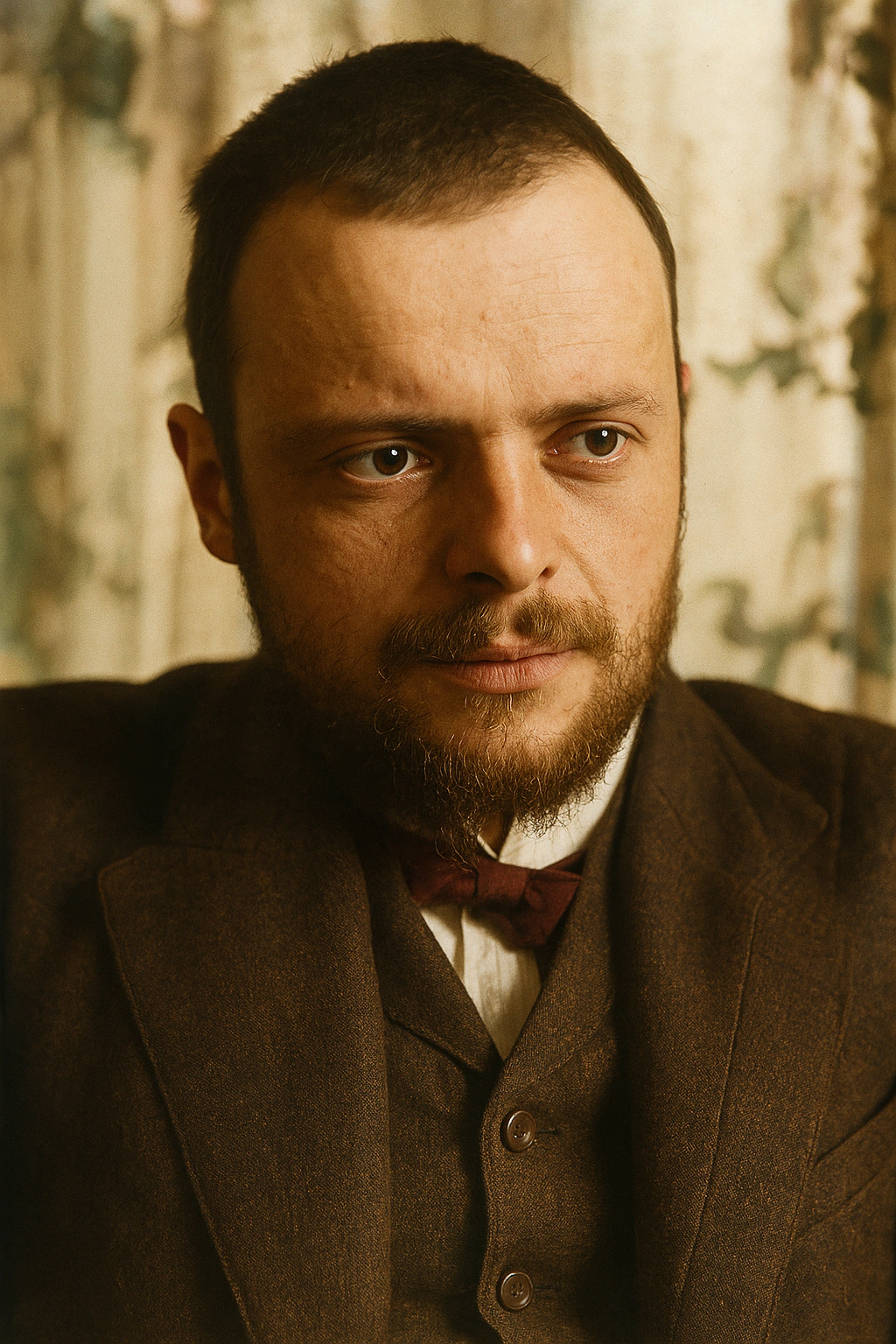
Attr: Alexander Eliasberg
| 18 Quotes | |
| Occup. | Artist |
| From | Switzerland |
| Born | December 8, 1879 Münchenbuchsee, Bern, Switzerland |
| Died | June 29, 1940 Muralto, Ticino, Switzerland |
| Cause | scleroderma |
| Aged | 60 years |
| Cite | |
Citation Formats
APA Style (7th ed.)
Paul klee biography, facts and quotes. (2026, February 11). FixQuotes. https://fixquotes.com/authors/paul-klee/
Chicago Style
"Paul Klee biography, facts and quotes." FixQuotes. February 11, 2026. https://fixquotes.com/authors/paul-klee/.
MLA Style (9th ed.)
"Paul Klee biography, facts and quotes." FixQuotes, 11 Feb. 2026, https://fixquotes.com/authors/paul-klee/. Accessed 12 Feb. 2026.
Early Life and Background
Paul Klee was born on December 8, 1879, in Muenchenbuchsee near Bern, Switzerland, into a household where music was not a pastime but a daily discipline. His father, Hans Klee, taught music; his mother, Ida Marie (Frick), was trained as a singer. The family soon lived in Bern, and Klee grew up in a bilingual borderland of Germanic order and Swiss pragmatism, with the violin as his first serious craft and drawing as a private, parallel language.From the start he carried a divided temperament that would later become a method: the musician's respect for structure and the satirist's eye for contradiction. Fin-de-siecle Bern offered civic stability while Europe lurched toward modernity, and Klee learned to distrust simple heroics. His early diaries and caricatures show a young man both ambitious and self-skeptical, testing how far irony could protect the self without impoverishing feeling.
Education and Formative Influences
In 1898 he left Bern for Munich, then a magnet for German-speaking artists, and studied at Heinrich Knirr's private school before entering the Academy of Fine Arts under Franz von Stuck. Academic instruction sharpened his draftsmanship but also convinced him that mere virtuosity could become a trap; he returned to Bern in 1901-1902 after an extended trip to Italy, absorbing Renaissance clarity while sensing that modern art required a different kind of truth. Etching, satire, and the example of Symbolism and Jugendstil pushed him toward an art that could be both analytical and dreamlike, and his marriage in 1906 to the pianist Lily Stumpf anchored his life in a working partnership of music, teaching, and slow, deliberate artistic growth.Career, Major Works, and Turning Points
Klee's decisive turn came in the orbit of Munich's avant-garde: he exhibited with Der Blaue Reiter, befriending Wassily Kandinsky and Franz Marc, and in 1914 traveled to Tunisia with August Macke and Louis Moilliet, where light recalibrated his entire practice. The First World War interrupted and darkened his era - he served in the German army in noncombat roles - yet his production surged, and by the early 1920s his reputation had hardened into authority. Walter Gropius invited him to teach at the Bauhaus (Weimar, then Dessau), where his notes on form, movement, and pictorial logic became as influential as his paintings and prints. After the Nazis branded his work "degenerate", Klee was dismissed in 1933, moved to Bern, and in his final years - under the pressure of illness and political exile - made austere, urgent late works such as "Death and Fire" (1940), compressing signs into stark, fateful statements.Philosophy, Style, and Themes
Klee treated art as a way of thinking that could never be reduced to illustration. He built images the way a composer builds a score - with motifs, inversions, pauses, and a controlled drift between order and surprise - and he prized the smallest unit of movement as the generator of meaning. "A line is a dot that went for a walk". The remark is playful, but it also reveals a psychology of becoming: for Klee, identity and form were not fixed substances but trajectories, and drawing was an ethical act of attention to how things change.His inner life oscillated between surrender and control. At times he described creation as a kind of disciplined trance: "Everything vanishes around me, and works are born as if out of the void. Ripe, graphic fruits fall off. My hand has become the obedient instrument of a remote will". Yet this was not mysticism for its own sake; it was a strategy for outwitting habit, letting the work arrive before theory smothered it. Color, too, became both sensation and self-definition, especially after Tunisia: "Color possesses me. I don't have to pursue it. It will possess me always, I know it. That is the meaning of this happy hour: Color and I are one. I am a painter". The tension between diagram and reverie, childlike sign and mature calculation, is the core of his style - an art that looks simple, then keeps unfolding like a coded map.
Legacy and Influence
Klee died on June 29, 1940, in Muralto, Switzerland, leaving behind an oeuvre that helped define modernism's most fertile paradox: rigorous abstraction that still behaves like a living language. His Bauhaus pedagogy shaped generations of artists and designers, while his paintings and drawings offered a model for Surrealists, Abstract Expressionists, and postwar graphic sensibilities seeking permission to be both intellectual and intimate. In an era that tried to police meaning and purity, Klee insisted on ambiguity as a form of truth, and his influence endures wherever artists treat the page or canvas as a site where thought can sing, stammer, and invent new alphabets.Our collection contains 18 quotes written by Paul, under the main topics: Art - Deep - Parenting - Change - Self-Improvement.
Other people related to Paul: Josef Albers (Artist), Wassily Kandinsky (Artist), Paul Rand (Designer), Max Bill (Architect), Gunther Schuller (Composer)
Frequently Asked Questions
- Paul Klee pronunciation: Pronounced 'PAHL KLAY' (Klee rhymes with 'clay').
- Paul Klee artist: Swiss-born modernist (1879–1940), Bauhaus master known for inventive abstract painting.
- Paul Klee drawings: Whimsical line drawings and watercolors with symbols, fantasy figures, and delicate geometry.
- What is Paul Klee famous for: Pioneering abstract art, influential color theory, and teaching at the Bauhaus.
- Paul Klee art style: Modernist blend of abstraction, Expressionism, Cubism, and Surrealism with poetic geometry and color theory.
- Paul Klee artwork: Colorful abstract works like Senecio and Twittering Machine; playful symbols, line, and color.
- How old was Paul Klee? He became 60 years old
Source / external links